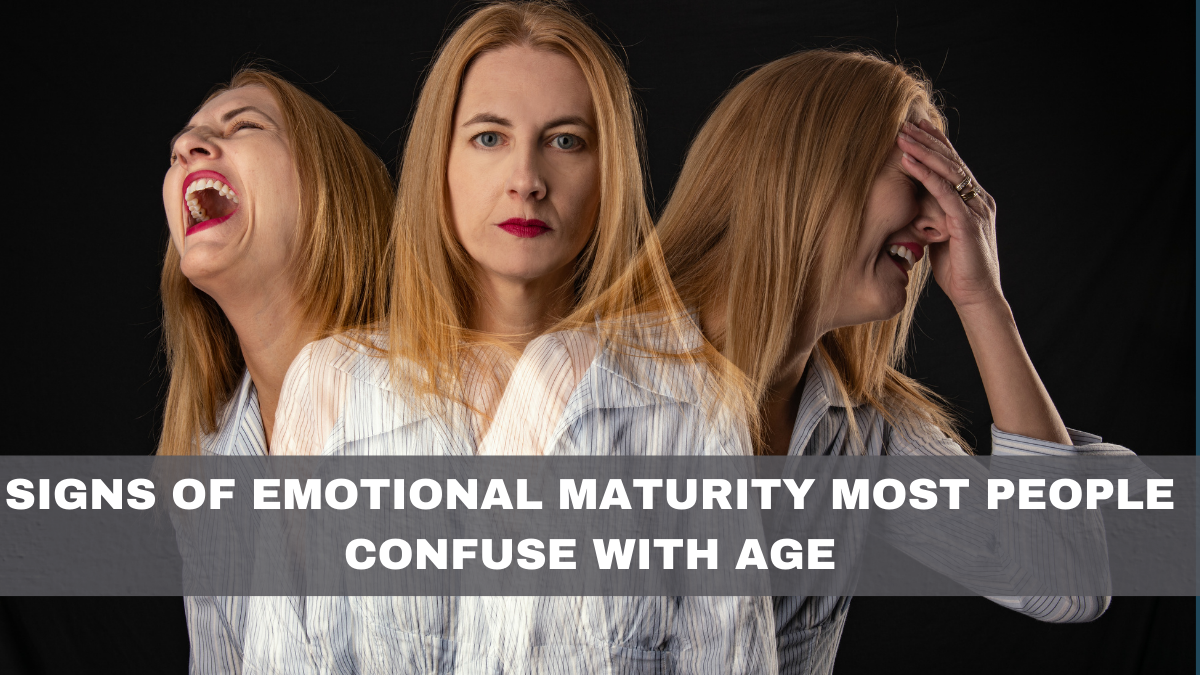
People often assume emotional maturity arrives automatically with age. The older someone is, the more “grown up” they must be—right? Psychology tells a different story. Emotional maturity signs have very little to do with birthdays and everything to do with behavior. Many adults grow older without growing emotionally, while others develop deep maturity early through awareness, reflection, and experience.
Emotional maturity isn’t loud or impressive. It’s subtle. It shows up in how people respond under pressure, handle discomfort, and relate to others without needing control or validation. Understanding these signs helps separate emotional growth from simple aging.
Why Emotional Maturity Is Not the Same as Age
Age measures time. Emotional maturity measures regulation.
People confuse the two because:
• Age looks authoritative
• Maturity is invisible
• Society rewards seniority
But adult behavior reveals far more than years lived.
Taking Responsibility Without Defensiveness
One of the clearest emotional maturity signs is accountability.
Mature people:
• Admit mistakes without excuses
• Listen without interrupting
• Don’t need to “win” arguments
Defensiveness signals insecurity, not strength.
Emotional Regulation During Conflict
Maturity shows most clearly under stress.
Emotionally mature individuals:
• Pause before reacting
• Express feelings without aggression
• Stay present during disagreement
Control doesn’t mean suppression—it means choice.
Comfort With Discomfort
Immature behavior avoids discomfort. Mature behavior tolerates it.
Mature adults:
• Sit with uncertainty
• Allow awkwardness
• Don’t rush to escape feelings
Avoidance keeps growth stalled.
Respecting Boundaries Without Resentment
Boundaries test maturity.
Emotionally mature people:
• Respect “no” without guilt
• Don’t personalize limits
• Set their own boundaries clearly
Boundary violations often hide entitlement.
Listening to Understand, Not to Respond
Listening style reveals emotional depth.
Mature listeners:
• Stay curious
• Ask clarifying questions
• Don’t hijack conversations
True listening requires self-awareness.
Reduced Need for External Validation
Validation-seeking fades with maturity.
Emotionally mature adults:
• Trust internal values
• Don’t chase constant approval
• Accept disagreement calmly
Confidence grows when self-worth is internal.
Choosing Response Over Reaction
Reactivity signals emotional immaturity.
Maturity shows up as:
• Thoughtful responses
• Measured tone
• Emotional pacing
This skill protects relationships and self-respect.
Accepting That Others Are Different
Mature people allow difference.
They:
• Don’t force agreement
• Accept varying perspectives
• Avoid moral superiority
Rigid thinking reflects fragile identity.
Letting Go of the Need to Control Outcomes
Control is often fear in disguise.
Emotional maturity signs include:
• Allowing uncertainty
• Trusting processes
• Accepting limited control
Letting go reduces anxiety.
Handling Criticism Without Collapse
Feedback reveals maturity level.
Mature responses include:
• Separating feedback from identity
• Reflecting before reacting
• Keeping self-worth intact
Collapse or rage often signals insecurity.
Apologizing Without Over-Explaining
Apologies show emotional clarity.
Emotionally mature apologies:
• Acknowledge impact
• Avoid justification
• Focus on repair
Over-explaining shifts focus away from responsibility.
Consistent Adult Behavior Across Situations
Maturity isn’t situational.
Emotionally mature adults:
• Act consistently
• Don’t change values for convenience
• Maintain integrity under pressure
Consistency builds trust.
Why Emotional Maturity Is Often Quiet
Maturity doesn’t announce itself.
It’s quiet because:
• It doesn’t need validation
• It avoids drama
• It prioritizes stability
Loudness often masks insecurity.
How Emotional Maturity Develops
It develops through:
• Self-reflection
• Emotional honesty
• Learning from conflict
Time helps—but only with awareness.
Conclusion
Emotional maturity signs are often mistaken for age because they’re subtle and internal. But maturity isn’t measured in years—it’s revealed through self awareness and adult behavior. The most emotionally mature people aren’t the loudest or most dominant. They’re the most regulated, respectful, and self-directed.
Growing older is automatic. Growing up emotionally is a choice—and one that shapes every relationship that follows.
FAQs
What are signs of emotional maturity?
Accountability, emotional regulation, respect for boundaries, and self-awareness.
Is emotional maturity related to age?
Not necessarily. Age and emotional maturity often develop independently.
Can emotional maturity be learned?
Yes. Through reflection, practice, and emotional responsibility.
Why do some adults lack emotional maturity?
Because growth requires awareness—not just time.
How can I develop emotional maturity?
By improving self-awareness, regulating emotions, and learning from conflict.