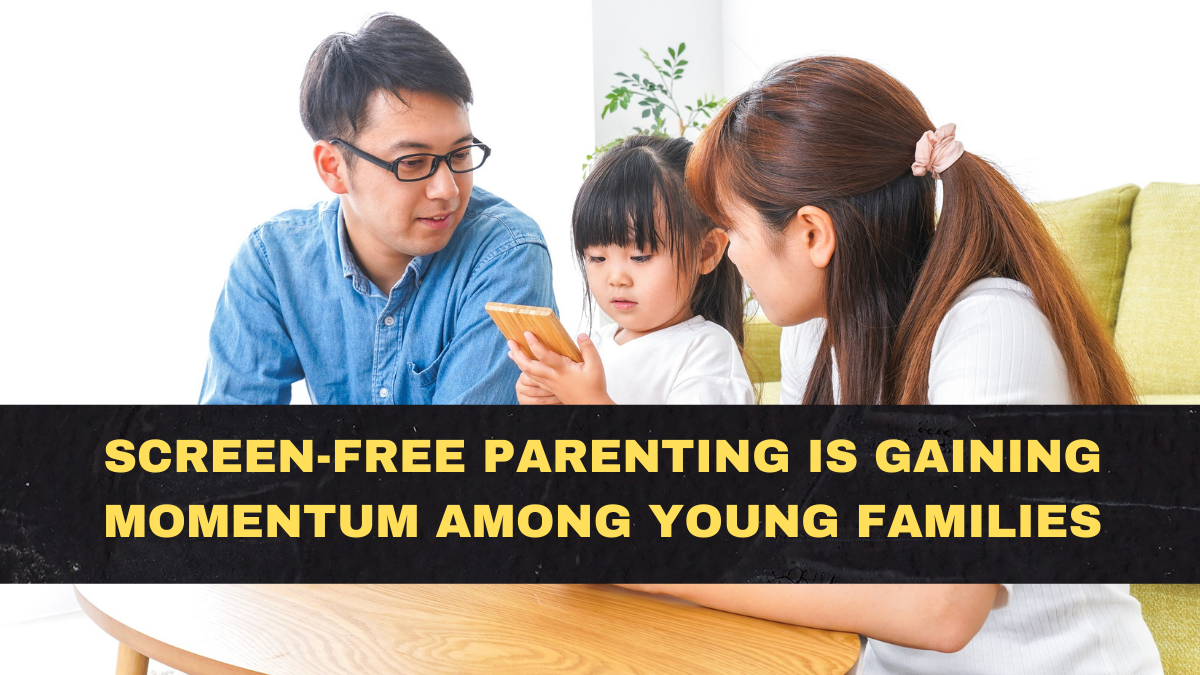
In 2026, a quiet rebellion is unfolding inside homes. More parents are choosing screen free parenting, deliberately limiting or eliminating screens from their children’s early years. This shift isn’t anti-technology or nostalgic—it’s a response to mounting evidence that constant digital exposure is reshaping attention, behavior, and emotional development far earlier than most families expected.
Raising low screen kids has become less about rules and more about values. Parents aren’t trying to win a purity contest—they’re trying to protect childhood in an environment that increasingly competes for it. As parenting trends evolve, screens are no longer treated as neutral tools by default.

What Screen-Free Parenting Actually Means
Screen free parenting doesn’t mean children will never see a screen.
It usually means:
• No personal devices in early childhood
• Limited or no passive screen consumption
• Screens used intentionally, not habitually
• Emphasis on physical, social, and imaginative play
The focus is control, not deprivation.
Why Parents Are Pulling Back From Screens
This shift didn’t happen overnight.
Parents are reacting to:
• Shortened attention spans
• Emotional dysregulation after screen time
• Sleep disruption
• Dependency on digital stimulation
• Difficulty with boredom
Screens solve short-term problems but create long-term ones.
The Difference Between Low Screen Kids and No Screens
Low screen kids aren’t disconnected—they’re grounded.
Key differences include:
• Screens are tools, not entertainment defaults
• Real-world play comes first
• Digital exposure is supervised
• Content is limited and purposeful
It’s not about banning technology—it’s about timing.
How Screen-Free Parenting Affects Child Development
Parents report noticeable changes when screens are limited.
Common benefits include:
• Improved focus and patience
• Stronger imagination
• Better emotional regulation
• More physical activity
• Deeper social engagement
Boredom becomes a feature, not a flaw.
Why Early Childhood Is the Focus
Early years are when habits and neural pathways form.
Parents focus on early childhood because:
• Brains are most plastic
• Attention skills are still developing
• Emotional regulation is learned, not innate
• Screen habits form quickly
What’s normalized early becomes automatic later.
The Role of Parents’ Own Screen Habits
Children learn from what they see.
Screen free parenting often starts with:
• Parents reducing phone use
• Modeling focused attention
• Creating tech-free zones
• Valuing presence over productivity
Kids notice inconsistency immediately.
Social Pressure and the Fear of “Falling Behind”
Many parents worry about digital disadvantage.
Concerns include:
• Missing tech skills
• Social exclusion
• Educational gaps
However, most screen-free families delay—not deny—technology, introducing it later with context and boundaries.
How Families Replace Screen Time
Removing screens creates space—but it must be filled.
Common replacements include:
• Outdoor play
• Reading and storytelling
• Creative activities
• Family conversations
• Unstructured free time
Childhood expands when screens recede.
Challenges of Screen-Free Parenting
This approach isn’t easy.
Challenges include:
• Social expectations
• Caregiver consistency
• Convenience trade-offs
• Explaining boundaries to others
It requires intention, not perfection.
Why This Parenting Trend Is Growing in 2026
The trend is driven by lived experience, not theory.
Growth factors include:
• Parents comparing real outcomes
• Mental health awareness
• Burnout from digital overload
• Desire for calmer home environments
Parents are optimizing for well-being, not productivity.
What This Means for the Future of Childhood
Childhood norms are being renegotiated.
By late 2026:
• Tech-free early years become mainstream
• Delayed device ownership becomes common
• Parents set firmer boundaries
• Screens lose default status
Technology isn’t disappearing—but childhood is being defended.
Conclusion
Screen free parenting is gaining momentum because families are seeing tangible benefits in attention, behavior, and connection. By raising low screen kids and challenging dominant parenting trends, parents are reclaiming time, calm, and presence. In 2026, the boldest parenting choice isn’t adding the latest device—it’s knowing when to wait.
Childhood doesn’t need to be optimized. It needs to be lived.
FAQs
What is screen-free parenting?
It’s an approach that limits or delays children’s exposure to screens, especially in early years.
Are low screen kids at a disadvantage?
No. Most develop stronger focus and social skills before later learning technology.
Does screen-free parenting ban all technology?
No. It emphasizes intentional, age-appropriate use rather than constant exposure.
Is this approach realistic for modern families?
Yes, though it requires boundaries and consistency rather than perfection.
Why is this trend growing now?
Because parents are responding to attention, behavior, and mental health concerns.