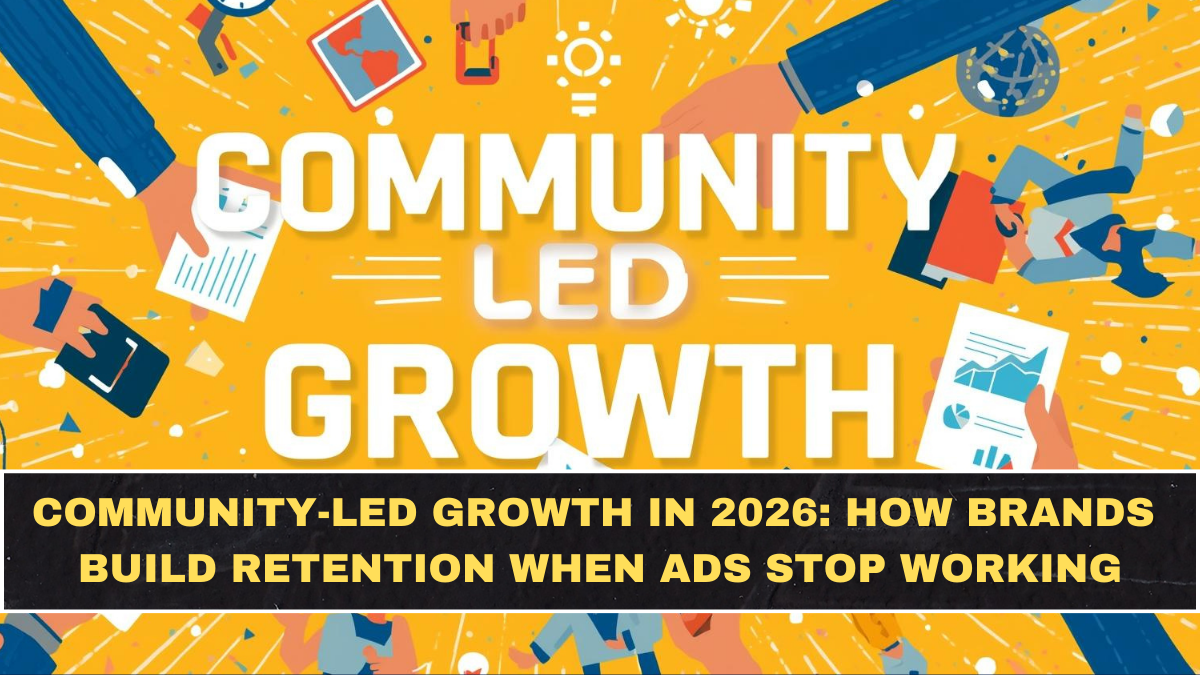
Community-led growth in 2026 is not a feel-good branding concept or a buzzword borrowed from startups. It has become a survival strategy for brands facing rising ad costs, declining click-through rates, and increasingly skeptical audiences. People no longer want to be targeted endlessly; they want to belong, participate, and feel heard. Brands that understand this shift are quietly outperforming those still dependent on paid reach.
What makes community-led growth powerful is not scale, but depth. Instead of chasing new users aggressively, brands focus on keeping existing users engaged, vocal, and emotionally invested. In 2026, retention, advocacy, and repeat usage matter more than raw acquisition numbers.
Why Ads Alone Are No Longer Enough in 2026
Paid advertising still works, but it is less efficient and more volatile. Algorithms change, costs fluctuate, and attention disappears quickly.
Audiences have developed ad-blindness. Even relevant ads struggle to hold attention beyond a few seconds.
Community-led growth fills the gap where ads fail, by building relationships instead of impressions.
What Community-Led Growth Actually Means
Community-led growth is not just running a forum or social group. It is about designing feedback loops where users contribute value back to the brand.
This includes sharing experiences, helping other users, and shaping product direction.
In 2026, communities are extensions of the product, not marketing add-ons.
Retention Becomes the Primary Growth Metric
Retention reflects trust. Users stay when they feel invested, not when they are retargeted.
Communities increase retention by creating emotional switching costs. Leaving means losing relationships, not just a service.
Brands with strong communities grow slower initially but compound faster over time.
UGC Evolves Into Community Ownership
User-generated content now feels different. It is less about promotion and more about expression.
Communities create their own language, norms, and content formats around a brand.
In 2026, the most effective UGC feels organic because it is not directed by marketing teams.
The Role of Creators Inside Communities
Creators act as bridges between brands and users. They translate values into relatable narratives.
Unlike influencers, community creators stay embedded long-term.
Their credibility comes from participation, not reach.
Why Community Trust Outlasts Campaigns
Campaigns end. Communities persist. Trust built through consistent interaction survives product updates and mistakes.
Members forgive flaws more easily when they feel included in the journey.
In 2026, forgiveness and loyalty are competitive advantages.
How Feedback Loops Drive Product Improvement
Communities surface issues early. Bugs, confusion, and friction appear in conversations before metrics show problems.
Brands that listen actively improve faster and more accurately.
Community feedback replaces guesswork with lived experience.
Platforms Where Community-Led Growth Thrives
Messaging platforms, private groups, and comment-driven spaces perform better than public feeds.
Smaller spaces feel safer and more personal.
In 2026, intimacy beats virality for long-term growth.
Common Mistakes Brands Make With Communities
Over-moderation kills authenticity. Under-engagement signals disinterest.
Communities fail when brands talk too much and listen too little.
Successful communities feel owned by members, not managed by brands.
Measuring Community Success Beyond Vanity Metrics
Member activity, repeat contributions, and peer-to-peer support matter more than size.
Silent communities are fragile.
Healthy communities show conversation depth, not just member count.
Why Community-Led Growth Is Hard to Copy
Communities grow through culture, not templates. What works for one brand cannot be cloned easily.
This creates defensibility that ads cannot replicate.
In 2026, community becomes a moat.
The Long-Term Payoff of Community Investment
Community-led growth reduces dependency on paid channels over time.
It stabilizes revenue and increases lifetime value.
Brands that invest early benefit disproportionately later.
Conclusion: Growth Comes From Belonging, Not Targeting
Community-led growth in 2026 works because it aligns with how people want to interact with brands today. Instead of being pushed messages, they want conversations, recognition, and influence.
When ads stop working reliably, communities keep brands alive. They create retention, trust, and advocacy that no algorithm update can erase. Growth no longer comes from shouting louder, but from building spaces people choose to stay in.
FAQs
What is community-led growth in simple terms?
It is a growth strategy where users actively contribute, engage, and advocate instead of just consuming.
Is community-led growth only for startups?
No, large brands also benefit, especially for retention and loyalty.
Do communities replace marketing completely?
No, they complement marketing by strengthening long-term engagement.
Which platforms work best for communities?
Private groups, messaging apps, and discussion-driven platforms perform well.
How long does community-led growth take to show results?
It is slower initially but compounds strongly over time.
What kills brand communities fastest?
Over-control, lack of listening, and treating communities as ad channels.