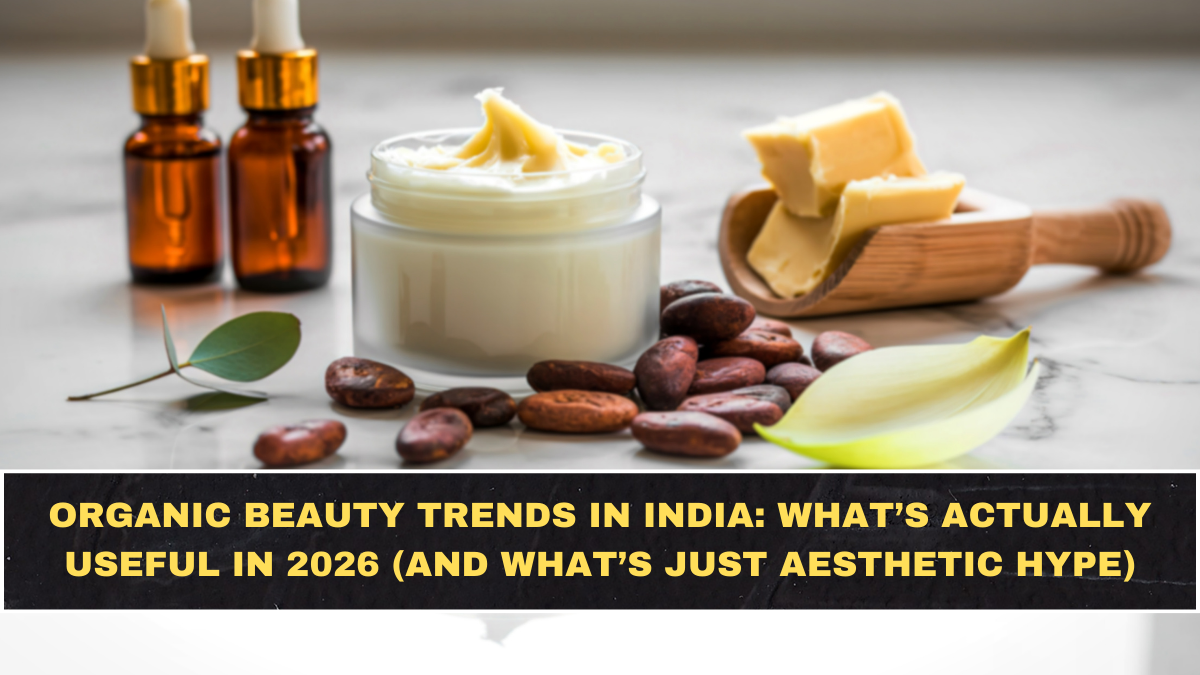
Organic beauty in India has gone through several phases, and 2026 marks a more mature, practical stage. Earlier waves were driven by buzzwords and visual appeal, where “natural” often meant homemade mixes without clarity or safety. Now, consumers are more informed, more cautious, and far less impressed by vague claims. The focus has shifted from what looks earthy to what actually supports skin and hair health over time.
This shift is important because organic beauty is no longer niche. It has entered daily routines across age groups, but only the trends that are realistic, repeatable, and safe are surviving. In 2026, Indian consumers are quietly filtering out noise and keeping what genuinely fits their lifestyle, climate, and skin needs.
Why Organic Beauty Feels Different in 2026
The biggest change is mindset. People are no longer chasing overnight results or miracle ingredients. They want slow, visible improvement without irritation or long-term damage.
Search behavior shows rising interest in simplified routines, ingredient transparency, and skin barrier health. Consumers are reading labels and questioning influencer advice more than before.
Organic beauty in 2026 is less emotional and more intentional.
The Rise of Minimalist Organic Skincare
One of the strongest trends is minimalist skincare using fewer products with clearer purposes. Instead of layering multiple organic serums and masks, people are choosing one cleanser, one treatment, and one moisturizer.
This works particularly well in Indian weather, where heavy routines often cause congestion. Fewer products reduce reaction risk and improve consistency.
Minimalism is replacing experimentation.
Turmeric and Haldi-Based Trends: What Actually Works
Turmeric continues to trend, but its usage has changed. Raw haldi pastes are declining because of staining and irritation risks.
In 2026, turmeric appears in controlled formulations such as cleansers or masks with balanced concentrations. These offer mild brightening without aggressive exfoliation.
The trend has become safer and more measured.
Herbal Haircare Is Becoming Scalp-Focused
Organic haircare trends are shifting attention from length to scalp health. Oils, shampoos, and masks now focus on cleansing, soothing, and balancing the scalp.
Ingredients like neem, bhringraj, and aloe are used in lighter formulations rather than thick oils. This suits modern lifestyles and reduces buildup.
Healthy hair is now viewed as a scalp outcome, not a product promise.
Why “Chemical-Free” Claims Are Losing Trust
In 2026, consumers are increasingly skeptical of “chemical-free” labels. There is growing awareness that everything is made of chemicals, including water and plant extracts.
Instead, people are looking for clarity on preservatives, fragrance sources, and allergen risks. Honest labeling matters more than marketing language.
This shift is improving product accountability.
The Role of DIY Beauty Is Shrinking
Homemade masks and scrubs were once central to organic beauty. Now they are used sparingly.
People recognize the hygiene risks and inconsistency of DIY mixes. Ready-made organic formulations offer better stability and safety.
DIY is becoming occasional, not routine.
Organic Makeup Is Staying Lightweight
Organic makeup trends in 2026 favor sheer coverage and breathable textures. Heavy foundations and full-coverage formulas are losing popularity.
Tinted moisturizers, lip oils, and cream blushes dominate because they feel comfortable in Indian climates. Skin texture is no longer something to hide completely.
The goal is healthy-looking skin, not perfection.
Who Organic Beauty Actually Works Best For
Organic beauty works best for people with sensitive skin, barrier issues, or those recovering from overuse of active ingredients.
It is not a cure-all. Severe skin conditions still require medical guidance. Organic routines support skin health but do not replace treatment.
Realistic expectations define success.
Common Organic Beauty Myths Still Floating Around
A common myth is that natural products cannot cause reactions. In reality, plant extracts can be just as irritating as synthetic ingredients.
Another myth is that organic means slow but guaranteed results. Results depend on formulation, not origin.
Understanding reduces disappointment.
How to Build a Practical Organic Routine in 2026
Start with cleansing and moisturizing before adding treatments. Introduce one product at a time and observe response.
Patch testing remains essential, even for organic products. Consistency matters more than variety.
Routine stability is the real trend.
Conclusion: Organic Beauty in 2026 Is About Discernment
Organic beauty in India has matured. The excitement phase is over, replaced by quieter, more thoughtful adoption.
The trends that survive are those that respect skin biology, climate realities, and daily habits. In 2026, organic beauty is not about looking natural, but about functioning naturally over time.
What remains is usefulness, not hype.
FAQs
Is organic skincare better than regular skincare?
It depends on formulation and skin type, not just whether it is organic.
Can organic products cause skin reactions?
Yes, natural ingredients can still irritate sensitive skin.
Is turmeric safe to use daily on skin?
Only in balanced formulations, not raw homemade pastes.
Do organic products work slower?
They may feel gentler, but results depend on consistency and formulation quality.
Is DIY skincare still recommended?
Only occasionally, with caution and proper hygiene.
Who should avoid organic beauty routines?
Those with severe skin conditions should consult professionals first.