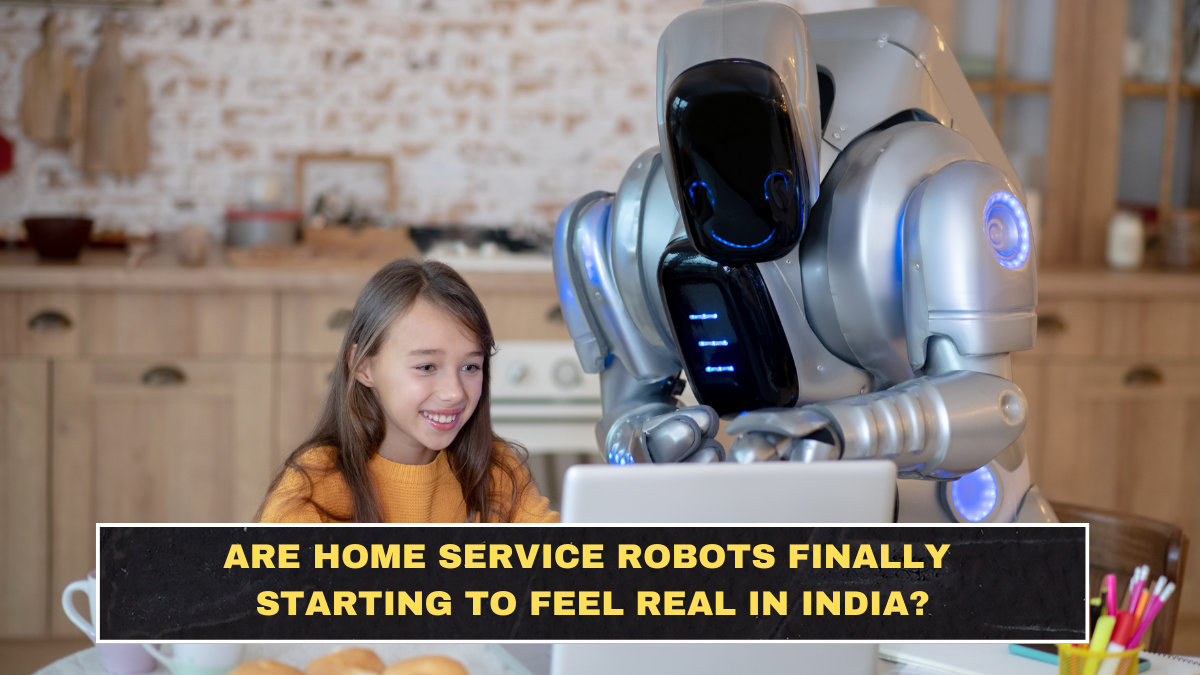
Home service robots used to sound like science fiction. In India, that image is changing because the category is now tied to practical tasks like floor cleaning, window cleaning, and lawn maintenance rather than fantasy ideas about humanoid helpers. The real shift is simple: robots are becoming visible where they solve one clear problem well, not where they try to do everything. India’s cleaning-robot market reached about USD 159.4 million in 2024 and is projected to grow to USD 680.1 million by 2030, which shows this is no longer just a novelty category.

What “Home Service Robot” Really Means in India
In the Indian market, home service robots mostly mean task-specific machines. Right now, the most practical versions are:
- robot vacuum and mop devices
- window-cleaning robots
- lawn-care robots in premium homes
- app-connected cleaning systems with automated docking and maintenance
That matters because people often imagine general-purpose robots. That is the wrong lens. India is not seeing a wave of all-purpose home robots. It is seeing growth in useful, narrow-function machines that save time on repetitive chores. Grand View Research says floor-cleaning robots were the largest segment in India in 2024, which tells you exactly where the real demand sits.
The Data Behind the Trend
| Indicator | Latest figure | Why it matters |
|---|---|---|
| India cleaning robot market, 2024 | USD 159.4 million | Shows the category already has real market presence |
| India cleaning robot market, 2030 forecast | USD 680.1 million | Suggests strong multi-year expansion |
| India cleaning robot CAGR, 2025–2030 | 27.8% | Signals fast growth, not slow niche demand |
| India robotic vacuum market, 2030 forecast | USD 1,362.9 million | Shows floor-cleaning robots remain the biggest home-service category |
| Global home cleaning robot shipments, 2025 | 32.72 million units | Global scale helps bring more models and better features into India |
Why India Is Finally Noticing Them More
The rise is not random. A few forces are pushing it:
- urban households are more open to smart-home appliances
- hygiene and convenience matter more than before
- premium buyers are willing to pay for time-saving devices
- e-commerce makes these products easier to discover and compare
- global shipment growth keeps improving features and competition
There is also a visibility effect. Brands like Milagrow are no longer selling only one type of robot. Their India lineup includes floor-cleaning robots and other specialized products, which helps make the category feel broader and more real to buyers. That expansion matters because a category starts to look serious when brands build portfolios, not just gimmicks.
Where These Robots Actually Make Sense
This is where most articles get lazy. Home service robots are not equally useful for everyone. They make the most sense for:
- larger homes with regular dust and open floor areas
- busy households that value convenience
- buyers already comfortable using app-based appliances
- premium homes where maintenance automation is easier to justify
They make less sense for:
- highly cluttered homes
- buyers expecting deep cleaning without manual effort
- very price-sensitive households
- users expecting one robot to replace all human cleaning
That is the blunt reality. These machines reduce repetitive work; they do not eliminate housework.
Why Cleaning Robots Are Leading the Category
Cleaning robots are leading because the use case is obvious. Everyone understands the value of automating a repetitive floor-cleaning task. That is why both India-specific and global market data keep pointing to floor-cleaning as the largest segment. It is easier to sell a machine that quietly vacuums and mops daily than a robot that promises some vague “future lifestyle” upgrade.
IDC’s 2025 shipment data strengthens that point. Global home cleaning robot shipments rose 20.1% year over year to 32.72 million units, which shows that the category is scaling beyond early adopters. India is benefiting from that broader global momentum.
What Buyers Should Watch Before Buying
Before buying a home service robot, users should check:
- whether their home layout suits automated movement
- whether the robot is for daily upkeep or deeper cleaning support
- service and spare-part support in India
- docking, mopping, and self-cleaning features versus price
- whether the device saves real time, not just looks impressive
A lot of people buy gadgets emotionally and regret it later. That is exactly how expensive appliances become wasted money.
Conclusion
Home service robots are starting to feel real in India, but only in a practical sense. The current wave is not about humanoid assistants. It is about specialized cleaning and maintenance machines becoming more useful, more visible, and more commercially viable. The strongest proof is in the data: India’s cleaning-robot market is growing quickly, floor-cleaning remains the dominant segment, and global shipment growth keeps improving the category.
The honest takeaway is this: home service robots are real in India now, but mostly where the task is simple, repetitive, and worth automating. Anyone selling this as a fully robotic home future today is overselling it. Anyone ignoring the trend completely is missing where household automation is actually heading.
FAQs
Are home service robots available in India?
Yes. In India, the most visible home service robots are cleaning-focused machines such as robot vacuums, mops, and window-cleaning robots. Brands including Milagrow have built visible India-facing product ranges in this space.
Are home service robots common in India yet?
Not in every household. They are still more common in premium urban homes and among buyers who already spend on convenience appliances. But the market is growing fast, which means visibility and adoption are clearly improving.
Which type of home service robot is growing fastest in India?
Cleaning robots, especially floor-cleaning devices, are the most established and important part of the category. They dominate current market demand because the use case is practical and easy to understand.
Will home service robots become cheaper in India?
Over time, better competition and global shipment growth should improve value and pricing options. But for now, many of the better-equipped models still sit in premium price bands, so buyers should stay realistic.