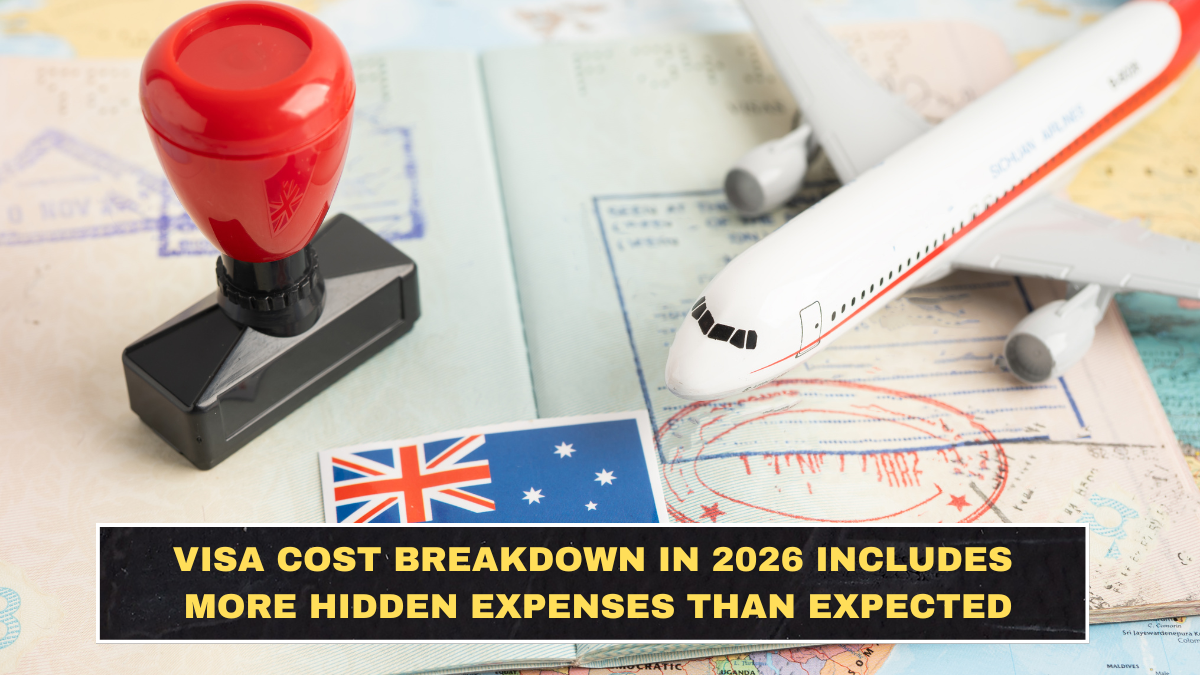
Most people budget for a visa the wrong way. They look up the official application fee, treat that as the main number, and ignore everything else until the process starts hurting. That is sloppy planning. In 2026, the real visa cost often includes biometrics, health cover, document preparation, translations, courier charges, proof-of-funds requirements, and travel to a visa center. The official fee is only the visible part of the bill.
The problem becomes obvious when you compare major destinations. The UK student visa fee is £558, and applicants also pay the healthcare surcharge. Australia’s student visa starts from AUD 2,000 and requires evidence of at least AUD 29,710 in financial capacity. Canada’s study permit fee is CAD 150, and biometrics for temporary residence start at CAD 85 per person. Those are very different systems, but they all prove the same point: visa budgeting fails when people stop at the headline fee.
Why is the official visa fee only part of the real cost?
Because a visa process is really a package of compliance costs, not one payment. Governments may charge one fee for the application itself, but applicants still have to satisfy identity checks, document rules, insurance rules, and financial requirements. For the UK student route, biometrics carry no separate fee, but the healthcare surcharge still applies on top of the £558 visa fee. For Canada, biometrics are a separate payment in many cases. For Schengen travel, applicants typically also need travel medical insurance with at least €30,000 in coverage.
That is where bad budgeting starts. People confuse “visa fee” with “visa cost.” Those are not the same thing.
Which expenses usually get missed most often?
The most commonly missed costs are biometrics, insurance, document support, translations, and travel to the appointment location. Canada explicitly requires many temporary resident applicants, including study permit applicants, to give biometrics and pay the biometrics fee unless exempt. Schengen-related guidance also shows that travel medical insurance is not optional in practice for many applicants.
Applicants also forget first-mile costs: passport photos, document printing, notary or translation work, courier handling, and local travel to a visa application center. Governments do not always bundle those into the official process, but your wallet still pays them. That is why people feel blindsided even when they technically “checked the visa fee” in advance.
What does a realistic visa cost breakdown look like?
| Cost area | What it includes | Why people underestimate it |
|---|---|---|
| Official application fee | Visa or permit charge | They assume this is the full cost |
| Biometrics | Fingerprints and photo collection | Sometimes billed separately |
| Insurance or surcharge | Health cover, travel insurance | Often discovered late |
| Documents | Photos, printing, translation, courier | Feels small, adds up fast |
| Proof of funds | Required bank balance or support evidence | Not a fee, but still a financial barrier |
| Travel and appointment costs | Transport to VAC or collection center | Easy to ignore until booking day |
This table is the real budgeting frame. A cost does not need to be paid to the embassy to still matter. Proof-of-funds rules are a perfect example. Australia’s student visa rules require evidence of at least AUD 29,710 in financial capacity. That is not a filing fee, but it is absolutely part of the real cost of being eligible.
How do major 2026 visa examples show the difference?
The UK is a good example of visible and hidden layers. The student visa fee is £558, but the healthcare surcharge applies on top. Canada looks cheaper at first glance because the study permit fee is CAD 150, but biometrics can add more. Schengen short-stay visa applicants typically face the visa fee plus insurance and document requirements, while long-stay visas are handled under national rules and can vary widely by country.
So when someone says one country is “cheap” based only on the visa fee, they are usually oversimplifying the decision.
How should people budget for visa costs in 2026?
Use a two-layer budget. First, calculate the official government charges. Second, add a process-cost layer for biometrics, insurance, documents, local travel, and a small contingency buffer. If the visa category also requires proof of funds, treat that as part of the financial plan from day one, not as a surprise later.
The smartest move is boring but effective: build the full cost before you apply. People who do that rarely feel trapped halfway through. People who do not usually blame the process for a budgeting mistake they made themselves.
FAQs
Is the visa application fee the full visa cost?
No. The official fee is only one part of the real cost. Biometrics, insurance, documents, and travel to the appointment can all add more.
Does Canada charge separately for biometrics?
Yes. Canada’s study permit fee is CAD 150, and biometrics start at CAD 85 per person when required.
Does the UK student visa include hidden extra costs?
Yes. The visa fee is £558, but applicants also pay the healthcare surcharge.
Why do visa budgets go wrong so often?
Because people budget for the official fee and ignore the surrounding costs that are still necessary to complete the process properly.
Click here to know more