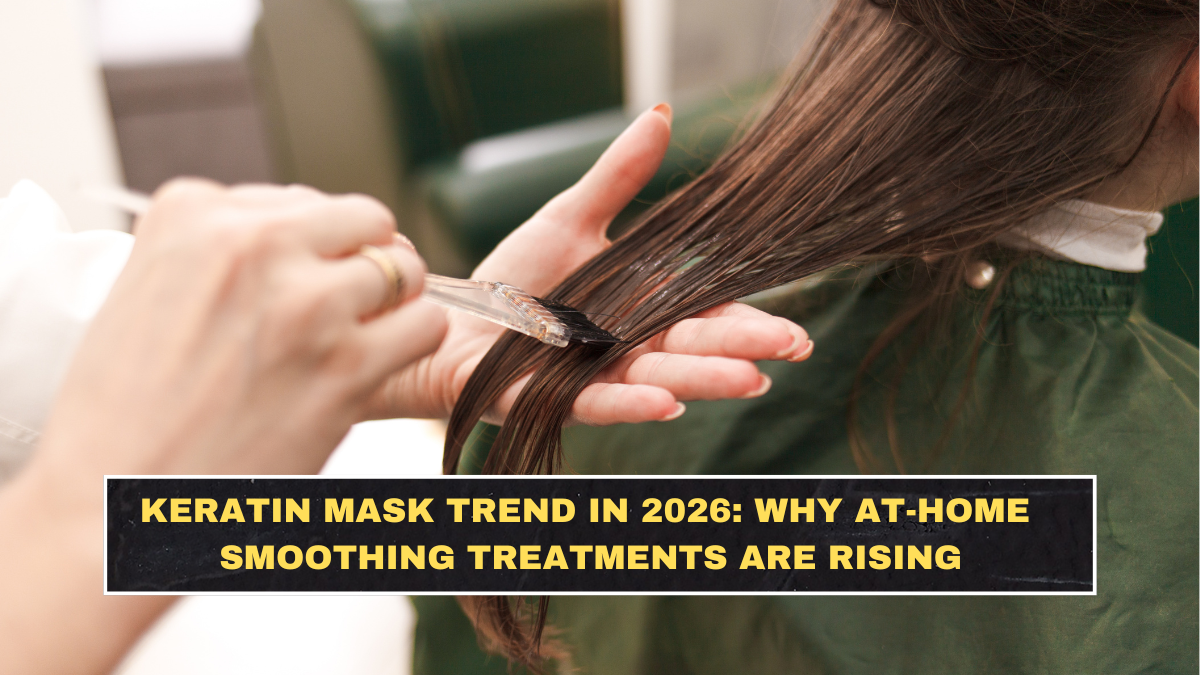
Keratin masks are growing because they sit in a very attractive middle ground: more treatment-focused than a normal conditioner, but far less intimidating than a salon keratin service. That makes them easy to sell to consumers who want smoother, shinier, less frizzy hair without committing to chemical straightening or expensive appointments. Recent 2026 trend coverage keeps pointing to at-home smoothing and structure-focused hair care as part of the broader ingredient-led shift in hair care. Vogue’s 2026 hair-care trends piece highlighted repair-driven and structure-aware treatments as a major category theme.
The category also benefits from behavior, not just beauty trends. People want results they can control at home. A mask feels manageable. It sounds restorative, it fits into an existing wash-day routine, and it borrows some prestige from salon language. That is why keratin masks are rising. Not because they are revolutionary, but because they feel like a lower-risk upgrade.
What is a keratin mask supposed to do?
A keratin mask is usually sold as a smoothing and strengthening treatment for hair that feels rough, frizzy, overprocessed, or weak. The logic is straightforward: hair is largely made of keratin, so products containing hydrolyzed keratin or related proteins are marketed as helping reinforce the hair shaft, improve surface smoothness, and reduce breakage. Scientific reviews on hair cosmetics support the idea that conditioning and repair-oriented ingredients can improve manageability, reduce friction, and temporarily strengthen damaged hair fibers.
The important word there is temporarily. This is where brands start playing games. A keratin mask can absolutely make hair feel smoother, softer, and more controlled. That does not mean it rebuilds hair back to a truly undamaged state. It usually improves performance and feel rather than permanently reversing structural damage. That distinction matters, because the category is useful precisely where people stop expecting magic.
Why do people prefer keratin masks over salon keratin treatments?
Because salon keratin treatments come with cost, commitment, and chemistry concerns. Salon smoothing services often promise longer-lasting frizz reduction and easier styling, but they are more expensive and can involve stronger treatment systems. Consumer concern around formaldehyde and formaldehyde-releasing chemicals in some salon smoothing services has also stayed in the conversation for years. The U.S. FDA has repeatedly addressed risks around certain hair-smoothing products, especially in professional contexts.
A keratin mask, by contrast, feels safer and easier. It is usually positioned as maintenance rather than transformation. That is a big reason the category is climbing. Buyers want something that looks and sounds advanced without the baggage of a full salon smoothing commitment. This is not irrational. It is a cleaner fit for the average person who wants less frizz, not chemically altered hair.
Do keratin masks actually reduce frizz?
Yes, often they do, but buyers should understand why. Frizz is partly about damage, partly about cuticle condition, partly about dryness, and partly about humidity. A good mask can improve cuticle smoothness, reduce roughness, and temporarily coat or reinforce the fiber so the hair behaves better. That makes frizz easier to manage, especially in damaged or porous hair. Reviews on hair fiber science and conditioning technology support that smoothing, film-forming, and protein-based care can reduce friction and improve the appearance and behavior of damaged hair.
What a keratin mask does not do is permanently solve why your hair frizzes. If the underlying issue is repeated heat damage, bleaching, rough brushing, or humid climate conditions, the mask helps manage the symptom more than it erases the cause. That is not a flaw. That is just reality, and buyers who understand that are much less likely to be disappointed.
What is driving the keratin mask trend most in 2026?
| Driver | Why it matters |
|---|---|
| At-home treatment demand | Buyers want salon-adjacent results without appointments |
| Frizz control | Smoothness remains one of the most searched hair concerns |
| Damage-aware beauty | Consumers now think more about hair structure and repair |
| Ingredient familiarity | “Keratin” sounds recognizable and trustworthy to buyers |
| Wash-day routines | Masks fit easily into existing hair-care habits |
This table explains the category better than brand copy does. People are not suddenly becoming protein chemists. They are buying a product that feels legible: keratin sounds like hair science, masks sound intensive, and frizz is a problem almost everyone understands. That combination is exactly why the category is growing.
Are keratin masks the same as bond repair products?
No, and this is where buyers confuse categories. Bond repair products are usually marketed around strengthening internal hair structure more specifically, often using language about disulfide bonds, keratin chains, or structural rebuilding. Keratin masks are more often sold around smoothing, softness, and reinforcement through protein-based conditioning. There can be overlap, but they are not identical jobs. Reviews and expert coverage on modern hair care consistently separate protein or conditioning repair from more specific bond-building claims.
This matters because many people think “stronger” and “smoother” automatically mean the same thing. They do not. A keratin mask may make hair feel dramatically better and still not function like a true bond-repair treatment. That does not make it worse. It just means buyers should stop expecting one product to solve every type of hair damage.
Who benefits most from keratin masks?
People with frizz-prone, dry, porous, heat-styled, or color-treated hair are the most obvious fit. If your hair feels rough, puffs up in humidity, or tangles easily after styling damage, a keratin mask can be a very reasonable addition. Consumers with heavily bleached or overprocessed hair may still need deeper structural support, but even then, keratin masks can help improve softness and manageability in a visible way.
On the other hand, very fine hair or low-damage hair may not always love heavy protein-heavy masks. Too much of the wrong treatment can make some hair feel stiff, coated, or unbalanced. That is another thing brands rarely say clearly. A richer treatment is not automatically better. It has to match the condition of the hair.
What are brands overselling in this category?
The biggest exaggeration is when keratin masks get sold like mini salon straightening systems. That is nonsense. A mask can smooth. It can soften. It can reduce visible frizz. It can make damaged hair more manageable. But a rinse-out or short-contact mask is not the same thing as a long-lasting salon smoothing process, and people who buy it expecting weeks of transformed hair are usually buying the fantasy, not the product.
The second exaggeration is “repair” language without limits. Yes, keratin masks can help damaged hair feel healthier and behave better. No, they do not return severely damaged strands to untouched condition. The category is strongest when it is treated as maintenance and support, not miracle reversal.
Conclusion
Keratin masks are rising in 2026 because they offer a believable compromise: more treatment-focused than a conditioner, easier and less risky than a salon smoothing service, and well aligned with current consumer interest in structure-aware hair care. The trend makes sense because frizz, roughness, and visible damage are common concerns, and masks fit naturally into at-home routines.
The honest takeaway is simple. Keratin masks can be genuinely useful, especially for smoothing and managing damaged or frizz-prone hair. But they are not magic, and they are not salon keratin treatments in disguise. Buy them for support, softness, and easier styling. Do not buy them to rescue habits that keep destroying your hair in the first place.
FAQs
Do keratin masks really help with frizz?
Yes, many do. They can smooth the hair surface, improve softness, and reduce roughness, which often makes frizz easier to control.
Are keratin masks the same as salon keratin treatments?
No. Keratin masks are usually temporary at-home treatments for smoothing and conditioning, while salon keratin services are stronger, more committed smoothing treatments with a different risk and result profile.
Can keratin masks repair damaged hair completely?
No. They can improve feel, manageability, and the appearance of damage, but they do not fully restore badly damaged hair to an untouched state.
Who should try a keratin mask in 2026?
People with frizz-prone, dry, heat-damaged, or color-treated hair are the best fit, especially if they want smoother hair without committing to a salon treatment.
Click here to know more