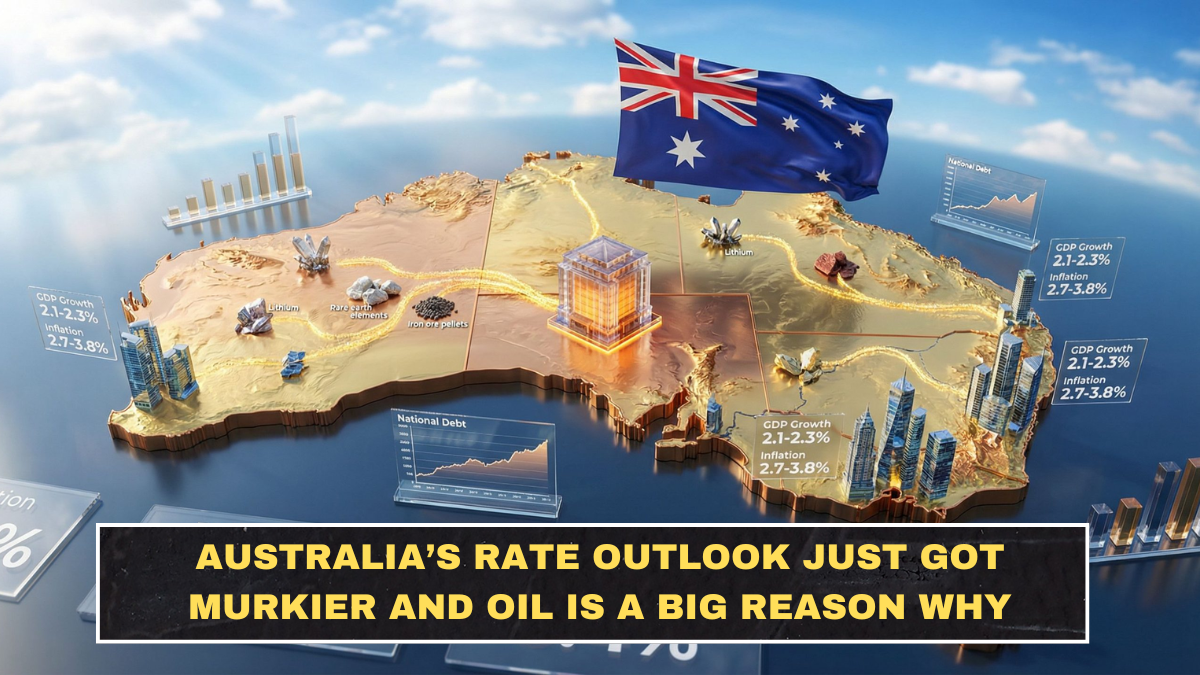
Australia’s rate outlook got messier in March because the Reserve Bank of Australia is no longer dealing with a normal inflation problem. Reuters reported that the RBA raised rates by 25 basis points to 4.1% at its March meeting, reversing two of the three cuts made in 2025. But the bigger point was the split and the uncertainty: the board was divided on timing, and officials made clear that the Iran war and higher oil prices had complicated the path ahead.
This is what people keep oversimplifying. A rate hike does not mean the central bank is suddenly confident. In this case, it means the bank saw enough inflation risk to act, but not enough clarity to map the next move cleanly. Reuters said five members supported the hike because Middle East conflict could worsen supply constraints and push inflation higher, while four preferred to wait because household consumption looked weak and labour-market confidence was not solid.
What the RBA actually did in March
The March decision was a 25 bp increase that took the cash rate to 4.1%. That alone matters, but the internal split matters more because it shows the board is not united around a straightforward tightening cycle. Reuters reported that all members agreed more tightening was likely to be needed eventually, but they disagreed on whether March was the right moment.
Here is the clean breakdown:
| Indicator | Verified detail | Why it matters |
|---|---|---|
| March RBA move | +25 bps | The bank tightened again after 2025 cuts. |
| Cash rate after hike | 4.1% | Australia’s policy rate moved higher again. |
| Board split | 5 for hike, 4 against | Shows unusually high uncertainty inside the RBA. |
| February inflation | 3.7% annual | Inflation was already above target before the oil shock deepened. |
| RBA inflation concern | Headline CPI could hit 5% by June quarter if oil stays near $100 | Oil is now a direct policy risk. |
Why oil is suddenly such a big problem
The energy shock is the reason the outlook turned murky. Reuters reported that RBA members warned if oil prices stay around $100 a barrel, headline inflation could rise to 5% by the June quarter, up from 3.7% in February. That is a major shift in a short time. It means an external supply shock is now threatening to undo some of the progress on inflation.
RBA Assistant Governor Christopher Kent also warned that a prolonged Middle East war could hit growth and “unmoor” inflation expectations. That phrase matters. Central banks can live with temporary price spikes more easily than with a situation where businesses and households start assuming higher inflation will stick. Once that happens, wage and price-setting behavior gets harder to control.
Why the path now looks so unclear
This is where the policy dilemma gets uglier. If the RBA tightens too much, it risks hurting already soft household demand. If it waits too long, it risks letting the oil shock bleed into inflation expectations. Reuters said the members opposing the March hike were already worried about weak consumption and questions around labour-market momentum. That means Australia now has the same problem hitting many central banks: inflation risk is up, but growth does not look strong enough to absorb aggressive tightening comfortably.
Markets are treating it that way too. Reuters reported that traders are pricing about a 60% chance of another rate hike in May and roughly 65 basis points of additional tightening this year. That is not certainty. It is the market admitting the path has become unstable.
What this means for Australia now
A few things matter more than the noise:
- The March hike was real, but it was not backed by broad confidence.
- Australia’s February inflation data was already above the RBA’s 2%–3% target band before the worst oil pressure arrived.
- The oil shock makes near-term inflation harder while also threatening growth.
- That is why the next move looks murkier than a simple “more hikes are coming” story. This last point is an inference from the board split, inflation risk, and weak-demand concerns.
Conclusion
Australia’s rate outlook just got murkier because the RBA is now trapped between two bad options: react harder to inflation or risk tightening into a weaker economy. The March hike to 4.1% showed concern, but the divided vote and explicit warnings about oil and inflation expectations showed uncertainty. The blunt takeaway is simple: oil did not just raise prices. It made the whole rate path harder to trust.
FAQs
What did the RBA do in March 2026?
The RBA raised the cash rate by 25 basis points to 4.1% in March 2026.
Why is oil such a big issue for Australia’s rates?
Because the RBA warned that if oil stays near $100 a barrel, headline inflation could reach 5% by the June quarter.
Was the RBA united behind the March hike?
No. Reuters reported a 5–4 split, showing significant disagreement over timing.
Could Australia raise rates again soon?
Markets are pricing about a 60% chance of another hike in May, but the outlook remains uncertain.