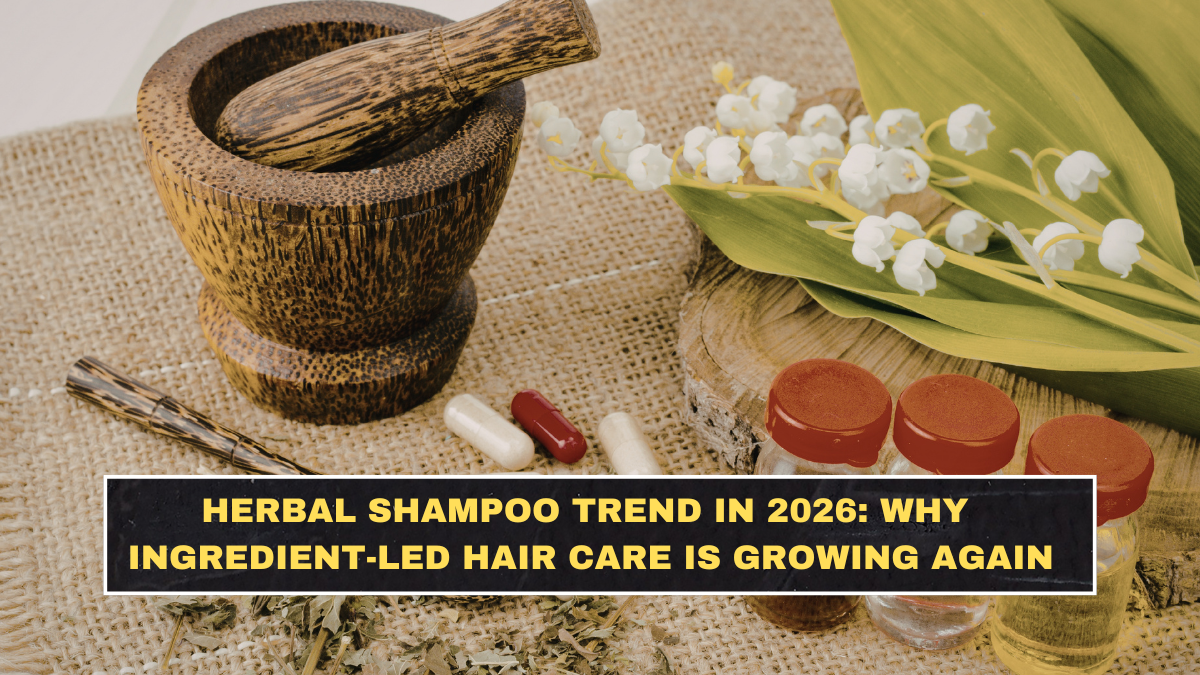
Herbal shampoo is growing again because hair care is being pulled into the same ingredient-first logic that already reshaped skincare. Recent 2026 trend coverage says consumers are reading labels more carefully, paying more attention to scalp health, and looking for plant-based formulas that feel gentler and more intentional. Vogue specifically listed herbal shampoos as one of the biggest ingredient-led hair trends of 2026.
The market data supports that this is more than a social-media mood. One 2026 market report values the herbal shampoo market at $6.6 billion in 2026 and projects it to reach $8.83 billion by 2030, while another places the 2026 market at $3.54 billion with growth to $6.74 billion by 2034. Those estimates do not match exactly, but both point in the same direction: the category is expanding, not fading.
What do buyers actually mean by “herbal shampoo”?
Most buyers are not using the term in a scientific way. They usually mean shampoo built around plant-derived ingredients, a gentler image, and fewer “harsh chemical” associations. Recent category summaries describe herbal shampoos as formulas centered on botanical extracts, essential oils, and more natural-feeling cleansing systems, often positioned around scalp comfort, dandruff control, and lighter cleansing.
That does not automatically mean the product is superior. “Herbal” is often as much a marketing language as a formulation truth. A shampoo can contain botanicals and still be mediocre. It can also be “clean” in branding and still be a bad fit for a person’s actual scalp needs. That is where buyers keep getting manipulated.
Why are plant-based shampoos appealing right now?
The biggest draw is trust. People increasingly associate plant-based or herbal labels with gentler cleansing, scalp friendliness, and lower daily irritation risk, whether that assumption is always fair or not. Trend coverage on oily-scalp shampoo selection also shows experts pointing people toward ingredient-led choices like rosemary, tea tree, lavender, and other lighter botanical-associated ingredients when balancing oil and scalp comfort.
There is also a lifestyle angle. “Herbal” fits clean beauty, wellness, and ingredient transparency in one shot. That makes it easier to sell than generic shampoo. It feels more thoughtful, even when the real benefit may simply be that the formula is milder or better matched to the scalp. This is the same pattern beauty uses everywhere: people do not only buy performance, they buy a story they trust.
Does herbal shampoo actually help the scalp?
Sometimes yes, but the answer depends on the formula and the scalp issue. A recent 2025 review on herbal shampoos says the category is widely associated with multi-functional benefits such as scalp cleansing, support for dandruff management, and overall scalp comfort, especially when compared with harsher cleansing systems. Another 2025 study on botanical-extract shampoo and tonic formulations reported anti-inflammatory and scalp-support potential in the tested plant blend.
But this is where you need to stop being naive. “Herbal” is not a free pass to effectiveness. A scalp with dandruff, seborrheic dermatitis, or heavy buildup may still need proven anti-dandruff or medicated ingredients, not just a pleasant bottle with rosemary leaves on the label. Botanical support can be useful, but it does not automatically replace clinically established treatment when the problem is real.
What are buyers looking for most in 2026?
| What buyers want | Why it matters |
|---|---|
| Scalp-friendly cleansing | People want less stripping and less irritation |
| Plant-based ingredient story | “Herbal” feels cleaner and more trustworthy |
| Anti-dandruff or anti-hair-fall positioning | Buyers want function, not just branding |
| Lightweight formulas | People want clean hair without heavy residue |
| Better transparency | Ingredient-led shopping is becoming normal |
This is the real buying logic. People are not simply asking for “natural shampoo.” They want a product that feels gentler, looks more transparent, and still targets practical concerns like oil, flakes, and scalp balance. The 2026 market report specifically mentions lightweight herbal shampoos as a growth area, while broader shampoo-market reporting says natural, sulfate-free, and ingredient-based formulas now account for a sizable share of global shampoo sales.
Is the herbal shampoo trend actually about scalp health, or just branding?
It is both. The scalp-health part is real because people are finally treating the scalp as skin instead of ignoring it until something goes wrong. The branding part is also real because “herbal” is an easy way to package trust, softness, and wellness into one word. Vogue’s 2026 hair trend coverage ties herbal shampoos directly to scalp health, while market reporting shows strong growth in scalp-focused and natural formulations.
The problem is that many buyers confuse “plant-based” with “automatically better.” That is lazy thinking. Good shampoo is about fit, not purity theater. A well-formulated conventional shampoo can outperform a weak herbal one. The category is useful when it delivers gentler cleansing and real scalp support. It becomes nonsense when the label matters more than the actual formulation.
Who is this trend really for?
Herbal shampoo makes the most sense for people who want gentler-feeling daily cleansing, have mild scalp sensitivity, or are actively trying to avoid harsher-feeling formulas. It also makes sense for buyers who already shop through a clean-beauty or ingredient-led lens and want their hair care to match that behavior. That is exactly the consumer shift current trend coverage and market reports are describing.
It makes less sense for people expecting miracles. If someone has significant dandruff, major hair loss, or serious scalp inflammation, herbal shampoo alone is unlikely to be the whole answer. That is where people waste months buying labels instead of solving problems.
Why is this category likely to keep growing?
Because it sits at the overlap of three durable consumer trends: clean beauty, scalp care, and ingredient transparency. The market forecasts point upward, and 2026 trend coverage makes clear that buyers are now treating hair care more like skincare, with more scrutiny on what goes into formulas and what those formulas are actually supposed to do.
The stronger part of the trend will survive because people genuinely do want better scalp experiences. The weaker part will keep being marketing fluff. That split is normal. The category will keep growing, but the smart buyers will be the ones who separate plant-based usefulness from plant-based decoration.
Conclusion
Herbal shampoo is trending in 2026 because consumers want ingredient-led hair care that feels gentler, more transparent, and more aligned with scalp health. The market is growing, trend coverage is consistent, and buyers are clearly shifting toward formulas that promise more than basic cleansing.
The honest takeaway is simple. Herbal shampoo can be a smart choice when the formula is good and the scalp need is real. But the category is also full of soft-focus marketing. “Herbal” is not a performance guarantee. It is just a signal. The product still has to earn its place on your shelf.
FAQs
Is herbal shampoo actually better for the scalp?
Sometimes, but not automatically. Some herbal shampoos may be gentler and more supportive for mild scalp concerns, but effectiveness still depends on the formula and the scalp issue.
Why is herbal shampoo growing again in 2026?
Because ingredient-led hair care, scalp health, and plant-based beauty are all growing together. That combination makes herbal shampoo an easy category for consumers to understand and try.
Are herbal shampoos mainly about clean beauty marketing?
Partly yes. The category clearly benefits from clean-beauty branding, but it also reflects real interest in gentler cleansing and scalp-friendly routines.
Who should be cautious with herbal shampoo claims?
Anyone with significant dandruff, major thinning, or persistent scalp symptoms should be cautious about relying on herbal branding alone. Those problems often need more targeted treatment than a trend label can provide.
Click here to know more