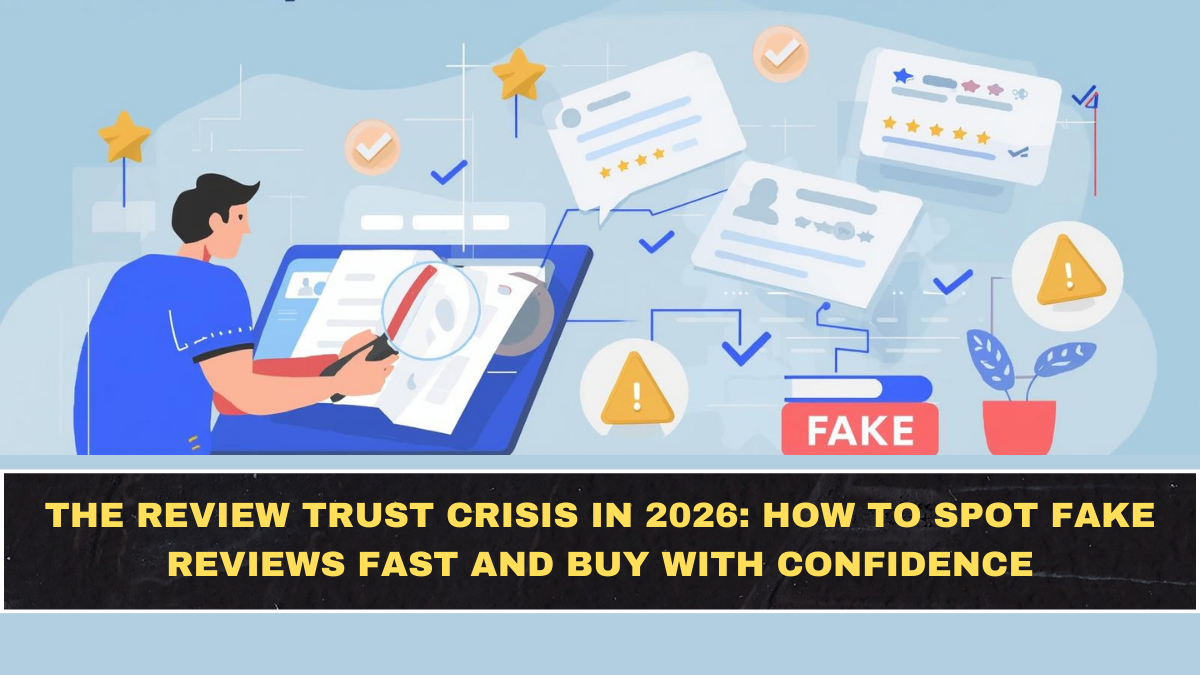
The review trust crisis in 2026 is not about a few fake comments slipping through moderation. It is a structural problem created by scale, incentives, and automation. Reviews once represented lived experiences shared by buyers. Today, they are often optimized artifacts designed to influence algorithms, assistants, and conversion funnels. As shopping decisions increasingly rely on summaries rather than manual reading, the cost of misinformation has risen sharply.
What makes this crisis harder is that fake reviews no longer look fake. Language models generate natural phrasing, timing patterns are randomized, and rating distributions are engineered to appear authentic. In 2026, trusting reviews blindly is no longer naïve; it is risky. Buyers need faster, more reliable ways to judge credibility without becoming investigators.
Why Reviews Lost Credibility in the First Place
The pressure to rank higher created incentives to manipulate feedback. Sellers learned that reviews influence visibility long before they influence buyers.
Automation lowered the cost of review generation. Quantity scaled faster than verification.
In 2026, the system rewards appearance of trust more than trust itself.
How Fake Reviews Look Different in 2026
Fake reviews are no longer short or repetitive. They are detailed, balanced, and emotionally plausible.
Many include mild criticism to appear authentic, which confuses traditional detection methods.
The danger is not obvious deception, but convincing imitation.
Why Star Ratings Matter Less Than Patterns
Average ratings hide distribution. A product with sudden bursts of five-star reviews raises more questions than one with steady mixed feedback.
Patterns across time, not totals, reveal manipulation.
In 2026, review timelines tell more truth than star averages.
The Rise of Review Summaries and AI Interpretation
Buyers rarely read reviews line by line anymore. AI summaries extract themes and sentiment automatically.
If input reviews are manipulated, summaries amplify distortion.
Trust now depends on signal quality before summarization happens.
What Real Reviews Still Have in Common
Real reviews mention context. They describe usage conditions, expectations, and trade-offs.
They often include inconsistencies, minor frustrations, or learning curves.
In 2026, specificity signals authenticity more than enthusiasm.
How to Spot Fake Reviews Quickly
Look for repetition in structure rather than wording. Similar story arcs across reviews indicate scripting.
Check timing clusters. Organic reviews spread out; fake ones arrive in waves.
Speed matters. Quick scanning beats deep reading.
Why Verified Bad Reviews Matter More Than Good Ones
Negative reviews that explain problems in detail are harder to fake consistently.
They reveal product limitations and seller responses.
In 2026, thoughtful criticism is often the most valuable signal.
Seller Behavior as a Trust Indicator
How sellers respond to criticism matters. Defensive or generic replies reduce trust.
Specific, solution-oriented responses suggest real engagement.
Trust extends beyond reviews into behavior.
The New Role of Cross-Platform Signals
Buyers cross-check quickly. Consistency across platforms strengthens credibility.
Discrepancies raise doubt even if reviews look polished.
In 2026, trust is comparative, not isolated.
Why Refund and Support Experiences Matter More Now
Policies reveal confidence. Clear refunds and responsive support reduce risk perception.
Fake reviews cannot hide poor post-purchase experiences for long.
Buyers judge systems, not just products.
How AI Can Help Buyers, Not Just Sellers
AI tools can flag anomalies, summarize risks, and highlight recurring complaints.
Used wisely, AI restores balance rather than distorting it.
In 2026, buyers must use AI defensively, not passively.
What Platforms Are Doing About the Crisis
Platforms increase detection but struggle with scale. Enforcement lags manipulation.
Trust cannot be fully automated without human judgment.
The crisis persists because incentives remain misaligned.
Conclusion: Trust Requires Interpretation, Not Blind Acceptance
The review trust crisis in 2026 reflects how systems evolved faster than safeguards. Reviews still matter, but only when interpreted critically. Buyers who understand patterns, context, and seller behavior make better decisions without overthinking.
Trust is no longer given; it is inferred. In a landscape filled with polished noise, confidence comes from recognizing signals that automation struggles to fake. Buying well now depends less on believing reviews and more on understanding how they are shaped.
FAQs
Are most reviews fake in 2026?
No, but manipulation is common enough that blind trust is risky.
Do verified purchase tags guarantee authenticity?
They help, but they are not foolproof on their own.
Should buyers ignore five-star reviews?
Not ignore, but contextualize them alongside patterns and timing.
Are AI review summaries reliable?
Only if underlying reviews are credible and diverse.
What is the fastest way to assess trust?
Scan timing patterns, seller responses, and detailed negative reviews.
Can platforms fully solve fake reviews?
Not yet, because incentives to manipulate still exist.