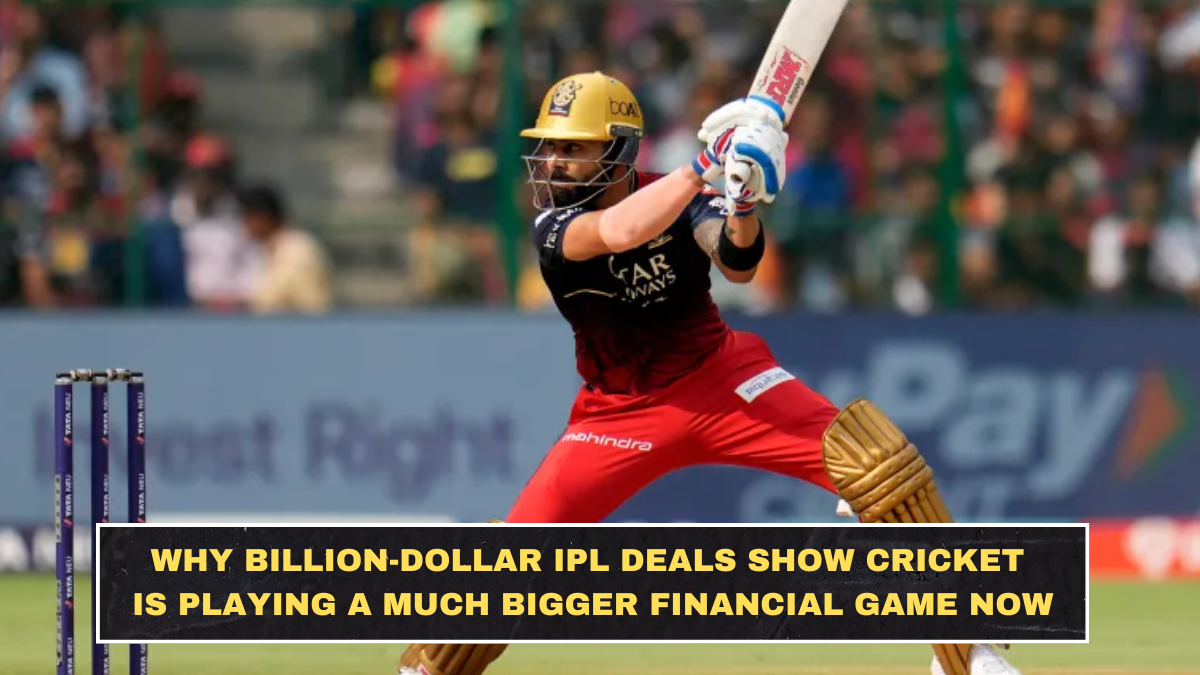
The IPL investment boom is real because the valuations are no longer just “strong for cricket.” They are now firmly in global sports-franchise territory. Reuters reported that Royal Challengers Bengaluru was sold for $1.78 billion in March 2026, while Rajasthan Royals changed hands at about $1.6 billion soon after. Reuters also reported earlier that the IPL’s overall business value had climbed to $18.5 billion last year, citing Houlihan Lokey. Those are not hobby-asset numbers. They are proof that elite investors now see IPL teams as serious long-term sports businesses.
Why investors are suddenly paying this much
The basic answer is revenue confidence. Reuters reported that the IPL’s media-rights value more than doubled in 2022 to over $6 billion, giving teams stronger visibility on future cash flows. RCB’s own revenue reportedly rose to $56 million in 2024–25, up 73% over three years. Investors are not paying these prices because they love cricket sentimentally. They are paying because the league has scarce assets, massive viewership, sponsorship growth, and a revenue-sharing model that looks more mature than it did a few years ago.
Why the RCB deal mattered so much
The RCB sale changed the tone of the whole market because it gave everyone a fresh benchmark. Reuters reported that the buyer group included the Aditya Birla Group, Times of India Group, Bolt Ventures, and Blackstone, ending a competitive bidding process. RCB was especially valuable because it is one of the original IPL teams, had just won its first men’s title in 2025, and also includes the women’s franchise. In other words, this was not just a team sale. It was a premium-brand sports-property deal.
Why foreign money is getting more interested
This is not just an India story anymore. AP reported that the two billion-dollar IPL deals marked a major influx of American investment into Indian cricket, with U.S.-linked buyers involved in both RCB and Rajasthan Royals. Reuters had already reported in February that global private-equity firms and sports investors were circling IPL assets because of rising revenues and global audience potential. That matters because foreign capital usually enters only when an asset class starts looking scalable, monetizable, and internationally credible.
What makes IPL teams so attractive
A few factors explain the current valuation jump:
- Scarcity: there are only a limited number of IPL franchises.
- Media money: the rights cycle has become far richer than it was before.
- Brand power: teams like RCB carry star value, city identity, and strong fan loyalty.
- Expansion logic: cricket’s push into markets like the U.S. and the 2028 Olympics story add growth upside.
That is why these valuations are rising faster than many outsiders expected.
The numbers that matter most
| Measure | Reported figure | Why it matters |
|---|---|---|
| RCB sale value | $1.78 billion | New benchmark for premium IPL franchises |
| Rajasthan Royals sale value | $1.6 billion | Confirms RCB was not a one-off outlier |
| IPL league value | $18.5 billion | Shows whole league is being repriced upward |
| IPL media rights cycle | $6+ billion | Strengthens long-term revenue confidence |
| RCB revenue | $56 million | Helps justify higher franchise valuations |
These numbers show the real shift: IPL franchises are no longer being priced like regional cricket teams. They are being priced like strategic sports assets with global upside.
Why this could trigger more stake sales
The logic is obvious. Once two teams sell at billion-dollar valuations, other owners start reconsidering what their franchises are worth. Economic Times reported that the recent re-rating is already encouraging more IPL owners to think about stake sales or dilution. That does not mean every team will sell tomorrow, but it does mean the market has been reset upward.
What this says about cricket now
The blunt truth is that cricket is becoming a more financialized global business. Reuters described the IPL as the world’s richest cricket league, and these latest transactions reinforce that status. Investors are not buying nostalgia. They are buying media rights, fan loyalty, urban brand value, and future monetization. That is the same logic that drives pricing in bigger global sports leagues. This last point is an inference based on the valuation data and investor mix reported above.
Conclusion
Billion-dollar IPL deals show cricket is playing a much bigger financial game because the market now treats top franchises as premium sports properties, not just successful teams. RCB’s $1.78 billion sale and Rajasthan Royals’ $1.6 billion deal are strong evidence that the IPL has moved into a new valuation phase. That is good news for current owners, exciting for investors, and a warning to anyone still pretending cricket is small money compared with the rest of global sports.
FAQs
Why are IPL team valuations rising so quickly?
Because investors see stronger media-rights income, scarce franchise supply, big fan bases, and better long-term revenue visibility.
How much was RCB sold for?
Reuters reported that Royal Challengers Bengaluru was sold for $1.78 billion in March 2026.
Was Rajasthan Royals also sold recently?
Yes. Reuters and AP reported a separate deal valuing Rajasthan Royals at about $1.6 billion.
Does this mean more IPL teams could be sold?
Possibly. Recent reporting suggests these deals have encouraged other owners to consider stake sales or dilution as valuations rise.