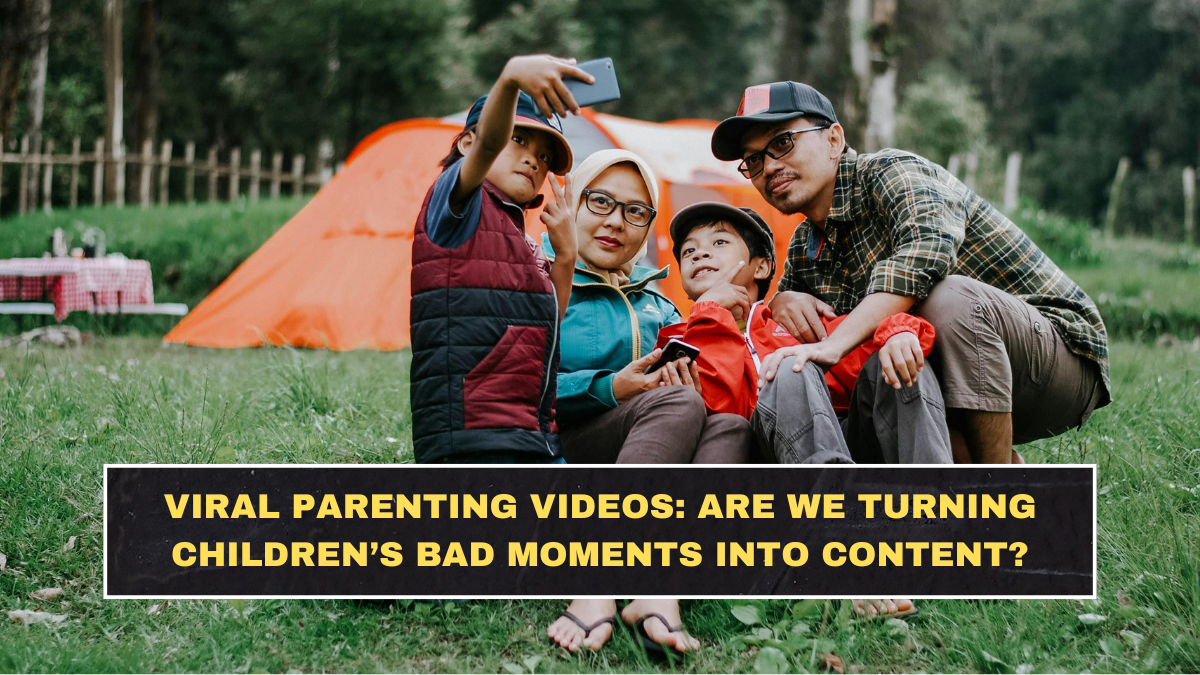
Viral parenting videos are becoming a bigger debate because more clips of children’s emotional outbursts, rude behaviour, unsafe actions and family conflicts are being posted online for public reaction. India Today recently listed several viral clips where children’s behaviour led to criticism of parenting choices and wider debate about supervision, boundaries and social media culture.
The uncomfortable question is not only whether the child behaved badly. The bigger question is why adults are recording and uploading these moments in the first place. A child’s worst emotional moment should not automatically become public entertainment. When parents turn embarrassment, anger or discipline into content, they may be solving their own attention needs while creating a digital record the child never agreed to.
What Kind Of Parenting Videos Usually Go Viral?
The clips that go viral usually show children doing something shocking, emotional or socially uncomfortable. It may be a child shouting at a parent, behaving badly in public, crying during a conflict, refusing discipline, acting entitled, or being filmed during a vulnerable moment. These videos travel fast because they trigger strong reactions: anger, judgment, humour, sympathy and moral debate.
A recent Times of India parenting report described a disturbing viral video of a young boy reacting aggressively toward his mother after being denied something he wanted. The discussion online moved beyond the clip itself and raised questions about emotional development, boundaries and parenting style.
| Viral Video Type | Why It Spreads | Main Risk |
|---|---|---|
| Child shouting at parent | Triggers judgment and debate | Public shame for the child |
| Public tantrum clip | Feels dramatic and relatable | Loss of privacy |
| “Funny” misbehaviour | Easy to meme or remix | Behaviour gets rewarded |
| Discipline moment | Sparks parenting arguments | Child becomes spectacle |
| Emotional breakdown | Creates sympathy or outrage | Vulnerable moment becomes permanent |
| Unsafe behaviour | Gains shock value | Normalises risky content |
Why Are Parents Posting These Clips?
Parents post these clips for different reasons. Some want advice, some want sympathy, some think the moment is funny, and some are chasing engagement without admitting it. The harsh truth is that social media rewards emotional content, and children’s reactions often get more attention than thoughtful parenting discussions.
This is where many adults need to be honest. If a parent posts a child’s meltdown with dramatic music, captions and hashtags, that is not “raising awareness.” That is content packaging. A child cannot fully understand how far the video may spread, how strangers may judge them, or how that clip may follow them later.
What Is Sharenting And Why Does It Matter?
Sharenting means parents sharing photos, videos or personal details about their children online. UNICEF explains that many parents share children’s content to include family and friends in joyful moments, but it also warns that parents should understand privacy risks, respect children’s views and teach consent.
A 2024 review on sharenting noted that this growing practice can expose children to risks including identity theft, sexual exploitation and future emotional distress. That is not a small warning. It means a cute or dramatic post today may become a privacy problem tomorrow, especially when a child’s face, school, home, routine or emotional behaviour is visible.
What Are The Biggest Risks For Children?
The biggest risk is that children lose control over their own digital identity before they are old enough to understand it. Legal scholar Stacey Steinberg’s widely cited work explains that parents can shape a child’s online identity long before the child opens their first email account, and those disclosures can follow them into adulthood.
There are also practical risks. Australia’s eSafety Commissioner warns that photos or videos of children can spread more widely than intended, be copied from private chats, reposted publicly, harvested for unintended uses, used to train AI tools or even manipulated into deepfakes. This is why casual posting is no longer casual.
| Risk Area | What Can Happen | Why Parents Should Care |
|---|---|---|
| Privacy loss | Child’s face and routine spread online | Child cannot control exposure |
| Public embarrassment | Friends may find old clips later | Emotional harm can last |
| Identity misuse | Personal details can be collected | Safety risk increases |
| AI misuse | Images may be harvested or altered | Deepfake risk is real |
| Consent issue | Child never agreed to posting | Trust between parent and child weakens |
| Behaviour reward | Bad moments get attention | Child may repeat performative behaviour |
Are We Rewarding Bad Behaviour With Attention?
Yes, sometimes we are. When a child’s rude or dramatic behaviour gets millions of views, laughter, reactions and reposts, the internet can accidentally reward the exact behaviour adults claim to criticise. Children may not fully understand the algorithm, but they understand attention.
Parents also need to check their own behaviour. If the phone comes out before the parenting response, priorities are broken. A child’s emotional breakdown needs calm correction, not a camera angle. The blunt truth is this: if your first instinct during your child’s vulnerable moment is to record, you may be part of the problem.
How Does Social Media Change Modern Parenting?
Social media turns private parenting into public performance. Earlier, a child’s tantrum or mistake stayed within the family, school or neighbourhood. Now, one clip can reach thousands or millions of strangers who do not know the child, the family situation or the full context.
Governments are also becoming more concerned about children’s digital safety. Reuters reported that countries from Australia to Europe are moving to restrict children’s social media access because of concerns around mental health and safety. Australia introduced a ban for users under 16 from December 2025, while several European nations are considering or implementing age restrictions.
What Should Parents Do Before Posting A Child’s Video?
Parents should pause and ask one hard question: would I want this video of myself online forever? If the answer is no, the child deserves the same protection. Do not post videos that show crying, punishment, shame, aggression, medical issues, school details, bathing, uniforms, locations or personal routines.
A safer approach is to share parenting lessons without exposing the child. Blur faces, remove names, avoid school or location clues, and describe the issue generally instead of uploading the child’s most embarrassing moment. If the content only works because the child is vulnerable, it probably should not be posted.
What Is The Better Way To Discuss Parenting Problems Online?
The better way is to discuss the behaviour without turning the child into the content. Parents can ask for advice by writing the situation anonymously, speaking to a counsellor, discussing with teachers, joining closed support groups or learning child development basics from credible sources. Public virality should not be the first parenting tool.
This also applies to viewers. Stop sharing clips only to judge parents or mock children. Every share increases the child’s exposure. If people genuinely care about better parenting, they should stop feeding the algorithm that profits from children’s worst moments.
Conclusion?
Viral parenting videos are not harmless just because they look funny or relatable. A child’s bad moment can become permanent online, copied by strangers, judged without context and rediscovered years later. The real issue is not only child behaviour; it is adult behaviour around the camera, consent and attention.
Parents need to stop confusing posting with parenting. Children need boundaries, privacy and guidance, not viral exposure. If a clip embarrasses a child, exposes their identity or turns discipline into entertainment, it should not be online. The internet may forget the trend, but the child may not forget the shame.
FAQs
What Are Viral Parenting Videos?
Viral parenting videos are clips involving children, parents or family situations that spread widely on social media. They often show tantrums, emotional moments, discipline, funny behaviour or public conflicts.
What Is Sharenting?
Sharenting means parents sharing photos, videos or personal information about their children online. It can include everyday family posts, school updates, funny moments or emotional clips involving children.
Why Can Posting Children Online Be Risky?
Posting children online can expose their identity, location, emotions and private life to strangers. Photos or videos can be copied, reposted, misused, harvested by AI systems or used to embarrass the child later.
Should Parents Post Funny Videos Of Their Children?
Parents should be careful even with funny videos. If the video embarrasses the child, shows private information, reveals location details or could hurt them later, it is better not to post it publicly.
How Can Parents Share Safely?
Parents can share safely by avoiding faces, names, school uniforms, location clues and vulnerable moments. They should also ask older children for permission and avoid posting anything the child may feel ashamed of later.