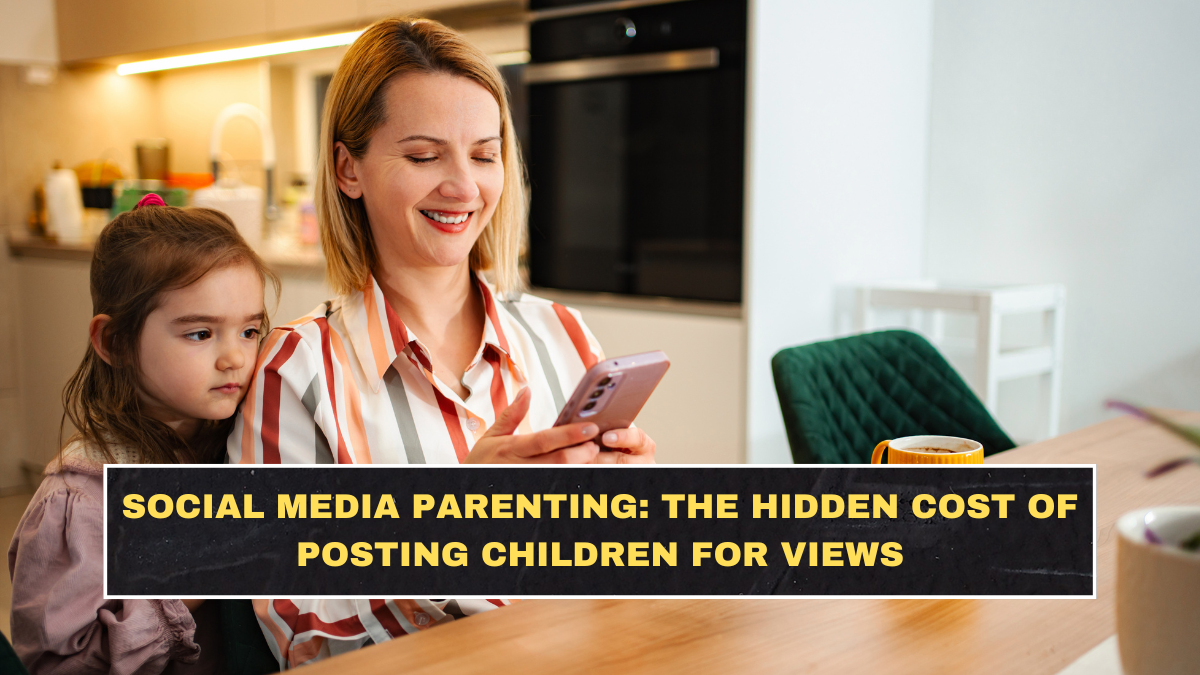
Social media parenting is becoming a serious issue because more parents are turning everyday childhood moments into public content. Photos, reels, school updates, tantrums, funny mistakes, birthday clips and family arguments are now being posted for likes, comments and shares. The problem is that children often do not understand what is being shared about them or how long it may stay online.
UNICEF describes this behaviour as “sharenting,” where parents or caregivers share content about their children online. It explains that many parents do this to include family and friends in happy moments, but it also warns that parents must understand privacy risks, respect children’s views and teach consent. That is the part many parents conveniently ignore.
What Is The Hidden Cost Of Posting Children Online?
The hidden cost is that a child’s digital identity begins before the child is old enough to control it. A baby photo, school uniform picture, emotional meltdown clip or “funny” embarrassing reel can become part of the child’s online footprint. Once posted, that content can be saved, copied, reshared or misused by people the family never intended to reach.
UNICEF’s online privacy guidance warns that every click, share, comment and post creates a digital record that can be difficult or impossible to erase. It also notes that children face risks to privacy, identity, reputation and safety in today’s digital world. So, parents are not just sharing memories; they are building a public record for someone else.
| Posting Habit | Hidden Risk | Smarter Alternative |
|---|---|---|
| Posting school uniform photos | Reveals school identity | Crop or avoid uniform details |
| Sharing location tags | Exposes routine and places | Turn off location tagging |
| Posting tantrum videos | Public embarrassment | Discuss behaviour privately |
| Using child for brand reels | Commercial exploitation risk | Keep child out of sponsored content |
| Sharing bath or illness clips | Privacy and safety concern | Never post intimate moments |
| Posting full names | Identity misuse risk | Use initials or no names |
| Public birthday details | Personal data exposure | Share privately with close family |
Why Is Consent So Important In Parenting Content?
Consent matters because children are not props. Young children cannot understand what social media exposure means, and older children may feel pressured to agree because the parent controls the camera, account and family environment. A child smiling in a video does not automatically mean they understand public distribution.
UNICEF advises parents to respect children’s views when sharing online and to use sharenting as a way to teach consent. This is not overthinking. It is basic respect. If adults expect control over their own embarrassing photos, children deserve the same protection.
How Can Posting Children Affect Their Future?
Posting children online can affect their future reputation, confidence and personal boundaries. A clip that looks cute at age four may feel humiliating at age fourteen. Classmates, strangers or future contacts may find old content and use it to tease, judge or embarrass the child.
This is especially serious when parents post crying, punishment, anger, bad behaviour or private family problems. The internet does not preserve context. It preserves the clip. A child may later have to live with a digital version of themselves created by a parent chasing engagement.
Why Are Family Influencer Accounts More Complicated?
Family influencer accounts are more complicated because the child is no longer only part of family memories; the child becomes part of a content business. When views, brand deals and sponsorships depend on children appearing online, the line between parenting and performance becomes blurry.
The brutal truth is that some parents are not “sharing family life.” They are monetising childhood. That does not automatically make every family creator bad, but it does create ethical questions. Is the child being paid? Can the child refuse filming? Are private moments protected? Who owns the money made from the child’s face and personality?
| Family Influencer Question | Why It Matters |
|---|---|
| Can the child say no to filming? | Consent must be real, not forced |
| Is money saved for the child? | Child is helping generate income |
| Are private moments off-limits? | Some content should never be public |
| Is school/location hidden? | Safety risk increases with visibility |
| Are emotional moments filmed? | Vulnerability should not become content |
| Are brand deals child-focused? | Commercial pressure may shape childhood |
What Are The Safety Risks Parents Ignore?
Parents often ignore how easily images can move beyond their control. UNICEF Australia warns that once a child’s photo is online, parents lose control over who sees it and how it is used. It also says all content posted about a child forms part of their digital footprint, which can have long-lasting effects.
The risk is even worse now because of AI tools. Photos and videos can be scraped, edited, impersonated or manipulated. Australia’s eSafety Commissioner has warned about deepfakes and child safety risks as online platforms face growing pressure to protect children better. This is not paranoia anymore; it is the new internet reality.
Are Parents Teaching Children The Wrong Lesson?
Yes, many parents are teaching the wrong lesson without realising it. When adults post everything online, children learn that privacy is optional and attention is the reward. They may start performing for the camera instead of experiencing childhood naturally.
This creates a deeper problem. Children may begin measuring moments by likes, comments and reactions. A family picnic becomes content. A birthday becomes content. A mistake becomes content. That is not healthy parenting; that is turning home life into a public stage.
What Should Parents Never Post About Their Children?
Parents should never post content that exposes a child’s body, medical condition, school identity, location, emotional breakdown, punishment, private conversation or embarrassing behaviour. They should also avoid posting documents, certificates, uniforms, addresses, travel routines and anything that reveals daily patterns.
The simple rule is this: if the child may feel ashamed of it later, do not post it. If strangers could misuse it, do not post it. If the post needs the child’s vulnerability to get attention, do not post it. Parents do not need a legal degree to understand this. They need common sense.
How Can Parents Share Safely Without Overexposing Children?
Parents can share safely by limiting the audience, avoiding names and locations, using private family groups, asking older children before posting, avoiding embarrassing content and turning off public comments on child-related posts. Sharing a family moment is not the issue. Careless public exposure is the issue.
UNICEF recommends that children should be encouraged to stop and think before posting because online content can be difficult to remove and may reach people beyond the intended audience. Parents should follow the same rule before posting about children. Adults cannot teach digital safety while behaving recklessly online themselves.
| Safer Sharing Rule | What To Do |
|---|---|
| Ask before posting | Get older child’s permission |
| Reduce visibility | Use private settings or family groups |
| Hide identifiers | Avoid school names, uniforms and locations |
| Avoid vulnerable moments | Do not post crying, punishment or illness |
| Review old posts | Delete anything too personal |
| Think long-term | Ask if the child may dislike it later |
| Skip monetisation pressure | Do not make the child the product |
Why Should Indian Parents Take This More Seriously?
Indian parents should take this seriously because smartphone use, reels culture, family vlogging and children’s content are growing fast. Many parents still think online sharing is harmless because “everyone is doing it.” That is weak reasoning. Popular behaviour is not automatically safe behaviour.
India also has a strong family-and-community culture where children’s milestones are shared widely. That makes privacy even more important, not less. A child’s school, neighbourhood, face, family structure and routine can become visible to hundreds or thousands of people without the child understanding any of it.
Conclusion?
Social media parenting looks harmless when the post gets likes, but the real cost may appear years later. Children can lose privacy, control over their image and the right to decide how much of their childhood becomes public. Parents may forget a reel after two weeks, but the internet may not.
The hard truth is simple: your child is not your content strategy. Share carefully, protect identity, avoid vulnerable moments and respect consent. A parent’s job is to protect the child’s future, not trade it for short-term engagement.
FAQs
What Is Social Media Parenting?
Social media parenting means using social platforms to share parenting experiences, family life and children’s moments online. It becomes risky when parents expose children’s identity, emotions, location or private life publicly.
What Is Sharenting?
Sharenting means parents or caregivers sharing photos, videos or personal information about children online. It can include family photos, school updates, funny reels, emotional clips or daily routine posts.
Is It Wrong To Post Children’s Photos Online?
Posting children’s photos is not always wrong, but careless posting is risky. Parents should avoid public exposure, location details, school information, embarrassing moments and anything the child may dislike later.
Why Is Child Consent Important?
Child consent matters because children deserve control over their own identity. Young children cannot understand the long-term effect of social media, and older children should be asked before their image or private moments are shared.
How Can Parents Protect Children’s Privacy Online?
Parents can protect privacy by using private settings, avoiding full names and locations, not posting school details, asking permission, avoiding vulnerable moments and reviewing old posts regularly.