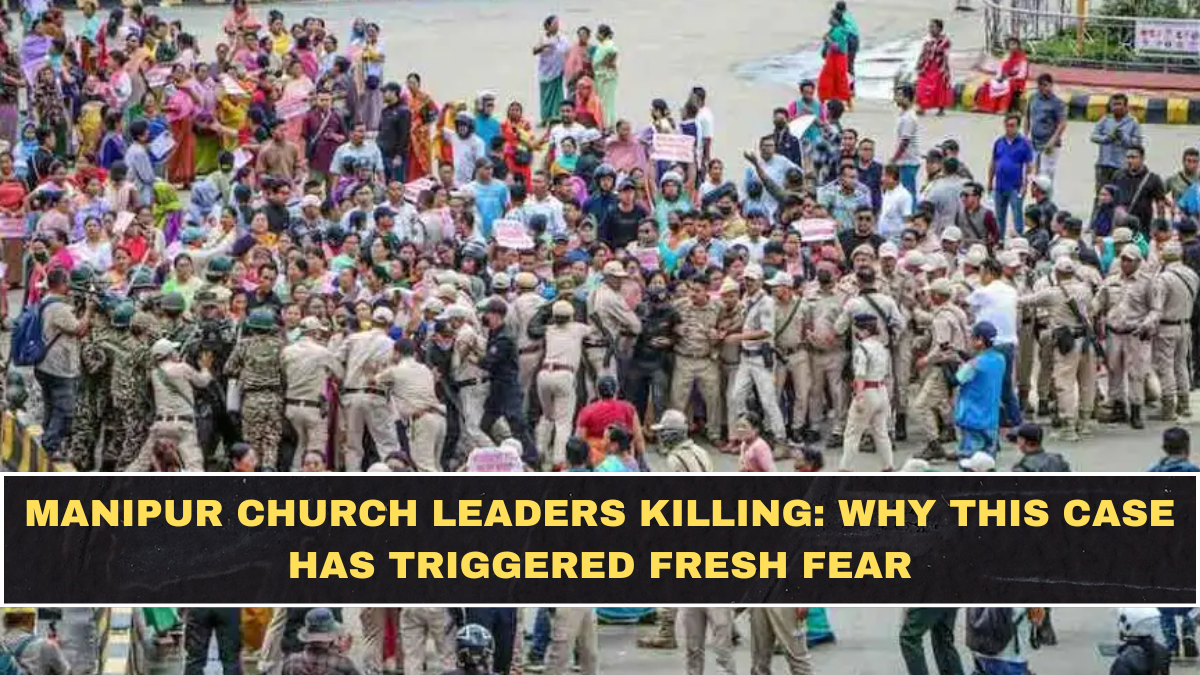
The killing of three church leaders in Manipur’s Kangpokpi district has triggered fresh fear because it happened in a state already exhausted by ethnic violence, displacement and mistrust. Reports said unidentified armed assailants ambushed two vehicles carrying members of the Thadou Baptist Association, killing three church leaders and injuring four others. The victims were reportedly travelling when their vehicles came under attack, turning a religious and community-linked journey into another flashpoint.
This case feels especially sensitive because church leaders often play a community role in conflict zones. They are not just religious figures; they can also act as voices of mediation, relief and local trust. When such figures are killed, fear spreads beyond one family or one village. It sends a message that even peace-linked community workers may not be safe.
What Happened In Kangpokpi?
The ambush reportedly took place on Wednesday morning in Kangpokpi district when the church leaders were travelling from Churachandpur to Kangpokpi. Indian Express identified the deceased as Reverend Vumthang Sitlhou, Reverend Kaigoulen Lhouvum and Pastor Paogoulen Sitlhou. Several others were injured, and the attack quickly triggered shutdowns, anger and heightened security concerns in the region.
Here is the quick breakdown:
| Detail | Reported Information | Why It Matters |
|---|---|---|
| Location | Kangpokpi district, Manipur | Conflict-sensitive zone |
| Victims | Three church leaders killed | Community shock |
| Injured | Four others injured | Attack was severe |
| Alleged attackers | Unidentified armed assailants | Investigation still needed |
| Aftermath | Shutdowns and hostage tensions | Wider escalation risk |
The biggest mistake now would be to rush into blame without verified evidence. Several groups have made allegations, but responsible reporting must separate confirmed facts from accusations. In a place like Manipur, one careless claim can inflame an already dangerous situation.
Why Did Fear Spread So Fast?
Fear spread quickly because the killing did not remain isolated. A day after the ambush, tensions between Kuki and Naga groups reportedly spiralled in Kangpokpi and Senapati districts. Indian Express reported that 18 Liangmai Naga villagers were being held by Kuki groups in Kangpokpi, while around 29 Kuki villagers were being held by Naga groups, mostly in Senapati district.
This is where the situation becomes extremely dangerous. Once civilians are held as leverage, the crisis moves beyond anger and grief. Hostage-taking can trigger retaliation, road blockades, rumours and panic. The immediate priority should be safe release, not political speeches or community blame.
Why Is The Kuki-Naga Angle Sensitive?
The Kuki-Naga angle is sensitive because Manipur’s hills have complex histories involving land, identity, armed groups, church networks, political control and past conflicts. The Kuki Students’ Organisation blamed a Naga armed group for the attack, but reports also described the attackers as unidentified armed individuals. That distinction matters because allegations are not the same as proven responsibility.
The blunt truth is that media and political leaders must be careful here. If unverified blame becomes public anger, ordinary villagers may pay the price. Manipur does not need more revenge narratives. It needs verified investigation, controlled communication and community-level restraint.
Why Is Manipur Still So Fragile?
Manipur’s fragility did not appear overnight. The state has been dealing with deep ethnic violence since 2023, with Reuters earlier reporting that the unrest had killed at least 250 people and displaced around 60,000. Even when violence slows down, distrust remains alive through displacement, armed presence, road blockades and competing community narratives.
That is why one targeted ambush can shake the entire peace process. People are not reacting only to this incident; they are reacting with the memory of past violence. In such conditions, rumours spread faster than official clarification, and communities often prepare for retaliation before facts are fully established.
What Must Authorities Do Now?
Authorities need to move faster than rumours. The first job is to secure all civilians reportedly held by different groups and prevent retaliatory violence. The second job is to identify the attackers through credible investigation, not selective blame. If the killers are not arrested quickly, mistrust will deepen and communities will assume the system is either weak or biased.
Immediate steps should include:
- Safe release of all reportedly held villagers
- Transparent investigation into the ambush
- Protection for injured survivors and witnesses
- Clear official updates to stop rumours
- Community talks involving trusted local leaders
- Security on vulnerable routes and villages
The uncomfortable reality is that peace cannot survive if civilians keep becoming bargaining tools. Every delay gives space to fear, anger and armed actors.
Conclusion?
The killing of three church leaders in Manipur is not just a crime story. It is a warning that the state’s fragile peace can still break quickly when community figures are targeted and civilians are pulled into retaliation. The deaths have deepened fear because they touch religion, identity, security and unresolved ethnic tensions at the same time.
The blunt takeaway is simple: Manipur needs facts, arrests and de-escalation now. If this case becomes another cycle of accusation, hostage-taking and revenge, ordinary people will again suffer the most. Justice for the slain church leaders must not become an excuse for more civilian pain.
FAQs
Who Were The Church Leaders Killed In Manipur?
Reports identified the deceased as Reverend Vumthang Sitlhou, Reverend Kaigoulen Lhouvum and Pastor Paogoulen Sitlhou. They were associated with the Thadou Baptist Association and were reportedly travelling when their vehicles were ambushed in Kangpokpi district.
Where Did The Ambush Happen?
The ambush happened in Manipur’s Kangpokpi district. Reports said the church leaders were travelling from Churachandpur to Kangpokpi when unidentified armed assailants attacked their vehicles.
Why Has This Case Increased Tension?
The case increased tension because the victims were church leaders and the attack came in a region already struggling with ethnic mistrust. Reports of villagers being held by groups from both sides made the situation even more dangerous.
What Should Happen Next?
The immediate priority should be the safe release of all civilians reportedly held, followed by a transparent investigation and arrest of those responsible. Authorities must also stop rumours and prevent revenge attacks from spreading the crisis further.