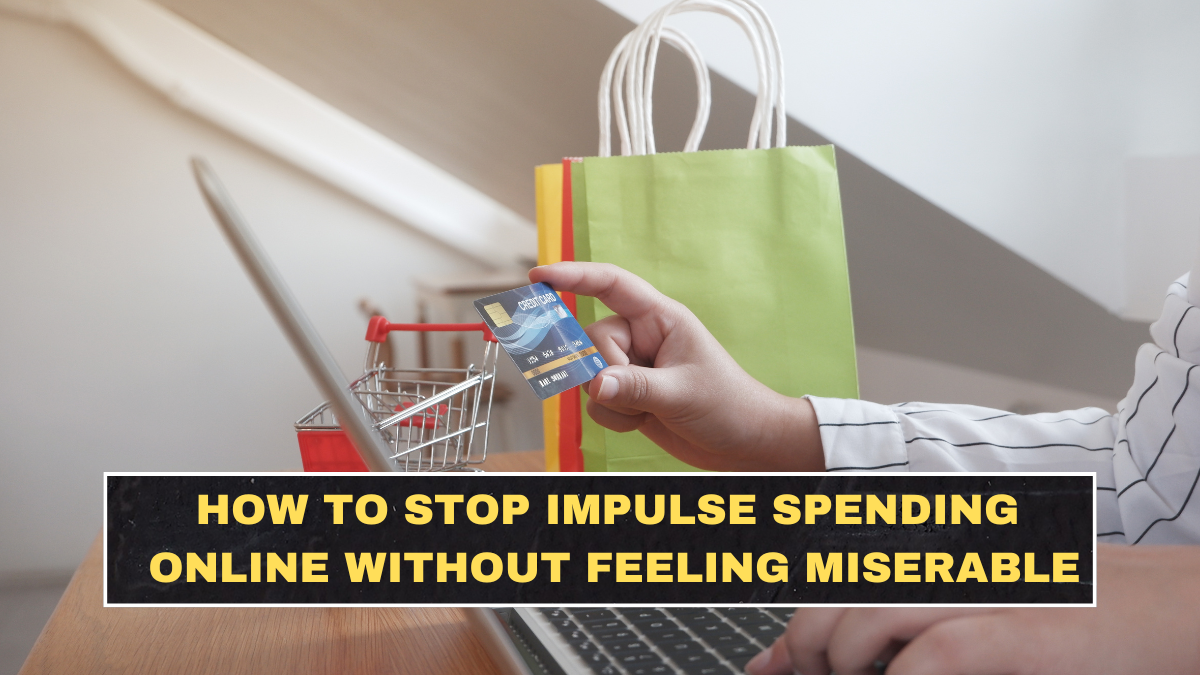
Impulse spending online is not happening because you are weak. It is happening because the system is built to make buying feel frictionless. One-click checkout, social commerce, limited-time offers, saved cards, push notifications, and buy now, pay later all reduce the pause between desire and payment. Bankrate reported that 16% of respondents in its 2025 Money and Mental Health Survey had bought an unplanned, nonessential item in just the last month, and 48% of social media users in its survey said they had impulsively bought a product they saw on social media. That is not a small behavior problem. It is a normal consumer trap now.
Why is online impulse spending so easy now?
Online shopping removes almost every natural speed bump. You do not need to go anywhere, carry cash, or even re-enter payment details. On top of that, social platforms and retail sites are built to keep products in front of you constantly. CFPB research on the convergence of payments and commerce describes how digital commerce is creating new consumer experiences that blend shopping and payment more tightly together, which is exactly why spending can start feeling automatic instead of deliberate. When the path from “that looks nice” to “order placed” takes seconds, self-control alone is a weak defense.
What habits trigger the most impulse purchases?
The biggest triggers are boredom, stress, social comparison, and false urgency. Social media is a major one because it mixes entertainment with shopping cues. Bankrate’s survey finding that nearly half of social media users had bought impulsively after seeing a product there shows how often scrolling turns into spending. Another trigger is flexible payment framing. CFPB says buy now, pay later is designed to split purchases into smaller installments, often with the first payment due at checkout and the rest over a short period. That can make a purchase feel smaller than it really is, even when total spending still adds up fast.
| Trigger | Why it leads to impulse spending | Better replacement |
|---|---|---|
| Social media scrolling | Creates comparison and product temptation | Unfollow shopping-heavy accounts |
| Saved cards and one-click checkout | Removes friction before buying | Delete saved payment methods |
| BNPL at checkout | Makes bigger purchases feel smaller | Force full-price view before deciding |
| Stress or boredom browsing | Uses shopping as mood regulation | Replace with a non-buying reset habit |
| “Limited-time” sales pressure | Pushes rushed decisions | Use a 24-hour waiting rule |
What is the fastest way to reduce impulse spending?
Add friction back into the process. That sounds basic because it is basic, but it works. Delete saved card details, log out of shopping apps, unsubscribe from marketing emails, and remove shopping notifications from your phone. These steps matter because they create a pause between urge and action. If buying something now requires re-entering card details, thinking about the total cost, and waiting a few extra minutes, a surprising number of weak purchase urges die on their own. CFPB’s BNPL research and broader consumer finance work both support the underlying point: the easier payment becomes, the easier overspending becomes too.
Should you stop using buy now, pay later for nonessential purchases?
For most people, yes. At least until spending is under control. Bankrate’s 2025 BNPL survey found that about half of BNPL users had encountered at least one issue, including missing a payment or overspending. That is the part people like to ignore. BNPL is marketed as flexible, but flexibility can become permission. If the item is not essential, spreading the cost over weeks often just helps you justify something you did not need urgently in the first place.
Which money rule actually helps without making life miserable?
A waiting rule works better than a total ban for most people. For example, wait 24 hours before buying anything under a set amount and 72 hours before buying anything bigger. This works because it separates emotional urgency from actual need. You can also use a “wishlist first” rule, where every nonessential item goes to a list instead of the cart. After a few days, many items lose their appeal. The goal is not to punish yourself. The goal is to stop letting every short-term feeling become a financial decision.
How can you make online shopping less emotional?
You need replacement habits, not just restrictions. If stress shopping is your pattern, then “stop shopping” is not enough. Replace it with something else that changes your state without costing money, such as a walk, a short workout, making tea, journaling, or messaging a friend. This matters because impulse buying is often mood management wearing a consumer mask. Bankrate’s money and mental health framing points straight at that connection. The spending urge is often emotional first and financial second.
What should your budget do to control impulse spending?
Your budget should include guilt-free spending money. This is where bad advice ruins people. If your plan is so tight that every small pleasure feels forbidden, you will probably rebound and overspend harder. A better setup is to keep a fixed “fun money” amount for small wants while protecting savings and essentials first. That way you are not pretending you will become a robot. You are just creating boundaries that make occasional spending intentional instead of impulsive.
What mistakes keep people stuck in the impulse-buying cycle?
The first mistake is relying on willpower instead of systems. The second is keeping shopping apps, saved cards, and promo emails fully active and then acting surprised when temptation wins. The third is underestimating how often small purchases pile up. Another mistake is treating BNPL like harmless budgeting help. CFPB research and Bankrate’s survey both suggest that installment-style shopping can create overspending problems when people use it too casually.
Conclusion?
Stopping impulse spending online does not require making your life joyless. It requires making buying less automatic. Add friction, remove triggers, use waiting rules, avoid BNPL for nonessential items, and give yourself a controlled amount of guilt-free spending money. That is more realistic than pretending you will never want anything again. The real fix is not becoming more disciplined in theory. It is building a system where bad spending decisions become harder to make.
FAQs
What causes impulse spending online the most?
Social media exposure, one-click checkout, saved payment methods, stress, boredom, and fake urgency are some of the biggest triggers. Bankrate found that 48% of social media users had impulsively bought something they saw on social media.
Does buy now, pay later make impulse spending worse?
It can. CFPB explains that BNPL splits purchases into smaller installments, and Bankrate found that about half of BNPL users reported at least one issue such as overspending or missed payments.
Should I delete shopping apps to save money?
For many people, yes. Removing shopping apps, notifications, and saved cards adds friction, which can reduce automatic purchases.
Is a no-spend challenge better than a waiting rule?
Not always. A waiting rule is often more sustainable because it reduces rushed buying without creating the all-or-nothing pressure that can lead to rebound spending.
How do I stop shopping when I am stressed?
Use a replacement habit. Stress shopping is often emotional regulation, so you need another way to change your mood that does not involve spending.
Click here to know more