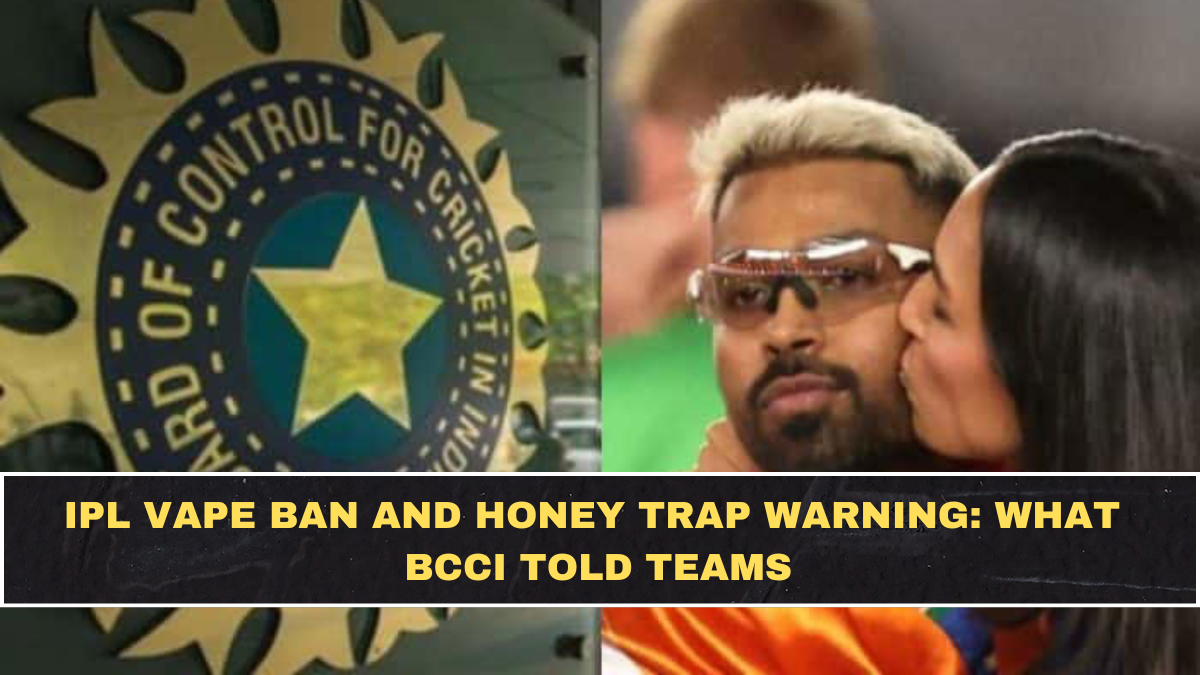
BCCI’s IPL vape ban and honey trap warning has become a major talking point because it shows how serious off-field discipline has become in the league. This is not only about cricket skills, team form, or match results anymore. The board is now focusing on hotel-room access, player movement, restricted areas, electronic cigarettes, and possible attempts to compromise players.
According to reports, BCCI secretary Devajit Saikia sent an advisory to all IPL franchises after protocol breaches were noticed during the ongoing season. The advisory reportedly highlighted professionalism, discipline, security awareness, and protocol compliance for players, support staff, team officials, and franchises. This is a blunt reminder that IPL is not just entertainment; it is a high-value tournament where one careless mistake can become a legal, reputational, or anti-corruption issue.
What Did BCCI Ban?
The most discussed point is the warning around vaping inside dressing rooms and restricted tournament areas. Reports said the BCCI noted incidents of vaping and reminded teams that vapes and electronic cigarettes are prohibited under applicable Indian law. That makes this bigger than “bad dressing-room behaviour” because it can also create statutory trouble for the person involved.
The directive also reportedly restricts unauthorised people from entering players’ rooms, support staff rooms, and officials’ rooms. Deccan Herald reported that written authorisation from team managers would be required for guests to access such spaces. This rule matters because private access to players can create security, legal, and anti-corruption risks.
| BCCI Concern | What It Means |
|---|---|
| Vape ban | No vaping or e-cigarettes in restricted IPL areas |
| Honey trap warning | Players warned about targeted compromise risks |
| Hotel-room access | Unauthorised visitors restricted from player rooms |
| Venue accreditation | Access must follow official permission systems |
| Team accountability | Franchises must ensure discipline and compliance |
Why Is The Honey Trap Warning Serious?
The honey trap warning is serious because professional sport is vulnerable to manipulation, blackmail, leaks, and reputation damage. In a league like IPL, players are public figures, betting interest is high, and private access can become dangerous. BCCI is not being dramatic here; it is trying to reduce risks before they become scandals.
Times of India reported that the advisory cautioned franchises about possible targeted compromise and tightened hotel security rules. It also flagged unauthorised room access and warned teams to remain alert about behaviour that could create serious legal implications. The uncomfortable truth is simple: star players attract attention, and not all attention is harmless.
What Triggered These Rules?
Reports have linked the advisory to multiple protocol concerns during IPL 2026. India Today reported that controversies included Rajasthan Royals team manager Romi Bhinder using a phone inside the dugout and a vaping row involving Riyan Parag. These incidents may look small individually, but they create a pattern that forces the board to act.
This is where fans need to stop behaving like every rule is “overreaction.” A dressing room, dugout, and team hotel are not casual public zones. They are controlled environments connected to match integrity, player privacy, sponsor image, and tournament security. If those boundaries collapse, the league’s credibility takes a hit.
What Must Teams Follow Now?
The new warning puts pressure on franchises, not just players. Teams cannot hide behind “individual mistake” every time something goes wrong. If access control, room movement, or restricted-area discipline fails, team management will also face questions.
Key instructions reportedly include:
- No vaping or e-cigarette use inside dressing rooms or restricted areas.
- No unauthorised person should enter player, staff, or official rooms.
- Guest access must follow written authorisation and official protocols.
- Players and staff must avoid risky interactions that may create legal trouble.
- Team management must actively enforce BCCI’s security and conduct rules.
Conclusion?
The IPL vape ban and honey trap warning shows that BCCI is worried about more than what happens on the field. The league has become too big, too commercial, and too visible for casual discipline failures. A phone in the dugout, a vape in a restricted area, or an unknown visitor in a hotel room can quickly turn into a major controversy.
The hard truth is that players and franchises cannot enjoy IPL’s money, fame, and global attention while behaving carelessly behind the scenes. BCCI’s warning may look strict, but it is necessary. If teams ignore it, the next scandal may not remain a small disciplinary issue; it could damage careers, franchises, and the tournament’s image.
FAQs?
Why Did BCCI Warn IPL Teams?
BCCI warned IPL teams after protocol breaches were noticed during the ongoing season. Reports said the advisory focused on discipline, hotel-room access, vaping, unauthorised movement, and honey trap risks. The board wants franchises to tighten internal control before small mistakes become bigger controversies.
Is Vaping Banned In IPL Dressing Rooms?
Yes, reports say BCCI has clearly warned against vaping and e-cigarette use inside dressing rooms and restricted tournament areas. The board also reminded teams that vapes and electronic cigarettes are prohibited under applicable Indian law. That makes the issue both disciplinary and potentially legal.
What Is The Honey Trap Warning About?
The honey trap warning is about protecting players and officials from targeted compromise, blackmail, or risky private interactions. In a high-profile league like IPL, unauthorised access to players can create serious problems. BCCI wants teams to stay alert and control who interacts with players in private spaces.
Who Is Responsible If Rules Are Broken?
Players, support staff, team officials, and franchises can all be held responsible depending on the breach. The advisory reportedly puts pressure on team management to enforce rules properly. That means franchises cannot simply blame individuals if their internal security and discipline systems fail.