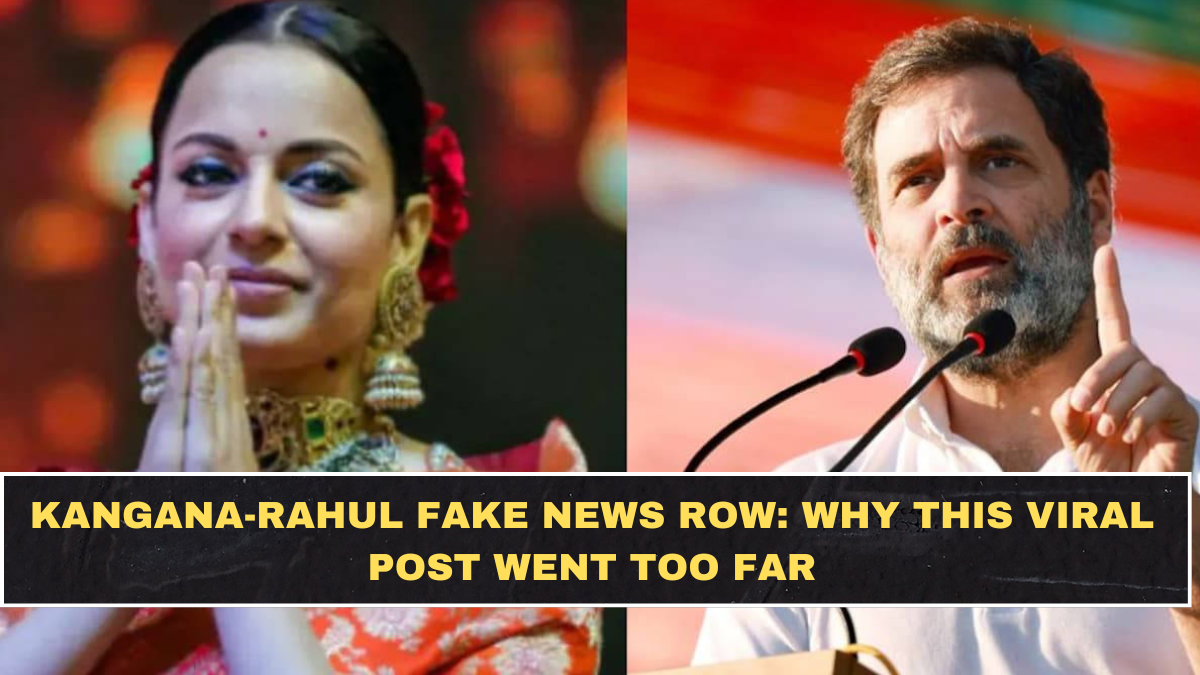
Kangana Ranaut has strongly denied a viral social media claim that falsely suggested she would marry Congress leader Rahul Gandhi if he joined the BJP. The claim reportedly began circulating through a meme-style post and quickly turned into a political-entertainment controversy. Kangana reacted sharply on Instagram Stories, calling it fake news and criticising those spreading it.
This story went viral because it mixed politics, Bollywood, gendered trolling and meme culture in one explosive package. Kangana is not only an actor but also a BJP MP from Mandi, so any fake quote linked to Rahul Gandhi naturally attracts political reactions. The problem is simple: a joke can become misinformation when users start sharing it as if it is a real statement.
What Was The Viral Claim?
The viral claim said Kangana Ranaut had allegedly agreed to marry Rahul Gandhi if he joined the BJP. Multiple reports confirmed that Kangana dismissed this as false and called out the people circulating the claim. NDTV reported that the false post was shared by a meme page and then spread widely across social media.
| Point | What Happened |
|---|---|
| Viral Claim | Kangana would marry Rahul Gandhi if he joined BJP |
| Reality | Kangana denied it and called it fake news |
| Platform | The claim spread through social media/meme pages |
| Reaction | Kangana criticised the rumour strongly |
| Why It Spread | Politics, celebrity angle and meme culture |
The important thing is that no credible report showed Kangana making such a statement. The claim appears to have been built for shock value, not accuracy. This is exactly how fake political content travels: it looks entertaining first, then becomes believable to people who do not verify before sharing.
Why Did Kangana React So Strongly?
Kangana’s reaction was sharp because the fake post was not just a political joke; it dragged her personal life into a false public claim. According to NDTV and Moneycontrol, she criticised the fake news and said there was no dignity for women even in politics. Her response framed the issue as more than a meme, pointing to how women in public life are often targeted through personal rumours.
That argument is not weak. Even if people dislike Kangana’s politics, fake marriage rumours are a cheap way to attack a woman politician. Political criticism should target speeches, policies and public conduct. The moment it shifts to fabricated personal claims, it stops being satire and becomes digital harassment disguised as humour.
Why Did This Become So Viral?
The post became viral because it had every ingredient social media loves: two famous political names, a shocking claim, an emotional reaction and easy meme potential. Kangana has often criticised Rahul Gandhi and Congress, so many users were already primed to react strongly. Hindustan Times reported that the fake claim circulated on May 3 and Kangana responded on May 4 to set the record straight.
Reasons this fake news spread fast:
- It used two high-recognition political names
- The claim sounded shocking enough to trigger clicks
- Meme pages made it look casual and shareable
- Users reacted before checking whether it was true
- Kangana’s response pushed the topic further into trends
The blunt truth is that people often do not share what is true; they share what gives them a reaction. That is the real sickness of viral misinformation. The fake claim succeeded because it was dramatic, not because it had evidence.
Why Is This Bigger Than Bollywood Gossip?
This row is bigger than celebrity gossip because Kangana is an elected MP, and Rahul Gandhi is one of India’s most prominent opposition leaders. When fake quotes are attached to political figures, they can influence public perception and create unnecessary hostility. Indian Express also reported that Kangana reacted after the fake post claimed she had offered to marry Rahul Gandhi if he joined BJP.
The danger is that fake political content now travels faster than corrections. By the time a clarification appears, thousands of people may already believe the original claim. That is why such rumours are not harmless jokes. They damage public discourse, waste media attention and reduce politics to cheap personal drama.
Conclusion: Did This Fake News Cross A Line?
Yes, this fake news crossed a line because it used a fabricated personal claim to create political entertainment. Kangana denied the rumour clearly, and multiple media reports confirmed that the viral marriage claim was false. The issue is not whether someone likes Kangana or Rahul Gandhi; the issue is whether public debate should be built on lies.
The harsh lesson is obvious: meme pages and political users cannot hide behind “just joking” when fake claims are shared as real news. Political satire is fine, but fabricated personal statements are not. If audiences keep rewarding this kind of content with shares, fake news will keep beating facts every single day.
FAQs?
Did Kangana Ranaut say she would marry Rahul Gandhi?
No, Kangana Ranaut did not say that. She denied the viral claim and called it fake news after a post falsely suggested she would marry Rahul Gandhi if he joined BJP.
Where did the Kangana-Rahul fake news start?
Reports said the false claim circulated through a meme-style social media post. Hindustan Times reported that the post appeared on May 3 and Kangana responded on May 4 through Instagram Stories.
Why did Kangana criticise the viral post?
Kangana criticised the post because it falsely linked her personal life with a political rumour. She also pointed out that women in politics are often targeted through such undignified claims.
Why did this fake news become viral?
It became viral because it involved two famous political figures, a shocking claim and meme-page amplification. The topic mixed politics, celebrity culture and trolling, which made it spread quickly across social media.