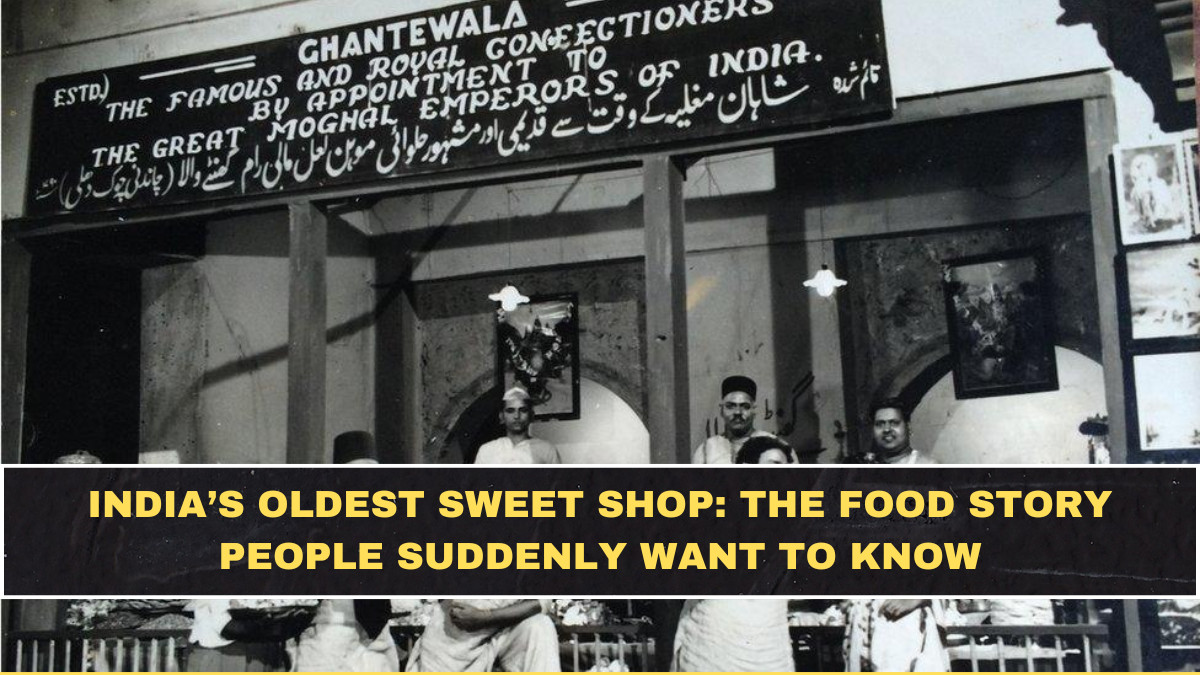
India’s oldest sweet shop debate is trending because food heritage stories are finding new life on social media. People are not only searching for new restaurants anymore. They are also becoming curious about old mithai shops, family-run food businesses, historic recipes and the stories behind famous sweets that survived for generations.
But let’s be clear: “India’s oldest sweet shop” is not always a simple claim. Some shops are old but closed for years, some reopened, some changed ownership, and some have stronger documentation than others. Two names often appear in this conversation: Ghantewala Halwai of Delhi, established in 1790, and Bhim Chandra Nag of Kolkata, established in 1826. Ghantewala is older by date, while Bhim Chandra Nag has a strong continuous cultural legacy in Bengali sweets.
Which Sweet Shop Is Called One Of India’s Oldest?
Ghantewala Halwai in Chandni Chowk, Delhi, is often described as one of India’s oldest traditional sweet shops. It was established in 1790 during the Mughal era and became famous for sweets like Sohan Halwa. The shop reportedly served everyone from royal-era customers to later political leaders, making it part of Old Delhi’s food memory.
However, Ghantewala closed in 2015 due to falling sales and regulatory issues, before reopening in November 2024. That makes its “oldest” claim historically important, but also slightly complicated if someone is talking about continuous operation. This is exactly why food-history claims need context instead of lazy viral captions.
| Sweet Shop | City | Established | Known For | Why It Matters? |
|---|---|---|---|---|
| Ghantewala Halwai | Delhi | 1790 | Sohan Halwa | Often cited among India’s oldest halwai shops |
| Bhim Chandra Nag | Kolkata | 1826 | Sandesh, Ledikeni | Major name in Bengali sweet heritage |
| Ghantewala status | Delhi | Closed in 2015, reopened in 2024 | Historic comeback | Shows heritage brands can return |
| Bhim Chandra Nag legacy | Kolkata | Nearly 200 years | Traditional Bengali mithai | Strong cultural continuity |
| Main debate | India-wide | Oldest vs continuously iconic | Food history needs nuance | Avoids misleading claims |
Why Is Ghantewala Halwai So Famous?
Ghantewala Halwai is famous because it connects Old Delhi’s food culture with the Mughal-era city of Shahjahanabad. Established in 1790, it became known for Sohan Halwa and was remembered as a landmark in Chandni Chowk. Food lovers often mention it when discussing Delhi’s historic eating places and traditional halwai culture.
Its story also became emotional because the shop shut down in 2015 after more than two centuries of history. For many Delhi food lovers, that closure felt like a piece of the old city disappearing. Its reported reopening in 2024 made people revisit its legacy, especially as heritage food brands are now being rediscovered by younger audiences.
Why Does Bhim Chandra Nag Also Matter In This Debate?
Bhim Chandra Nag matters because it is one of Kolkata’s most iconic and historically respected sweet shops. Slurrp reports that Bhim Chandra Nag was founded in 1826 and became famous for traditional Bengali sweets such as Ledikeni and Chhanar Sandesh. The shop is deeply tied to Kolkata’s culinary and cultural identity.
Times Travel also notes that Bhim Chandra Nag was set up by Paran Chandra Nag in Bowbazar in 1826 and is known as a pioneer in making Sandesh. The shop is associated with sweets such as Ladikeni, named after Lady Canning, and Ashubhog Sandesh, linked with Sir Ashutosh Mukhopadhyay. That gives it more than just age; it gives it cultural storytelling power.
What Makes Old Mithai Shops Different From Modern Sweet Chains?
Old mithai shops are different because they sell memory, not just sugar. A modern sweet chain can create clean packaging, online delivery and polished branding. But a historic mithai shop carries family recipes, local language, neighbourhood loyalty, festival tradition and stories passed from grandparents to grandchildren.
That is why people still care about them. A sweet from an old shop is not judged only by taste. It is judged by nostalgia, authenticity and trust. The real product is not just Sandesh, Sohan Halwa or Laddu. The real product is continuity.
Why Are People Suddenly Interested In Food Heritage?
People are suddenly interested in food heritage because the internet has made old local stories searchable and shareable. Short videos, food reels and nostalgia posts have turned old shops into viral destinations. A place that once depended only on local customers can now become a national curiosity overnight.
There is also fatigue with generic food trends. After years of loaded fries, cheese bursts, fusion dosas and over-designed café food, many readers want something that feels rooted. Historic sweet shops offer exactly that: a sense of place, story and emotional connection.
Are These “Oldest Shop” Claims Always Reliable?
No, and this is where readers need to stop being gullible. Many “oldest” claims online are repeated without checking whether the shop still exists, whether it operated continuously, whether ownership changed, or whether the date is documented. A viral reel is not historical proof.
For example, Ghantewala’s 1790 date makes it older than Bhim Chandra Nag’s 1826 date, but its 2015 closure and later reopening complicate the “continuous operation” angle. Bhim Chandra Nag may not be older by establishment date, but it remains one of India’s most important historic sweet shops because of its strong Bengali sweet legacy.
Why Do These Shops Still Matter In 2026?
These shops matter in 2026 because they protect food memory in a fast-changing market. India’s food business is becoming more app-driven, franchise-driven and packaging-driven. That is useful, but it can also make everything taste and look the same. Historic sweet shops remind people that food culture was once deeply local.
They also matter for tourism. A traveller visiting Old Delhi or Kolkata does not only want malls and cafés. They want food that carries a city’s personality. Ghantewala and Bhim Chandra Nag are not just shops; they are food-history stops that help people understand Delhi and Kolkata through taste.
Conclusion
India’s oldest sweet shop story is fascinating, but it should not be reduced to one careless viral claim. Ghantewala Halwai of Delhi, established in 1790, is often cited among India’s oldest halwai shops, while Bhim Chandra Nag of Kolkata, established in 1826, remains one of the strongest names in India’s living mithai heritage. Both deserve attention, but for different reasons.
The bigger reason people care is simple: old sweet shops carry history that modern brands cannot manufacture overnight. They represent family recipes, city memory, festival culture and emotional loyalty. In a world full of fast food and fake nostalgia, India’s historic mithai shops offer something real — taste with a past.
FAQs
Which is India’s oldest sweet shop?
Ghantewala Halwai in Chandni Chowk, Delhi, established in 1790, is often cited among India’s oldest traditional sweet shops. However, it closed in 2015 and reportedly reopened in 2024, so the claim needs context. Bhim Chandra Nag in Kolkata, established in 1826, is another major historic sweet shop with a strong living legacy.
What is Ghantewala Halwai famous for?
Ghantewala Halwai is famous for its long history in Old Delhi and its association with Sohan Halwa. It was established in 1790 and became a known food landmark in Chandni Chowk. Its closure in 2015 and reopening in 2024 brought fresh attention to its heritage.
Why is Bhim Chandra Nag famous?
Bhim Chandra Nag is famous for traditional Bengali sweets, especially Sandesh and Ledikeni. It was founded in Kolkata in 1826 and is considered one of the city’s most iconic sweet shops. It is also linked with old Kolkata’s cultural and culinary history.
Why are old sweet shops trending now?
Old sweet shops are trending because people are rediscovering food heritage through social media, reels and nostalgia-driven travel content. Historic mithai shops offer more than taste; they offer stories, family legacy and a connection to old city culture. That makes them attractive to both food lovers and younger audiences.