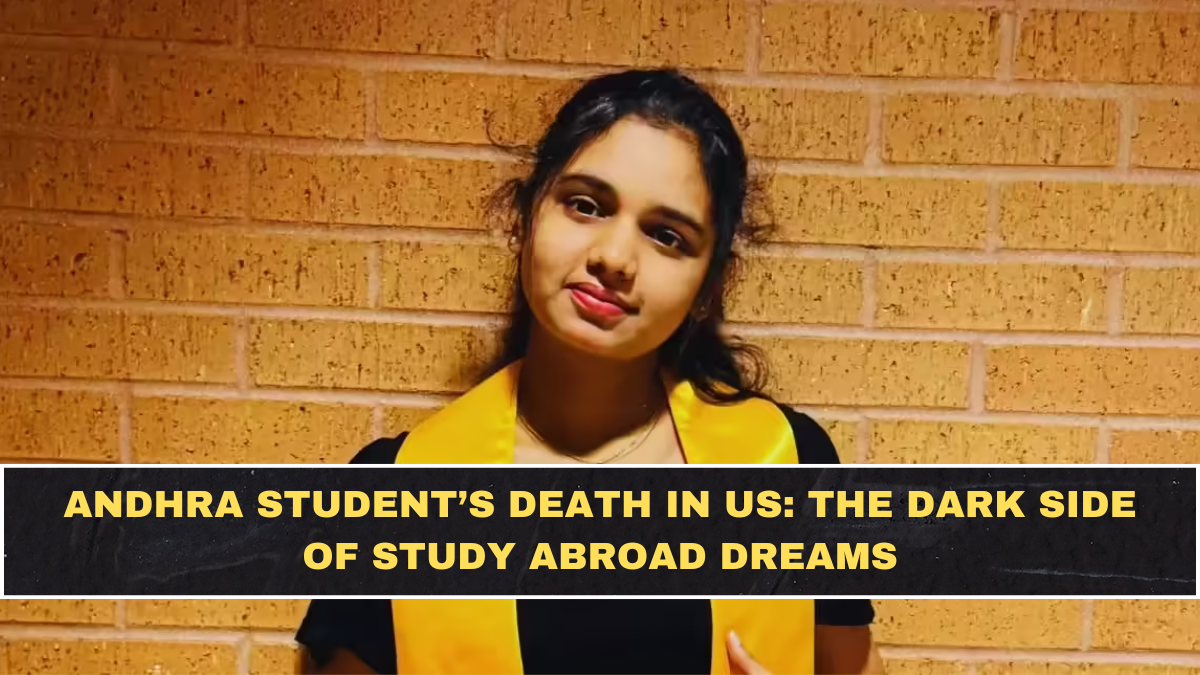
The death of a 26-year-old student from Andhra Pradesh in the United States has shocked many Indians because it exposes the emotional and financial pressure behind the study abroad dream. The student, identified in reports as Iraganaboyina Chandu from Kurnool district, had reportedly completed his master’s degree from DePaul University in Chicago and was struggling to find a job. Moneycontrol reported that he died by suicide after allegedly facing unemployment and financial stress.
This is not just one tragic incident. It has become a painful reminder that studying abroad is not always the polished success story shown on Instagram, YouTube and consultancy ads. Behind the airport photos and university posts, many students are carrying loans, visa pressure, family expectations, loneliness and the fear of failing after spending huge money.
What Do Reports Say About The Case?
Reports say Chandu had been searching for employment in the US after completing his master’s degree but had not been able to secure a job. ABP Live reported that he was struggling with job uncertainty and family financial pressure, while community members launched a fundraiser to support the family with repatriation and funeral costs.
Times of India reported that Chandu allegedly scheduled messages to friends before the incident, and his debt-hit family in India was waiting for his body to be brought back. The case is under investigation by local authorities, and the Indian community abroad has been trying to help the grieving family.
| Key Detail | Reported Information | Why It Matters? |
|---|---|---|
| Student name | Iraganaboyina Chandu | Identified in multiple reports |
| Age | 26 | Young graduate under career pressure |
| Native place | Kurnool district, Andhra Pradesh | Family based in India facing grief and debt |
| University | DePaul University, Chicago | Reportedly completed master’s degree |
| Main pressure | Job uncertainty and financial burden | Highlights study abroad risks |
| Community response | Fundraiser for repatriation and family support | Shows how costly such crises become |
Why Are Job Struggles So Dangerous For International Students?
Job struggles are dangerous for international students because their situation is not like local job seekers. They often have visa timelines, education loans, living expenses and family pressure running at the same time. After graduation, many students depend on finding work quickly to justify the huge financial investment made by their family.
This is where the study abroad dream becomes brutal. A student may spend lakhs or even crores on tuition, rent, travel and living costs, but there is still no guaranteed job at the end. If employment does not come on time, the student can feel trapped between debt in India and uncertainty abroad. That pressure can become emotionally crushing.
What Role Does Family Debt Play In These Cases?
Family debt can make the pressure much worse because many students go abroad after their parents take loans, mortgage property or borrow from relatives. The student does not only feel responsible for their own future. They also feel responsible for recovering the family’s investment and proving that the sacrifice was worth it.
American Bazaar reported that the fundraiser for Chandu described pressure linked to job uncertainty, visa timelines and financial responsibility. The report noted that many international graduates face a particularly intense period after completing studies. That line matters because the months after graduation can be the most unstable phase for foreign students.
Why Is The Study Abroad Dream Becoming Riskier?
The study abroad dream is becoming riskier because students often see only the success stories. They see people posting jobs, cars, apartments and foreign lifestyle content. They do not always see rejections, loneliness, immigration stress, unpaid bills, part-time job exhaustion and the emotional cost of being far from family.
This does not mean studying abroad is bad. That would be a lazy conclusion. The real issue is poor preparation and unrealistic expectations. Many families treat a foreign degree like a guaranteed ticket to success, but the job market does not care about emotions, loans or social pressure. It rewards skills, timing, networking and immigration fit.
What Should Families Understand Before Sending A Child Abroad?
Families need to understand that foreign education is a financial risk, not a guaranteed investment return. Before sending a student abroad, they should calculate total cost, loan burden, job-market reality, visa rules, backup options and emotional support. Blind optimism is dangerous when lakhs of rupees and a young person’s mental health are involved.
Parents also need to stop turning every student into a family rescue project. If a child feels that one failed job search means the entire family collapses financially, the pressure becomes unbearable. Support should not sound like “we sacrificed everything, now you must succeed.” That sentence may be true, but it can destroy someone mentally.
What Should Students In The US Watch For?
Students should watch for signs of burnout, isolation, panic, debt anxiety and hopelessness. If job rejection starts affecting sleep, eating, social contact or basic functioning, it is not “normal stress” anymore. It is a warning sign. Students should reach out to friends, university counselling services, community groups or crisis support before things become unmanageable.
They should also build practical backups early. That includes applying widely, networking before graduation, understanding OPT timelines, preparing for alternative countries or returning to India if needed. Returning home without a US job may feel embarrassing, but it is not failure. Losing your life over job pressure is the real tragedy.
How Should The Indian Community Respond?
The Indian community should respond with more than fundraisers after tragedies. Fundraisers help families in crisis, but they do not fix the system that leaves students isolated. Alumni groups, student associations and community organisations should create job networks, emergency mental health support, temporary housing help and practical guidance for unemployed graduates.
There is also a responsibility on education consultants and influencers. Selling the abroad dream without discussing risk is dishonest. If someone earns commissions from student admissions but never talks about debt, visa stress and job uncertainty, they are part of the problem. Students deserve reality, not marketing.
Conclusion
The Andhra student’s death in the US is heartbreaking because it shows the hidden cost of overseas education dreams. Chandu had reportedly completed his master’s degree from DePaul University but was struggling with unemployment and financial pressure. His death has left his family and community grieving while also raising serious questions about debt, job stress and mental health support.
The uncomfortable truth is that studying abroad can change lives, but it can also break people when expectations are unrealistic and support is weak. Families must plan better, students must seek help earlier, and communities must stop pretending that every foreign degree automatically leads to success. A dream is not worth it if it silently crushes the person chasing it.
FAQs
Who was the Andhra student who died in the US?
The student has been identified in reports as Iraganaboyina Chandu, a 26-year-old from Kurnool district in Andhra Pradesh. He had reportedly completed his master’s degree from DePaul University in Chicago and was searching for employment in the US before his death.
What was the reported reason behind the tragedy?
Reports say Chandu was allegedly struggling with unemployment, financial pressure and family debt-related stress. ABP Live reported that he faced job uncertainty and financial responsibility, while community members raised funds to help his family with repatriation and funeral costs.
Why are Indian students abroad under so much pressure?
Indian students abroad often face education loans, visa deadlines, high living costs, job-market uncertainty and family expectations at the same time. After graduation, the pressure to secure employment quickly can become intense. If support systems are weak, that stress can turn dangerous.
What should students do if they feel overwhelmed abroad?
Students should immediately speak to trusted friends, family, university counselling services or local crisis support if they feel hopeless or unsafe. They should not isolate themselves or treat job rejection as personal failure. If there is immediate danger, they should contact local emergency services or a suicide prevention helpline in their country.