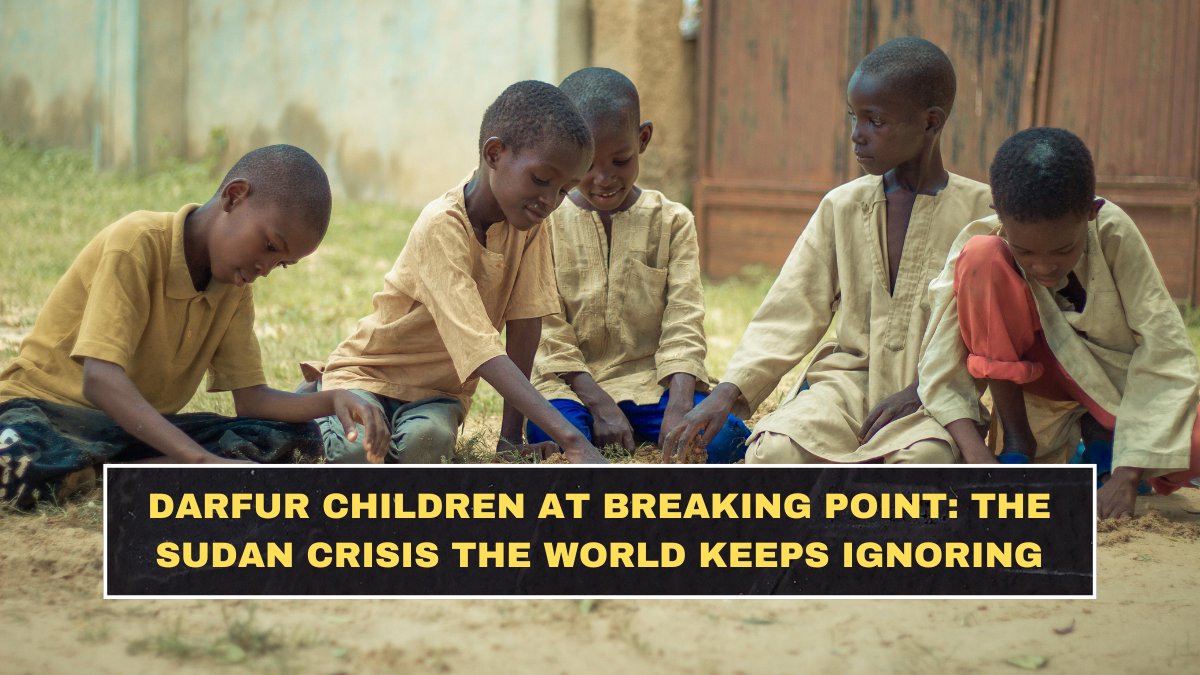
Children in Darfur are being described as “at breaking point” because they are facing violence, hunger, displacement, disease and trauma at the same time. UNICEF issued a rare Child Alert for Darfur on April 28, 2026, warning that more than 5 million children across the five Darfur states are facing extreme deprivation. It is the first UNICEF Child Alert for Darfur in around two decades.
This crisis is not new, but it has become much worse since Sudan’s civil war began in April 2023. The war between the Sudanese Armed Forces and the Rapid Support Forces has destroyed homes, schools, health facilities and local protection systems. For children, that means there is no safe routine left. Many have been displaced repeatedly, separated from family members, or forced to survive in camps with little food, water or medical care.
What Is Happening To Children In Darfur Right Now?
UNICEF says violence, hunger and displacement are once again defining childhood in Darfur, but this time the crisis is receiving far less international attention than it did 20 years ago. Children are being killed, maimed, recruited by armed groups, exposed to sexual violence and pushed into severe malnutrition. In al-Fashir, the besieged capital of North Darfur, conditions are among the worst.
Reuters reported that more than 1,300 children have been killed or maimed in al-Fashir since April 2024. UNICEF also warned that acute malnutrition has reached famine levels in additional parts of North Darfur. That means the crisis has gone beyond normal hunger. It is now a survival emergency where children are losing access to food, health care and basic protection at the same time.
| Crisis Factor | What It Means For Children? |
|---|---|
| Violence | Children are being killed, injured, recruited and traumatized |
| Hunger | Severe malnutrition is reaching famine-level conditions in some areas |
| Displacement | Families are forced to flee repeatedly without stable shelter |
| Health collapse | Hospitals and clinics are destroyed, closed or unreachable |
| Aid shortage | Humanitarian agencies lack enough funding and access |
Why Is Al-Fashir So Important In This Crisis?
Al-Fashir matters because it has become one of the most dangerous and desperate places in the Sudan war. UNICEF’s January 2026 flash update described al-Fashir as under near-siege, with severe protection risks and shortages of food, water, health care and essential supplies. Blocked routes and insecurity have made it extremely difficult for aid groups to reach displaced families.
When a city is under siege or near-siege, children suffer first. Food prices rise, medicine disappears, families hide indoors, schools shut down and hospitals become overwhelmed. The problem is not only bombs or bullets. It is the slow collapse of everything children need to survive. That is why al-Fashir has become a symbol of Darfur’s wider breakdown.
How Big Is Sudan’s Child Crisis?
Sudan is now one of the world’s worst child displacement and humanitarian emergencies. UNICEF says millions of children have fled their homes inside Sudan or across borders, making the country the world’s largest child displacement crisis. The number of children needing humanitarian assistance has also increased by more than 20% compared with last year.
UNICEF’s 2026 Humanitarian Action for Children appeal says conflict has displaced 9.5 million people and left more than 21 million people facing acute food insecurity. It is seeking $962.9 million to reach 13.8 million people, including 7.9 million children, with life-saving health, nutrition, water, sanitation, education and protection support.
Why Is Hunger Becoming So Deadly In Darfur?
Hunger is becoming deadly because families are trapped between violence, blocked aid and collapsing markets. When conflict shuts roads and destroys livelihoods, food does not reach communities normally. Prices rise, supplies shrink and parents are forced to skip meals or feed children whatever they can find. Children under five are especially vulnerable because malnutrition can become fatal very quickly.
The wider global hunger picture is also worsening. Reuters reported that the 2026 Global Report on Food Crises found 266 million people across 47 countries faced severe food insecurity in 2025, while 35.5 million children were acutely malnourished. Sudan was one of the places where famine was declared last year, showing how extreme the crisis has already become.
Why Is The World Paying So Little Attention?
The world is paying too little attention because Sudan’s war is being buried under other global crises. Ukraine, Gaza, Iran, US-China tensions and energy shocks dominate headlines. Sudan gets mentioned, but rarely receives the sustained political pressure or funding that a disaster of this size demands. That is not just unfortunate. It is a moral failure.
UNICEF has warned that its 2026 Sudan appeal is only 16% funded, even as children face worsening hunger and violence. This funding gap means fewer nutrition treatments, fewer safe spaces, fewer water services and fewer child protection teams. In simple terms, children are not only being failed by war. They are being failed by global indifference.
What Needs To Happen Now?
The most urgent need is safe humanitarian access. Aid groups must be allowed to reach children trapped in al-Fashir and other conflict-hit areas without being blocked, attacked or delayed. Food, therapeutic nutrition, clean water, vaccines and emergency medical care need to move at scale, not through tiny symbolic deliveries.
The second need is protection. Children must be shielded from recruitment, sexual violence, family separation and attacks on schools or health facilities. The third need is funding. It is useless for the world to express concern while underfunding the response. Darfur does not need another round of empty statements. It needs access, money and pressure on armed actors now.
What Is The Bottom Line?
Darfur’s children are at breaking point because they are facing the worst combination possible: war, hunger, displacement, disease and neglect. UNICEF’s latest warning shows that more than 5 million children are facing extreme deprivation, while al-Fashir has become one of the clearest examples of how brutal the crisis has become.
The harsh truth is that this disaster is not invisible. It is being ignored. The world has enough information to understand what is happening in Darfur. What is missing is urgency. If aid access and funding do not improve quickly, more children will die from violence, hunger and preventable disease.
FAQs
Why Did UNICEF Issue A Child Alert For Darfur?
UNICEF issued a Child Alert because children in Darfur are facing extreme violence, hunger, displacement and loss of protection. More than 5 million children across Darfur are facing extreme deprivation.
How Many Children Have Been Affected In Darfur?
UNICEF says more than 5 million children across the five Darfur states are facing extreme deprivation, while children in al-Fashir have suffered severe casualties and worsening hunger.
Why Is Al-Fashir Important?
Al-Fashir is important because it is under near-siege, with severe shortages of food, water, health care and essential supplies. Humanitarian access remains heavily restricted.
Is Sudan Facing Famine?
Yes, famine conditions have been reported in parts of Sudan, including Darfur and Kordofan. UNICEF’s 2026 appeal says more than 21 million people face acute food insecurity.
Why Is The Darfur Crisis Being Ignored?
The Darfur crisis is being overshadowed by other global conflicts and political crises. UNICEF’s Sudan appeal is also badly underfunded, which limits the scale of emergency response.