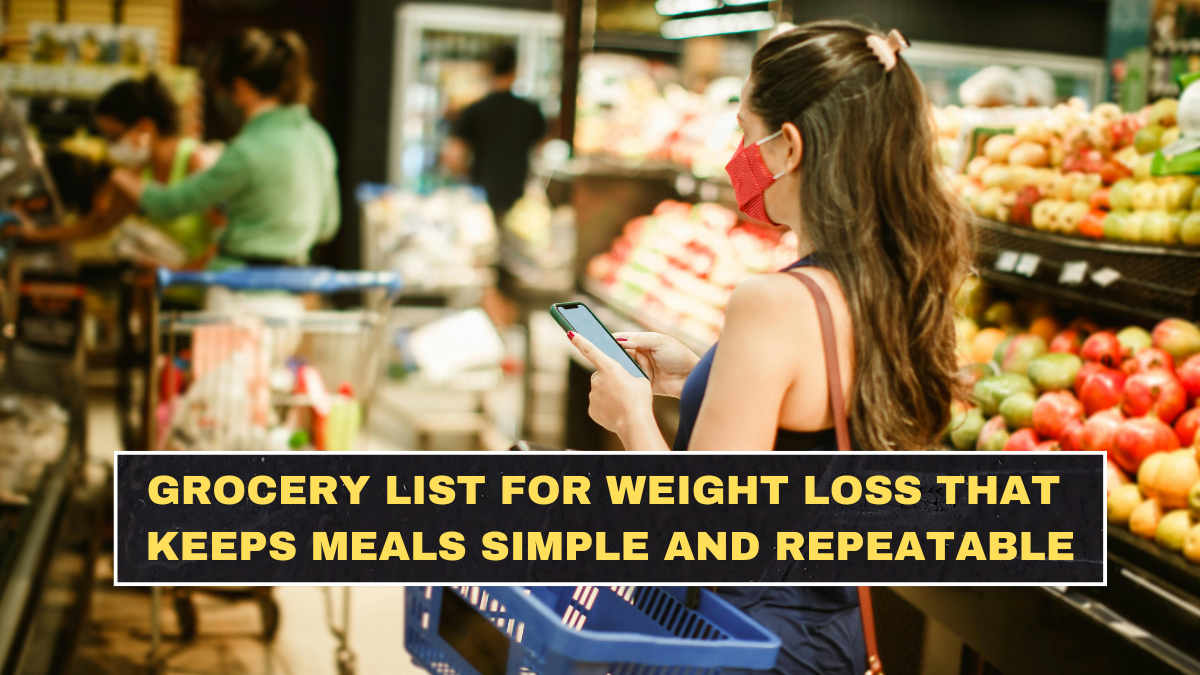
Weight-loss grocery advice usually fails because it turns into two extremes: bland “diet food” nonsense or expensive health-food shopping that nobody sustains. The better approach is simpler. A useful grocery list for weight loss should make it easier to build meals around vegetables, fruit, whole grains, and protein while limiting foods high in added sugar, saturated fat, and excess sodium. That is still the direction backed by CDC and NIDDK guidance for healthy eating and weight management.
What should a weight-loss grocery list actually focus on?
It should focus on foods that make meals more filling and easier to repeat, not foods that merely sound “clean.” CDC says healthy eating patterns emphasize vegetables, fruits, whole grains, healthy fats, dairy without added sugars, and a variety of protein foods such as eggs, poultry, seafood, beans, peas, lentils, nuts, seeds, and soy. Harvard’s Healthy Eating Plate gives a similar structure, with vegetables and fruits, healthy protein, and whole grains as core parts of a balanced plate.
That matters because weight loss usually breaks down at the grocery level first. If your kitchen is built around refined snacks, sugary drinks, and random “treat” foods, meal planning becomes harder than it needs to be. A better list makes the right meals the easier default.
Which foods deserve top priority on the list?
The highest-priority foods are the ones that pull the most weight across multiple meals: lean proteins, vegetables, fruit, whole grains, and a few simple healthy-fat options. NIDDK says a healthy eating plan includes a variety of nutritious foods and advises limiting added sugars to less than 10% of daily calories, saturated fat to less than 10%, and sodium to less than 2,300 mg per day.
That means your cart should not be led by “low-calorie” branding. It should be led by meal utility. Chicken, eggs, Greek yogurt, beans, oats, rice, potatoes, frozen vegetables, salad greens, berries, apples, and nuts do more useful work than most diet products ever will.
| Grocery category | Best weight-loss staples | Why they help |
|---|---|---|
| Protein | Eggs, chicken, fish, Greek yogurt, beans, lentils, tofu | Helps meals feel more filling |
| Vegetables | Leafy greens, broccoli, carrots, cucumbers, frozen mixed veg | Adds volume with fewer calories |
| Fruit | Apples, berries, oranges, bananas | Useful for snacks and sweet cravings |
| Whole grains | Oats, brown rice, whole-grain bread, quinoa | More useful than refined carb-heavy staples |
| Smart extras | Olive oil, nuts, seeds, plain yogurt, spices | Improves taste and repeatability |
Which proteins make the list stronger?
Protein is one of the most useful anchors because it makes meals more satisfying and gives structure to breakfast, lunch, and dinner. CDC specifically lists eggs, poultry, seafood, beans, peas, lentils, nuts, seeds, and soy among healthy protein options, while Harvard recommends fish, poultry, beans, and nuts and says to limit processed meats.
That is why a strong list usually includes two or three easy proteins for the week instead of ten random ones. For many people, that means eggs, chicken, Greek yogurt, and one plant protein like beans or lentils. The goal is repeatability, not grocery-store ambition.
Why do vegetables and fruit matter so much?
Because they help build meals that are bigger, more filling, and less calorie-dense without turning eating into punishment. CDC says healthy eating for a healthy weight emphasizes fruits and vegetables, and it also notes that cooking methods matter because breading, frying, and high-fat sauces can sharply increase calories and fat.
This is where people fool themselves. They buy one bag of spinach, call the week healthy, then build the rest of the cart around refined snacks. That is not a weight-loss grocery list. It is cosmetic effort. A smarter list includes vegetables you will actually use raw, cooked, and in quick meals. Frozen vegetables are especially useful because they reduce waste and make “nothing to cook” a weaker excuse.
Should carbs stay on the list?
Yes. The anti-carb grocery fantasy is one of the dumbest mistakes people still make. Harvard’s Healthy Eating Plate specifically recommends whole grains and limiting refined grains, not eliminating carbs entirely. NIDDK also includes whole grains as part of a healthy eating plan for weight loss and maintenance.
The better move is to shop smarter for carbs. Oats, potatoes, rice, fruit, and whole-grain bread are usually more useful than sugary cereals, pastries, or constant snack crackers. Weight loss gets easier when carbs are planned into meals instead of appearing later as uncontrolled cravings.
What should stay off the main list?
Foods high in added sugar, heavily processed snack foods, sugary drinks, and items that are easy to overeat without much fullness should stay off the core list or at least be bought deliberately in smaller amounts. CDC and NIDDK both emphasize limiting added sugars and keeping eating patterns within daily calorie needs.
That does not mean you must never buy anything fun. It means you stop pretending that a cart full of “healthy-looking” snack foods is the same thing as buying ingredients for real meals. Most weight-loss shopping fails because people buy for mood, not for structure.
What does a realistic weekly grocery list look like?
A practical weekly list might include eggs, chicken or fish, Greek yogurt, beans, oats, rice or potatoes, salad greens, two frozen vegetables, two fruits, whole-grain bread, olive oil, and a few seasonings. That is enough to build breakfasts, lunches, dinners, and snacks without needing a different recipe every day.
The smarter rule is simple: every shopping trip should give you a few repeatable breakfasts, a few easy lunches, and a few dinners that do not require heroic motivation. If your list cannot do that, it is badly built.
How do labels help without becoming obsessive?
Use labels to compare calories, serving size, added sugar, saturated fat, sodium, and protein. NIDDK specifically says learning to read a Nutrition Facts label helps you choose the right amount of food and understand serving sizes better. NHLBI shopping guidance also says labels help shoppers compare calories and fat while choosing lower-calorie foods.
That matters because many products marketed for wellness are still weak choices when you look at what is actually inside them. Read the label before trusting the front of the package.
Conclusion?
A grocery list for weight loss should not be built around gimmicks. It should be built around foods that make simple meals easier to repeat: protein, vegetables, fruit, whole grains, and a few supportive extras. CDC, NIDDK, and Harvard all point toward the same broad pattern, and that is the pattern most people should follow before they start chasing diet trends. If your shopping still revolves around snacks, convenience foods, and vague “healthy” branding, the problem is not motivation. The problem is that your cart is working against your goal.
FAQs
What is the best grocery list for weight loss?
The best list usually includes lean proteins, vegetables, fruit, whole grains, and a few healthy-fat staples because those foods make balanced meals easier to build and repeat.
Should I avoid carbs when shopping for weight loss?
No. The better move is to choose more whole grains and less refined grain-heavy food, which matches Harvard and NIDDK guidance.
Are frozen vegetables good for weight loss?
Yes. They are practical, reduce waste, and help you keep vegetables available for meals more consistently. This is a practical inference based on the broader guidance to emphasize vegetables regularly.
What should I check first on food labels?
Start with serving size, calories, added sugar, saturated fat, sodium, and protein. NIDDK and NHLBI both recommend using the Nutrition Facts label to make better food choices.