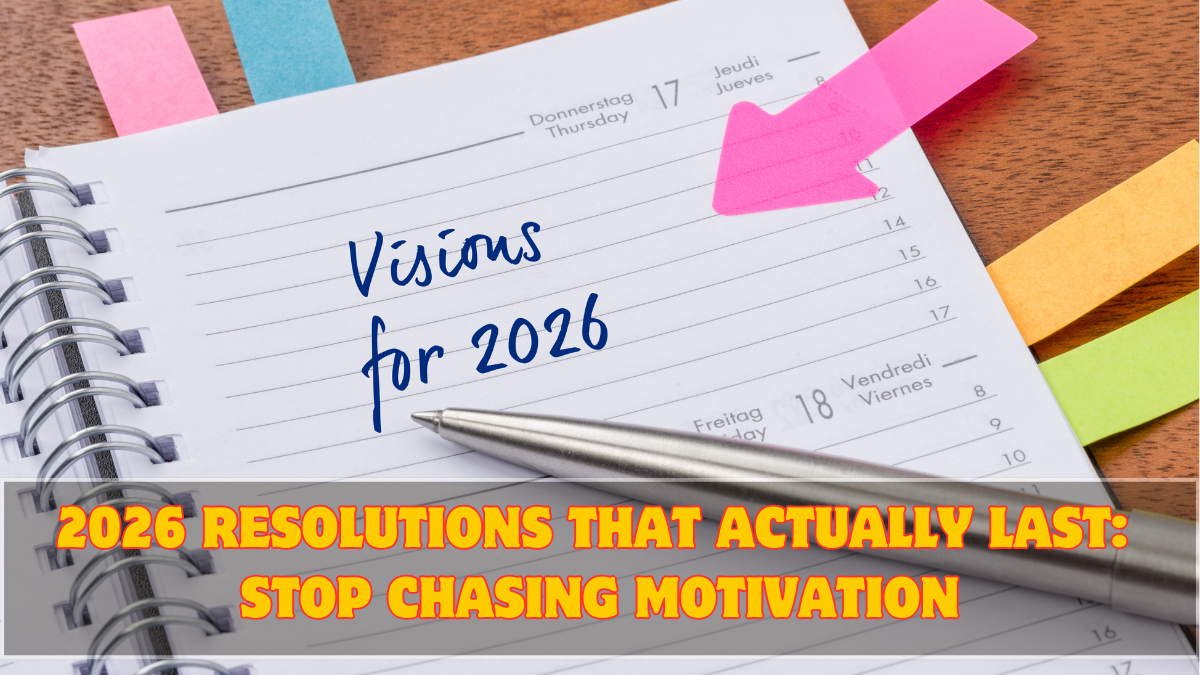
Most inspiration 2026 resolutions will fail for the same old reason: they depend on motivation. Motivation is loud in January and missing by February. What actually lasts in 2026 isn’t hype-driven goal setting—it’s attention protection, sustainable habits, and realistic self-growth that works on boring days too.
If you’re tired of writing resolutions that quietly die, this is a different approach. Less dramatic. Far more effective.
Why Most Resolutions Collapse Every Year
Failure isn’t a discipline problem—it’s a design problem.
Common reasons resolutions fail:
• They rely on willpower
• They ignore attention overload
• They aim for identity change overnight
• They compete with real life
Motivation spikes don’t survive routine friction.
The Biggest Shift in 2026: Protecting Attention First
In 2026, attention is the real currency.
Without attention protection:
• Habits don’t stick
• Focus fragments
• Consistency breaks
If your environment steals your attention, no resolution survives.
What “Attention Protection” Actually Means
This isn’t productivity theatre.
Attention protection includes:
• Fewer notifications
• Clear phone boundaries
• Intentional app usage
• Reduced background noise
You don’t need more discipline—you need fewer distractions.
Why Sustainable Habits Beat Big Goals
Big goals feel inspiring. Small habits actually work.
Sustainable habits:
• Require low energy
• Fit into real schedules
• Compound quietly
Consistency beats intensity every single time.
How to Design Habits That Survive Bad Days
Bad days kill most plans.
Habits that last are:
• Short (5–10 minutes)
• Flexible
• Easy to restart
If missing one day breaks the habit, it was designed poorly.
Stop Using Self-Comparison as Fuel
Self comparison feels motivating—but it burns out fast.
Problems with comparison-driven goals:
• Unrealistic timelines
• Constant dissatisfaction
• External validation dependence
Progress measured against others is unstable.
Replace Comparison With Personal Baselines
Healthier measurement looks inward.
Better tracking methods:
• “Am I better than last month?”
• “Is this easier than before?”
• “Did I show up today?”
Quiet progress lasts longer.
Mindfulness Without the Spiritual Pressure
Mindfulness in 2026 isn’t about long meditation streaks.
Practical mindfulness includes:
• Single-tasking
• Short breathing pauses
• Being present in routine tasks
Calm doesn’t require candles or silence.
Why Fewer Resolutions Work Better
More goals equal more friction.
High-success resolution sets:
• 1 core habit
• 1 support habit
• 1 boundary
That’s it. Anything more competes for attention.
A Simple 3-Part Resolution Framework for 2026
Use this instead of long lists.
Framework:
• One habit to build
• One habit to stop
• One distraction to remove
This creates space, not pressure.
Examples of Resolutions That Actually Stick
Realistic 2026 resolutions:
• Walk daily, no distance goal
• Phone-free mornings
• Fixed sleep time window
They sound boring—but boring wins.
Why Identity-Based Resolutions Fail Early
“I will become a new person” is a trap.
Problems with identity-first goals:
• Too abstract
• Hard to measure
• Easy to abandon
Actions build identity—not the other way around.
Design Your Environment to Support Your Goals
Your environment decides outcomes.
Simple environment fixes:
• Apps off the home screen
• Workout clothes visible
• Healthy defaults prepared
Make good choices easier than bad ones.
What to Do When Motivation Disappears
Expect it to disappear.
When motivation drops:
• Shrink the habit
• Maintain the streak lightly
• Don’t reset everything
Survival beats perfection.
Why 2026 Is About Stability, Not Hustle
People are tired.
2026 growth focuses on:
• Emotional regulation
• Sustainable pace
• Long-term consistency
Burnout isn’t impressive anymore.
How to Review Resolutions Without Guilt
Reviewing isn’t failing.
Healthy reviews:
• Adjust goals
• Drop what doesn’t fit
• Keep what feels natural
Flexibility is strength—not weakness.
Why These Resolutions Actually Last
They align with:
• Human energy limits
• Modern attention realities
• Long-term well-being
That’s why they survive beyond January.
Conclusion
The smartest inspiration 2026 resolutions aren’t loud or dramatic. They’re quiet systems built around attention protection, sustainable habits, reduced self comparison, and practical mindfulness. When resolutions stop depending on motivation, they finally start lasting.
Success in 2026 isn’t about pushing harder.
It’s about designing better.
FAQs
Why do most New Year resolutions fail?
Because they rely on motivation instead of systems and habits.
What is attention protection?
Reducing distractions so focus and consistency can survive daily life.
How many resolutions should I set for 2026?
One to three maximum—more than that creates friction.
Is mindfulness necessary for self-growth?
Yes, but it can be simple and practical, not spiritual or time-consuming.
What if I miss days while following a resolution?
Missing days is normal. Shrink the habit and continue—don’t quit.