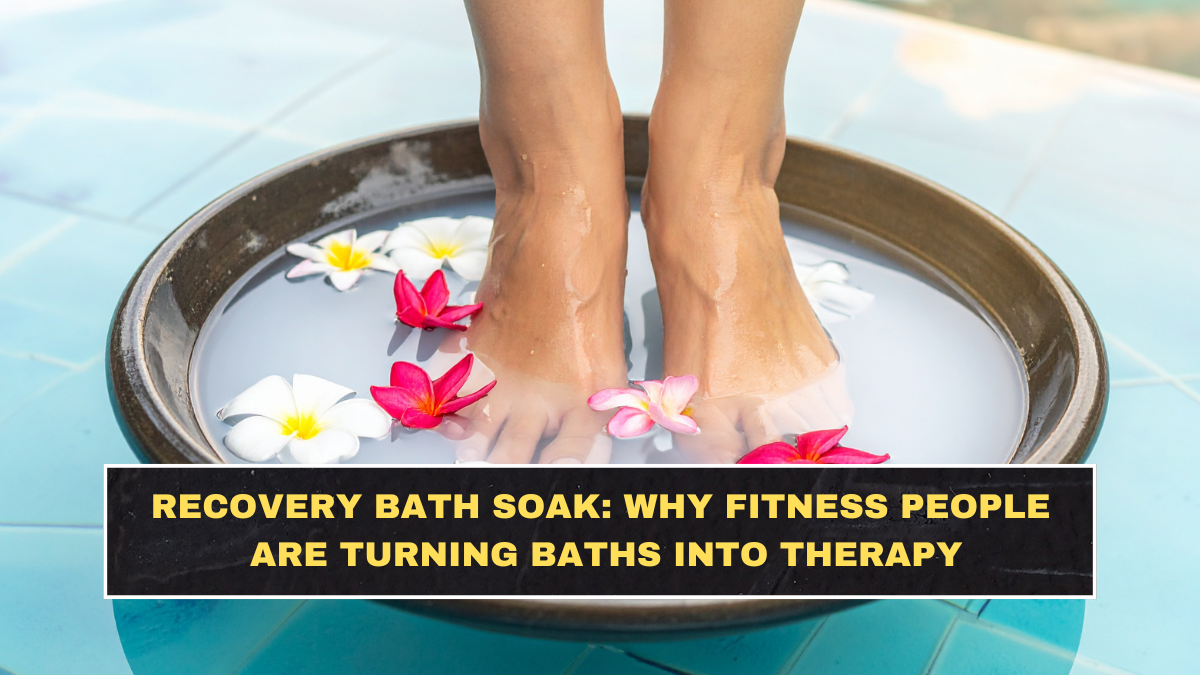
Recovery bath soaks are trending because fitness culture has moved beyond workouts and into recovery. People are no longer only buying protein powders, gym memberships, and smartwatches. They are also spending on sleep, mobility, massage guns, cold plunges, sauna sessions, magnesium products, and bath soaks that promise relaxation after training.
Most recovery bath soaks are built around Epsom salt, magnesium chloride, sea salt, essential oils, clay, botanical extracts, or fragrance blends. The idea is simple: after a hard workout, long workday, run, or sports session, a warm bath may help the body relax, reduce stiffness, and support better sleep.
Cleveland Clinic says cold plunges or soaking in an Epsom salt bath may help with delayed onset muscle soreness, along with light exercise and massage. It also explains that sore muscles usually need gentle movement, recovery time, and smart load management rather than another hard workout immediately.
What Is Actually Inside A Recovery Bath Soak?
A recovery bath soak is usually a mineral-based bath product designed to be dissolved in warm water. The most common ingredient is Epsom salt, also known as magnesium sulfate. Some newer products use magnesium chloride flakes, Dead Sea salt, Himalayan salt, essential oils, menthol, eucalyptus, lavender, or arnica-style botanical blends.
The marketing often sounds very scientific, but the basic experience is not complicated. Warm water relaxes the body, minerals soften the bath feel, fragrance may create a calming effect, and the ritual itself helps people slow down. That alone can be useful in a world where many people train hard but recover badly.
| Ingredient | Why Brands Use It | What Users Should Know |
|---|---|---|
| Epsom salt | Marketed for sore muscles and relaxation | Evidence is mixed, but many people find it soothing |
| Magnesium chloride | Popular in newer magnesium bath products | Skin absorption claims are still debated |
| Lavender oil | Used for relaxation and sleep routine | Can irritate sensitive skin |
| Eucalyptus or menthol | Gives a cooling, spa-like feel | Avoid if skin is reactive |
| Sea salt | Adds mineral bath feel | Can dry skin if overused |
Do Recovery Bath Soaks Really Help Muscle Soreness?
Recovery bath soaks may help muscle soreness mainly through warmth, relaxation, and the overall recovery ritual. A warm bath can increase comfort, ease stiffness, and make the nervous system feel calmer. That can make soreness feel more manageable after workouts, especially when combined with hydration, sleep, stretching, and light movement.
But let’s not exaggerate. Healthline notes that Epsom salt baths may help soothe muscles and promote relaxation, but those benefits have not been strongly proven scientifically. Medical News Today also states that research into Epsom salt’s therapeutic use is limited, even though many people claim it helps with pain and muscle relaxation.
So the honest answer is this: recovery bath soaks can be useful, but they are not magic. They may help you feel better, relax tight areas, and wind down. They will not repair a torn muscle, erase poor training habits, replace sleep, or compensate for overtraining.
Why Is Magnesium The Main Selling Point?
Magnesium is the main selling point because it plays a real role in muscle and nerve function. That makes it an easy ingredient for brands to connect with recovery, cramps, soreness, and relaxation. The problem is that magnesium’s importance in the body does not automatically prove that a bath soak meaningfully raises magnesium levels through the skin.
Verywell Health recently noted that magnesium baths may support muscle recovery and sleep by helping people relax and reduce soreness, but uncertainty remains around how much magnesium is absorbed through the skin. Vogue also reported that strong evidence for magnesium improving muscle recovery through bath soaks is still limited, although warm bathing itself can help people feel better.
This is where buyers need to be less gullible. Magnesium is important, yes. Bathing feels good, yes. But “contains magnesium” does not automatically mean “clinically proven recovery treatment.” If your magnesium intake is poor, food and proper supplements under guidance are more reliable than hoping a bath fixes it.
Who Can Benefit From A Recovery Bath Soak?
Recovery bath soaks may benefit people who do regular workouts, running, cycling, yoga, strength training, sports, or physically demanding jobs. They may also help people who struggle to switch off at night because a warm bath can become a calming pre-sleep ritual.
Cleveland Clinic says Epsom salt baths are used to relax muscles and relieve pain in areas like the shoulders, neck, back, and skull, and this may help sore muscles during workout recovery. The key word is “may.” This is comfort support, not medical treatment.
The people most likely to enjoy bath soaks are those who already respond well to warm baths. If you hate baths, sweat heavily, have skin sensitivity, or feel dizzy in hot water, this trend may not be for you. Recovery should fit your body, not Instagram’s mood board.
How Should You Use A Recovery Bath Soak Safely?
Use a recovery bath soak in warm water, not boiling-hot water. Most people do well with around 12 to 20 minutes, depending on comfort and product instructions. Staying too long in very hot water can cause dizziness, dehydration, low blood pressure feelings, or skin dryness.
WebMD says Epsom salt bath benefits are commonly claimed for pain, stress, sleep, and skin health, but scientific backing is limited. It also warns that people should follow product directions and use caution, especially when health conditions are involved.
People with kidney disease, heart conditions, uncontrolled blood pressure, pregnancy concerns, diabetes-related skin issues, open wounds, eczema, or severe skin sensitivity should be careful and ask a healthcare professional before using mineral or scented bath products. Also, do not drink bath soak water. That sounds obvious, but some people misuse Epsom salt orally, which can be risky.
Are Recovery Bath Soaks Better Than Ice Baths?
Recovery bath soaks and ice baths are different tools. Warm recovery baths are better for relaxation, stiffness, stress relief, and sleep routine. Ice baths or cold plunges are usually used for reducing soreness, inflammation perception, and cooling after intense activity, but they can also feel stressful and are not suitable for everyone.
For normal fitness users, warm baths are easier, safer, and more enjoyable than extreme cold plunges. You do not need to copy elite athletes who have coaches, physios, medical monitoring, and structured recovery plans. A warm bath, good sleep, proper food, hydration, and lighter movement are enough for many people.
The smarter approach is to match the tool to the goal. If you want to calm down before bed, use a warm bath soak. If you are training for performance and experimenting with cold recovery, understand the pros and cons first. Recovery is not about doing the most dramatic thing; it is about doing what helps you consistently recover.
Conclusion?
Recovery bath soaks are trending because people are finally realising that recovery matters as much as training. A warm mineral bath can help people relax, reduce perceived soreness, create a better sleep routine, and make post-workout care feel more intentional.
But the hype needs limits. The evidence for magnesium absorption and strong muscle-recovery claims is not as solid as marketing suggests. A bath soak can support recovery, but it cannot replace sleep, nutrition, hydration, proper programming, or medical care. Use it as a useful ritual, not a miracle cure.
FAQs
What Is A Recovery Bath Soak?
A recovery bath soak is a bath product made with ingredients like Epsom salt, magnesium chloride, sea salt, essential oils, or botanical extracts. It is used in warm water to support relaxation, comfort, and post-workout recovery routines.
Do Recovery Bath Soaks Really Reduce Muscle Soreness?
They may help reduce the feeling of soreness by relaxing the body and easing stiffness, but scientific evidence for strong muscle-recovery claims is limited. Warm water itself may be one of the biggest reasons people feel better.
Is Magnesium Bath Soak Scientifically Proven?
Magnesium is important for the body, but evidence that bath soaks significantly raise magnesium levels through the skin is still debated. Magnesium bath products may still feel relaxing, but they should not be treated like medical supplements.
How Long Should You Soak In A Recovery Bath?
Many people soak for around 12 to 20 minutes, depending on comfort and product instructions. Avoid very hot water, do not stay in too long, and stop if you feel dizzy, weak, irritated, or uncomfortable.