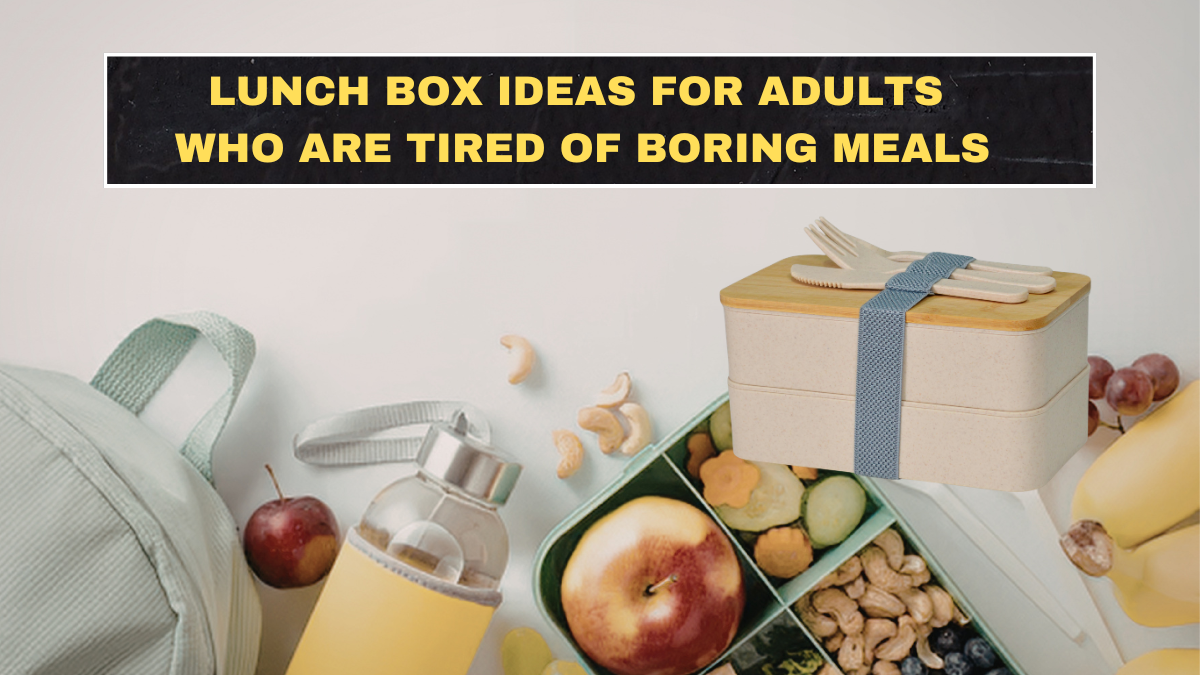
Most adult lunch boxes fail for predictable reasons. They are either too bland, too repetitive, too messy to transport, or too ambitious to keep making. That is why people fall back on expensive takeout or sad leftovers they do not even want to eat. A better lunch box is simpler: it needs balance, decent texture, and enough variety to keep you from hating your own meal by Wednesday. Harvard’s Healthy Eating Plate says a practical packed meal should roughly lean toward half vegetables and fruits, one-quarter whole grains, and one-quarter healthy protein, which is a far better starting point than randomly stuffing containers.
That structure matters because most “adult lunch” content is fluff. It tells you to meal prep without telling you what makes a lunch satisfying enough to repeat. MyPlate also emphasizes building meals around food groups instead of one-note carb-heavy convenience food, while USDA food-safety guidance reminds you that packed lunches only work if they stay safe as well as convenient. So the real goal is not just healthy lunches. It is balanced lunches that travel well and do not become a bacterial science project by noon.
What makes an adult lunch box actually satisfying?
A satisfying lunch usually needs four things: protein, produce, a smart carb, and one detail that keeps the meal from feeling dead. That last part is where people mess up. They pack plain chicken, plain rice, and a few cucumber slices, then act surprised when the lunch feels like punishment. Harvard’s plate model supports the first three parts clearly, and the easiest way to make the meal more enjoyable is to add something with crunch, acidity, creaminess, or spice, such as pickled onions, yogurt sauce, roasted seeds, hummus, or a sharp vinaigrette.
The good news is that you do not need endless recipes. You need repeatable lunch patterns. If you build lunches from a few reliable templates, they get easier to prep and less boring to eat. That is what realistic adult lunch packing actually looks like.
| Lunch template | Protein | Carb/base | Produce | Flavor booster |
|---|---|---|---|---|
| Grain bowl | Chicken, tofu, beans, tuna | Brown rice, quinoa, farro | Roasted veg, greens | Dressing, herbs, pickles |
| Wrap or sandwich box | Eggs, turkey, chickpeas | Whole-grain wrap or bread | Lettuce, tomato, carrots, fruit | Mustard, pesto, yogurt sauce |
| Snack-style lunch box | Cheese, eggs, hummus, edamame | Crackers, pita, whole-grain toast | Cucumbers, peppers, berries | Olives, nuts, dip |
| Pasta or noodle box | Chicken, tuna, lentils, feta | Whole-grain pasta or noodles | Spinach, tomatoes, peas | Lemon dressing, chili oil |
| Leftover remix | Whatever is left from dinner | Rice, bread, potatoes | Side salad or cut veg | Sauce added separately |
This kind of structure is better than recipe-chasing because it is easier to repeat and adjust across the week. Harvard’s plate guidance supports the balance behind it, and it also helps you use leftovers more intelligently instead of packing random scraps.
Which lunch box ideas are easiest to repeat during a busy week?
Grain bowls are one of the safest options because they hold up well, are easy to portion, and let you swap ingredients without rebuilding the whole lunch strategy. Use a base like brown rice or quinoa, add beans, chicken, tofu, or eggs, then layer roasted vegetables and a sauce packed separately. That format matches Harvard’s balanced plate approach very closely and usually survives transport better than delicate salads.
Snack-style lunch boxes are another strong option for adults who get tired of full reheated meals. This means building a container with boiled eggs, hummus, crackers, cheese, fruit, crunchy vegetables, and maybe nuts or olives. It sounds simple because it is simple, and that is why it works. Not every lunch needs to look like dinner in a box. Sometimes variety in small portions is what stops boredom fastest. USDA’s MyPlate framework still supports mixing multiple groups in one packed meal, even when the format is casual.
Wrap boxes also work well because they travel easily and can be customized without much effort. A whole-grain wrap with chicken, egg salad, chickpeas, or tofu plus a side of cut vegetables and fruit is much more realistic for many people than elaborate meal prep containers. The mistake is overfilling wraps until they turn soggy and annoying. Keep them tighter and pack wet sauces separately.
How do you stop lunch boxes from getting boring?
Stop making the exact same lunch five days in a row. Efficiency matters, but blind repetition is why people quit. A smarter approach is ingredient repetition with flavor variation. Cook one batch of grain, one or two proteins, and a tray of vegetables, then change the lunch profile with sauces and sides. One day the bowl gets lemon-herb dressing, the next it gets chili crisp, the next it becomes a wrap. That keeps the prep manageable without making the eating experience miserable. Harvard’s healthy plate model is flexible enough for this kind of rotation because it is about proportions and quality, not one fixed recipe.
Texture matters too. A lunch with only soft food gets boring faster. Add crunch through carrots, cucumbers, seeds, toasted chickpeas, or crisp fruit. Add contrast through something acidic or spicy. This is not extra. This is what makes packed lunches feel like meals instead of leftovers you are forcing yourself through.
What should adults keep in mind for lunch box food safety?
This part is not optional. USDA says bacteria grow rapidly between 40°F and 140°F, and CDC says perishable food should not sit out for more than 2 hours, or 1 hour above 90°F. USDA also advises keeping hot food at 140°F or warmer and using insulated lunch boxes with ice packs for cold foods. So if your lunch includes meat, eggs, dairy, cooked grains, or leftovers, temperature control matters.
That means adult lunch boxes should be designed for safety as well as taste. Use an insulated bag, add an ice pack for cold meals, and avoid packing foods that fall apart if they sit too long unrefrigerated. A great lunch idea that becomes unsafe by midday is not a great lunch idea.
Why do adult lunch boxes save more than just money?
Because they reduce friction. Yes, packed lunches can save money compared with buying lunch out repeatedly, but the bigger benefit is control. You control portion size, ingredient quality, and whether your lunch actually keeps you full through the afternoon. Harvard’s guidance pushes whole grains, healthy protein, and plenty of produce for a reason: that mix tends to hold up better than a lunch built around refined carbs alone.
The real fix for boring work lunches is not more dramatic recipes. It is smarter structure, better flavor, and fewer unrealistic expectations. Adults do not need lunch boxes that impress social media. They need lunches they will still want to eat on Thursday.
Conclusion
The best lunch box ideas for adults are the ones that are balanced, repeatable, and not depressing to open. Grain bowls, wrap boxes, snack-style lunches, pasta boxes, and smart leftover remixes all work when they follow a basic structure: produce, protein, a quality carb, and something flavorful enough to keep the meal interesting. Harvard and USDA guidance both support that balanced approach, and food-safety guidance makes it clear that transport matters too. If your packed lunch is boring every day, the problem is usually not lunch itself. It is the lazy way you are building it.
FAQs
What is the easiest adult lunch box to pack?
A grain bowl is one of the easiest because it is balanced, easy to portion, and simple to vary with different proteins, vegetables, and sauces. It also fits well with Harvard’s Healthy Eating Plate guidance.
How do I make packed lunches less boring?
Use the same core ingredients but rotate flavors, sauces, textures, and formats. Ingredient repetition is fine. Flavor repetition is what makes lunches boring. Harvard’s healthy plate model is flexible enough to support that kind of variation.
How long can a lunch box sit unrefrigerated?
CDC says perishable foods should not be left out for more than 2 hours, or 1 hour if the temperature is above 90°F.
What should a balanced lunch box include?
A strong packed lunch should usually include vegetables or fruit, healthy protein, and a whole-grain or other quality carb. That aligns with Harvard’s Healthy Eating Plate and USDA healthy-meal guidance.