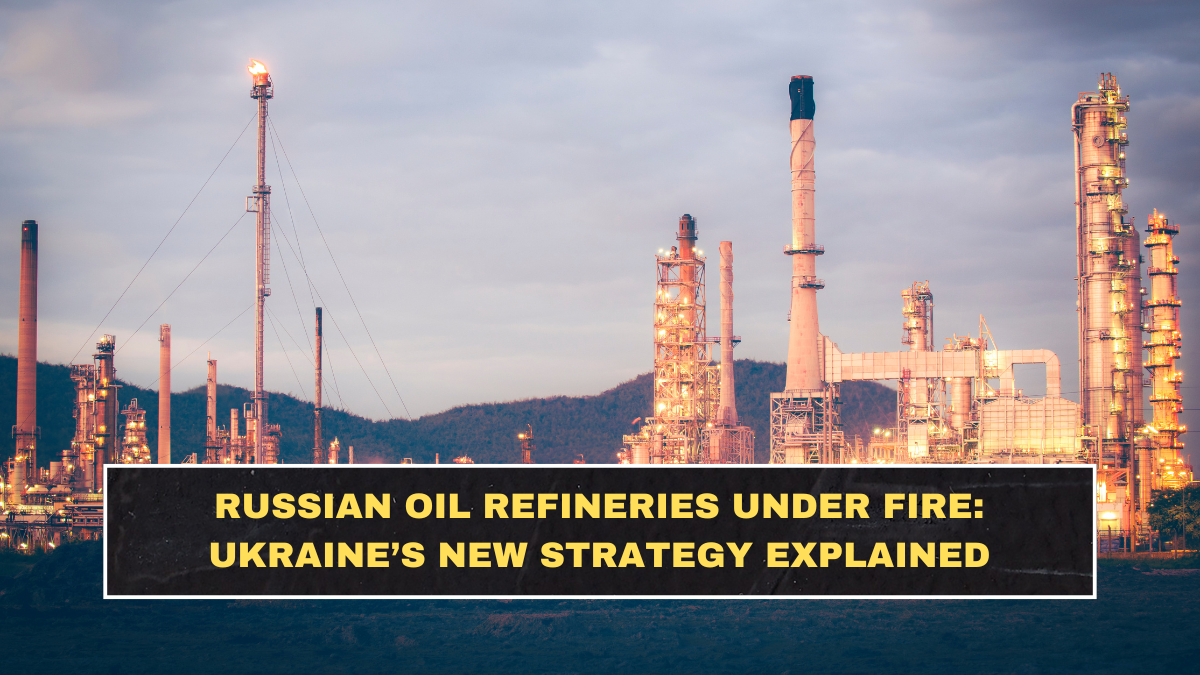
Russian oil refineries are under heavy attack because Ukraine is increasingly using long-range drones to hit the infrastructure that keeps Moscow’s war economy running. The latest focus is the Tuapse refinery on Russia’s Black Sea coast, which AP reported was struck for the third time in less than two weeks, damaging infrastructure and forcing evacuations.
This strategy is not random. Ukraine is trying to hurt Russia where it is financially and militarily vulnerable: fuel, exports, logistics and repair costs. Refineries turn crude oil into diesel, petrol, jet fuel and other products that support both the civilian economy and military movement. If Ukraine can repeatedly disrupt those facilities, it can make the war more expensive for Russia without needing to win every battlefield exchange directly.
What Makes Refinery Attacks Different From Normal Drone Strikes?
Refinery attacks are different because they target economic infrastructure with long-term pressure value. A single military vehicle can be replaced quickly. A refinery fire can disrupt processing, storage, loading, insurance, local safety and export operations at the same time. The Guardian reported that Tuapse processes around 12 million tonnes annually and had already been shut since April 16 after earlier damage stopped shipments.
That is why these strikes matter beyond the fire itself. A refinery does not need to be completely destroyed to become useless for days or weeks. If loading systems, storage tanks or port links are damaged, the refinery may not be able to move output properly. That creates bottlenecks and forces Russia to reroute fuel, repair facilities and increase air-defense protection around energy sites.
| Target Area | Why Ukraine Hits It? | Possible Impact |
|---|---|---|
| Oil refineries | Convert crude into usable fuel | Fuel supply disruption |
| Storage tanks | Hold refined products and crude | Fires, leaks and lost inventory |
| Export terminals | Move oil products to buyers | Shipping delays and revenue pressure |
| Pumping stations | Support pipeline movement | Regional supply bottlenecks |
| Air defenses | Russia must protect more sites | Higher military and security costs |
Why Is Tuapse So Important In This Strategy?
Tuapse is important because it sits on Russia’s Black Sea coast, where energy exports, shipping routes and wartime logistics overlap. The refinery and nearby terminal infrastructure give Ukraine a high-value target in a region already central to the war. When Tuapse burns, it is not only a local industrial accident. It is a signal that Russia’s rear-area energy system is vulnerable.
The Tuapse attacks also show that Ukraine is willing to repeat strikes on the same target. That matters because repair crews can become trapped in a cycle of damage and recovery. If a facility is hit once, it may recover. If it is hit again before full repairs are completed, the operational pressure becomes much worse. That is how Ukraine turns drones into a campaign rather than one-off headlines.
How Far Can Ukraine’s Drones Now Reach?
Ukraine’s drone range has improved sharply during the war. AP reported that Ukraine’s strike reach has expanded to around 1,750 km, compared with about 630 km in 2022. That change allows Kyiv to hit oil industry and weapons manufacturing targets deep inside Russia, not only areas near the border.
This is a major shift in the conflict. Russia’s size once gave it a sense of depth and safety, but long-range drones reduce that advantage. Ukraine does not need a large air force to create pressure if it can send cheaper drones toward refineries, depots and industrial sites. That does not guarantee victory, but it forces Russia to defend a much wider map.
Is Russia Calling These Attacks Civilian Terrorism?
Yes, Russia is framing the attacks as strikes on civilian infrastructure. Reuters reported that Vladimir Putin accused Ukraine of increasing attacks on civilian targets inside Russia and specifically referenced the drone strike on the Tuapse oil refinery. He also warned about possible environmental consequences from attacks on energy facilities.
Ukraine sees it differently. Kyiv argues that Russian oil infrastructure supports Moscow’s war effort through fuel supply and revenue. That argument is not just public relations; it is the logic behind the campaign. Still, there is no point pretending the risks are clean. Fires at refineries can affect workers, nearby residents and the environment, even if the target has economic or military value.
Are These Attacks Damaging Russia’s War Economy?
They are damaging and disruptive, but they are not yet enough to break Russia’s economy. This is where many dramatic headlines become misleading. Russia has a large energy system, repair capacity and export flexibility. High oil prices can also soften the financial blow, especially if global supply risks keep prices elevated.
The more realistic assessment is that Ukraine is creating cumulative pressure. Each refinery fire adds repair costs, reduces confidence, forces rerouting and stretches air-defense resources. One attack may be manageable. A pattern of repeated attacks across refineries, terminals and pumping stations becomes much harder to absorb over time.
Why Do Refinery Fires Create Environmental Fear?
Refinery fires are dangerous because they involve flammable fuels, chemicals, smoke and possible leaks into surrounding areas. The Guardian reported that oily residue and “black rain” were seen around the Tuapse area after recent attacks, raising concerns about pollution and local exposure.
This is one of the ugliest parts of infrastructure warfare. A refinery can be a strategic target and still create civilian harm through smoke, contamination and evacuation. Putin’s environmental warning should not be dismissed automatically just because it comes from Russia. At the same time, Moscow’s complaint is weakened by its own repeated attacks on Ukrainian infrastructure throughout the war.
Could More Russian Refineries Be Hit Next?
Yes, that is a realistic possibility. Ukraine’s strategy appears to be focused on repeated pressure against Russia’s energy and military-industrial infrastructure. If drones can reach deeper targets and evade some defenses, Kyiv has a strong incentive to keep using them. The goal is not only physical destruction. It is to make Russia feel that no major energy facility is fully safe.
Russia will likely respond by adding air defenses, electronic warfare systems and security around major refineries. But defending every refinery, depot, pipeline station and port is difficult and expensive. That is the strategic advantage Ukraine is exploiting: forcing Russia to spread protection across too many valuable targets.
What Is The Bottom Line?
Ukraine’s refinery campaign is a serious evolution in the war. Instead of only fighting at the front, Kyiv is attacking the energy system that funds, fuels and supports Russia’s military machine. Tuapse has become the clearest example because repeated strikes have caused fires, evacuations and operational disruption.
The blunt truth is this: these attacks will not collapse Russia overnight, and anyone claiming that is overselling the story. But they do make the war costlier, messier and harder for Moscow to manage. Ukraine is not just hitting buildings. It is attacking Russia’s ability to treat the war as something that happens far away from its own critical infrastructure.
FAQs
Why Is Ukraine Attacking Russian Oil Refineries?
Ukraine is attacking Russian refineries because they support Russia’s fuel supply, export revenue and wartime logistics. The goal is to raise costs and disrupt the systems that help Moscow sustain the war.
Which Russian Refinery Was Hit Recently?
The Tuapse refinery on Russia’s Black Sea coast was recently hit again by Ukrainian drones. AP reported it was the third strike on the site in less than two weeks.
Are Refinery Attacks Enough To Destroy Russia’s Economy?
No. They create disruption and pressure, but Russia’s economy is large and still supported by energy revenue. The bigger impact is cumulative damage, repair costs and rising vulnerability.
Why Are Refinery Fires Dangerous For Civilians?
Refinery fires can release smoke, chemicals and oily residue, and they can force evacuations. Reports around Tuapse mentioned pollution concerns including oily residue and “black rain.”
What Is Ukraine’s New Drone Strategy?
Ukraine’s drone strategy is to use long-range attacks against Russian energy, logistics and military-industrial targets deep inside Russia, forcing Moscow to defend more infrastructure across a wider area.