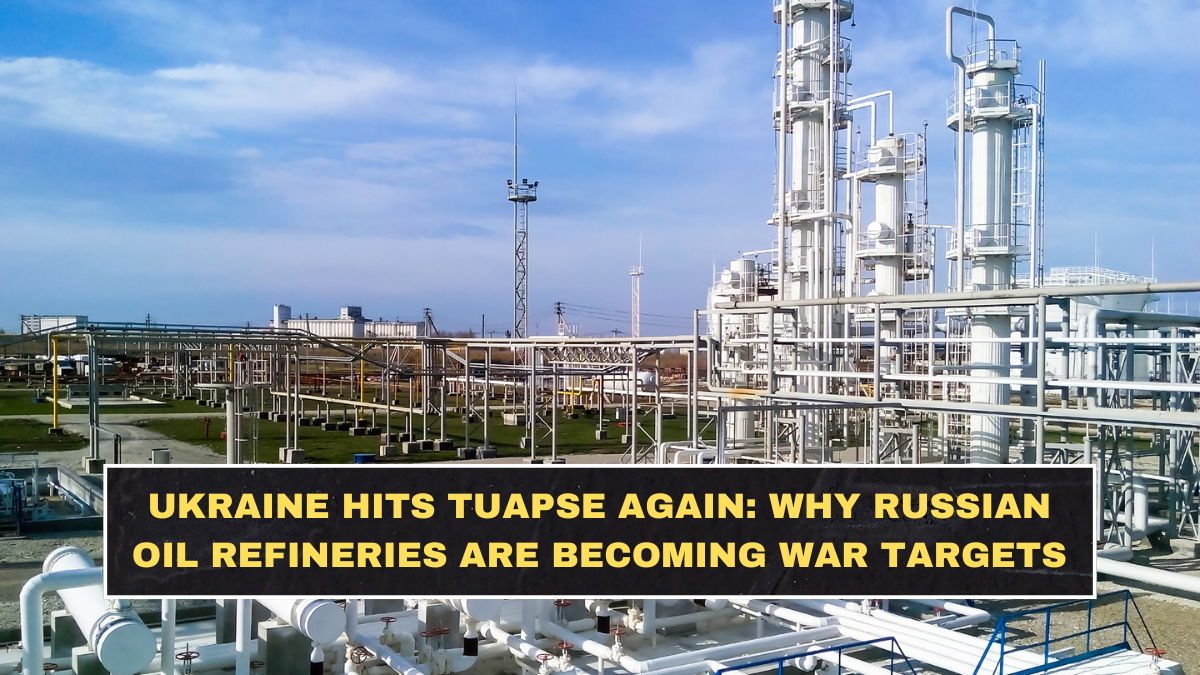
Ukraine’s latest strike on Russia’s Tuapse oil refinery is getting global attention because it shows how the war is moving deeper into energy infrastructure warfare. AP reported that Ukrainian long-range drones hit the Tuapse refinery on Russia’s Black Sea coast for the third time in less than two weeks, damaging infrastructure and forcing evacuations.
This is not just another drone incident. Refineries are critical because they turn crude oil into usable products such as diesel, petrol, jet fuel and military fuel. When Ukraine targets these facilities, it is not only trying to create fire and damage. It is trying to make Russia’s war machine more expensive, more disrupted and harder to sustain.
What Happened At The Tuapse Refinery?
The Tuapse refinery, located in Russia’s Krasnodar region on the Black Sea coast, was hit again by Ukrainian drones after earlier strikes had already disrupted operations. The Guardian reported that the refinery processes around 12 million tonnes annually and had already been shut down since April 16 because earlier damage prevented shipment. The latest attack triggered another major fire and renewed evacuations.
Russian President Vladimir Putin accused Ukraine of intensifying attacks on civilian infrastructure after the Tuapse incident. Reuters reported that Putin warned of possible environmental consequences from attacks on energy facilities, although he also said the regional governor reported no major threat from the latest Tuapse strike.
| Key Detail | What It Means? |
|---|---|
| Location | Tuapse, Russia’s Black Sea coast |
| Target | Oil refinery and related energy infrastructure |
| Attack method | Ukrainian long-range drones |
| Frequency | Third strike in less than two weeks |
| Main impact | Fire, evacuations, infrastructure damage and shutdown pressure |
Why Is Ukraine Targeting Russian Refineries?
Ukraine is targeting Russian refineries because oil is one of the strongest pillars of Russia’s war economy. Russia earns huge revenue from energy exports and also depends on refined fuel for military logistics. Hitting refineries is different from hitting crude production because it directly affects Russia’s ability to process oil into usable fuel.
The strategy is brutal but logical from Kyiv’s perspective. If Ukraine cannot match Russia missile-for-missile, it can use long-range drones to hit valuable infrastructure far from the front line. These attacks force Russia to spend more on air defense, emergency repairs, insurance, logistics and internal security. That turns Russian territory into a more expensive battlefield.
How Far Has Ukraine’s Drone Capability Improved?
Ukraine’s drone reach has expanded dramatically since the early stage of the war. AP reported that Ukraine’s strike range has grown to around 1,750 km, compared with about 630 km in 2022. That growth allows Kyiv to hit oil industry and weapons manufacturing targets much deeper inside Russia.
This is one of the most important changes in the war. Russia can no longer assume that distance gives complete safety to refineries, depots or defense factories. Ukraine’s drone program has become a way to compensate for limited air power. It is cheaper than traditional missiles, harder to fully stop, and politically useful because it brings the cost of war closer to Russia’s own population.
Is The Tuapse Refinery A Civilian Or Military Target?
This is where the controversy becomes serious. Russia calls the strikes attacks on civilian infrastructure. Putin has accused Ukraine of increasing attacks on civilian targets inside Russia. Reuters reported that he specifically referenced the Tuapse refinery and warned about environmental risks from damage to energy sites.
Ukraine’s argument is different. Kyiv sees refineries as part of Russia’s war-supporting infrastructure because fuel supports military movement, logistics and revenue. That does not remove the legal and humanitarian concerns, especially if fires, toxic smoke or oil spills affect nearby civilians. But it explains why Ukraine considers these facilities legitimate pressure points rather than random civilian targets.
What Are The Environmental Risks From Refinery Attacks?
Refinery strikes can create serious environmental risks because oil facilities store and process flammable, toxic materials. The Guardian reported that oily residue and “black rain” were reported in the area after the Tuapse attacks. Fires at such sites can release smoke, soot and chemical pollutants that affect air, water and nearby communities.
This is the uncomfortable part of infrastructure warfare. A strike may have a military or economic purpose, but the consequences can spill into civilian life. Firefighters, nearby residents, port workers and local ecosystems can all be exposed. That is why even successful attacks can create long-term environmental and health concerns.
Is Ukraine Actually Hurting Russia’s Economy?
Ukraine is causing real disruption, but the impact is not yet enough to break Russia’s economy. The Wall Street Journal reported that Ukraine has intensified strikes on Russian oil infrastructure, including Tuapse, but Russia’s broader economy has not been badly dented. Analysts noted that earlier production declines were temporary and that high global oil prices have helped cushion the blow.
That point matters. Some headlines make it sound as if each refinery strike is a strategic knockout. That is exaggerated. Russia has a large energy system, repair capacity and strong oil revenue support, especially when global prices are high. Ukraine’s strategy is not a quick kill shot. It is a pressure campaign designed to create repeated costs and vulnerabilities.
Why Does The Black Sea Location Matter?
Tuapse matters because it sits on the Black Sea, a region already central to the wider Russia-Ukraine war. Black Sea ports, shipping lanes, export routes and military logistics have all become strategic targets. A refinery fire in this region is not isolated from the bigger conflict. It affects energy movement, maritime risk and regional security calculations.
The Black Sea has also become a symbol of Ukraine’s asymmetric strategy. Kyiv has used drones and missiles to pressure Russian ships, ports and logistics despite having a much smaller navy. Attacks around Tuapse fit that wider pattern: hit the infrastructure that helps Russia move fuel, money and military capability.
What Is The Bottom Line?
Ukraine’s latest strike on Tuapse shows that Russian oil refineries are now major wartime targets. Kyiv is using long-range drones to attack Russia’s energy backbone, create repair costs, disrupt fuel logistics and bring the war deeper into Russian territory. This is not random. It is a calculated strategy.
But the results should not be exaggerated. These attacks hurt, but they have not yet crippled Russia’s economy. The real effect is cumulative: repeated fires, shutdowns, evacuations, environmental damage and rising security costs. The war is becoming less about front lines only and more about who can damage the other side’s critical infrastructure for longer.
FAQs
Where Is The Tuapse Refinery Located?
The Tuapse refinery is located in Russia’s Krasnodar region on the Black Sea coast. Its location makes it strategically important for energy movement and regional logistics.
How Many Times Was Tuapse Hit Recently?
AP reported that Ukraine struck the Tuapse refinery for the third time in less than two weeks, showing a repeated campaign against the same energy target.
Why Is Ukraine Attacking Russian Refineries?
Ukraine is attacking refineries to disrupt Russian fuel supplies, increase repair costs, pressure Russia’s war economy and force Moscow to defend more infrastructure far from the front line.
Did The Tuapse Attack Cause A Fire?
Yes. Reports said the latest Tuapse strike triggered a major fire and forced evacuations, while earlier damage had already shut down operations.
Are Refinery Attacks Enough To Break Russia’s Economy?
Not yet. The attacks create disruption and costs, but analysts say Russia’s wider economy has been cushioned by high oil prices and its ability to repair or reroute parts of the energy system.